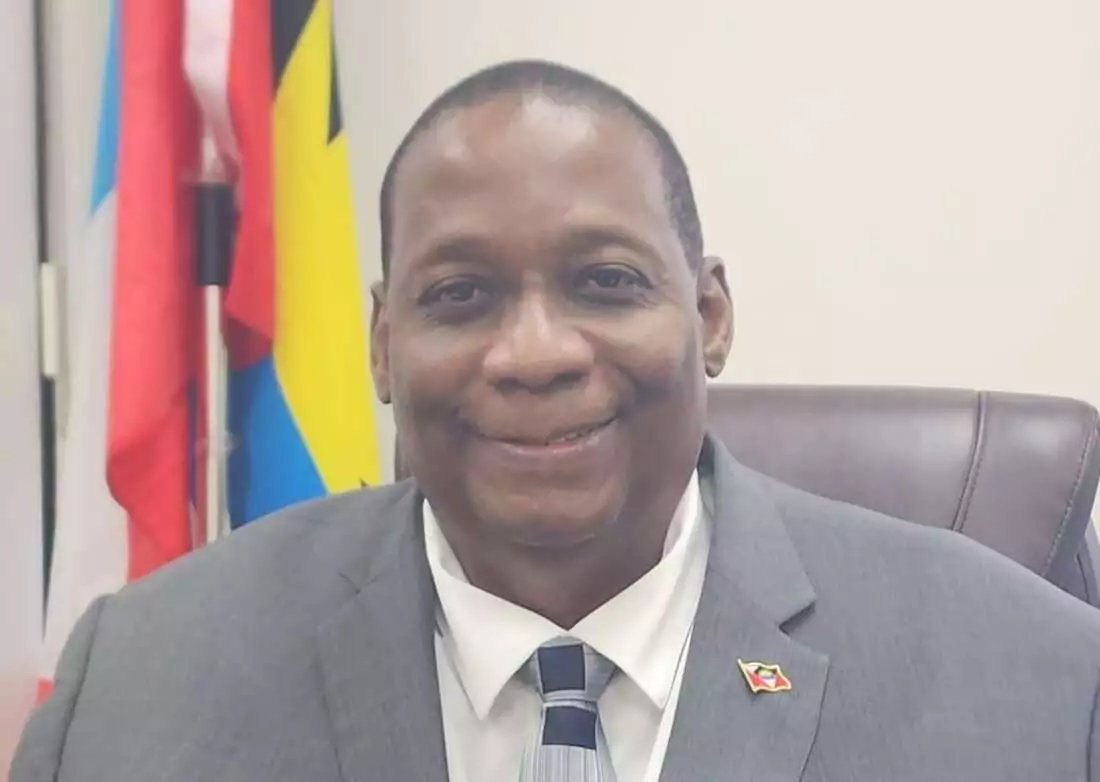
By Ambassador Dr. Clarence E. Pilgrim Permanent Secretary, Ministry of Sports and Creative Industries
The passing of The Right Excellent Sir Garfield St. Aubrun Sobers, OCC, National Hero of Barbados, on 17 July 2026 marks the close of one of the most extraordinary chapters in Caribbean history.
The world has lost perhaps the most complete cricketer ever to play the game. The Caribbean, however, has lost something even greater — a son whose life helped redefine the identity, confidence and aspirations of a region emerging from the long shadow of colonialism.
Sir Garfield's greatness cannot be measured solely by statistics, remarkable though they are. In 93 Test matches between 1954 and 1974, he amassed 8,032 runs at an average of 57.78, scored 26 centuries, claimed 235 wickets, held 109 catches, and recorded the highest individual Test score in history at the time — an unbeaten 365 against Pakistan. He also became the first cricketer to strike six consecutive sixes in an over in first-class cricket.
Equally extraordinary, he excelled as a fast-medium bowler, a left-arm orthodox spinner and a left-arm wrist spinner, all while remaining one of cricket's finest batsmen. More than half a century after his retirement, he remains the benchmark against which all-round excellence is measured. Yet the true measure of Sir Garfield Sobers lies beyond the boundary rope.
His international career began before the first wave of English-speaking Caribbean independence and matured alongside the birth of sovereign Caribbean nations. As constitutions were drafted, flags raised and new democracies established, Sir Garfield Sobers was forging an equally important achievement: the confidence of a people.
While visionary leaders such as Errol Barrow, Norman Manley, Sir Alexander Bustamante, Dr. Eric Williams, Forbes Burnham and Sir Vere Cornwall Bird were constructing the institutions of sovereign government, Sobers was constructing something equally indispensable — the conviction that Caribbean people could stand as equals with any nation on earth.
He belonged to what may rightly be described as the Caribbean's golden generation. Alongside Sir Frank Worrell, Sir Everton Weekes, Sir Clyde Walcott, Conrad Hunte, Rohan Kanhai, Wes Hall and Charlie Griffith, he transformed the West Indies cricket team into far more than a sporting institution. It became the living expression of a united Caribbean — one people, many nations, bound together by shared history, shared struggle and shared ambition.
Sir Frank Worrell had already demonstrated that Caribbean leadership could transcend race and insularity by becoming the first full-time Black captain of the West Indies. Sobers inherited that legacy and elevated it to unprecedented heights. Long before regional integration became formalised through the Caribbean Community, CARICOM, in 1973 — and later expanded through the Association of Caribbean States in 1994 — West Indies cricket had already demonstrated that the Caribbean could think, compete and triumph as one civilisation. The same spirit that united 11 players beneath the Maroon Cap now finds expression through these regional institutions as they pursue economic integration, maritime cooperation, sustainable development, climate resilience and a stronger Caribbean voice in global affairs.
Before the Caribbean possessed significant economic or geopolitical influence, it possessed extraordinary cultural influence. Sir Garfield Sobers became one of the region's earliest ambassadors of soft power, commanding worldwide respect not through military or economic might, but through unmatched excellence, humility and sportsmanship. His rise was no coincidence — it paralleled the emergence of Caribbean nationalism.
Whenever those runs were scored against the former imperial power that had introduced the game to the Caribbean, many West Indians came to see them as symbolic instalments in a larger claim for justice, recognition and historical repair. Every century restored dignity. Every victory challenged inherited assumptions of racial and colonial superiority. These were not merely runs upon a scoreboard. They became symbols of a civilisation reclaiming its confidence.
Long before reparatory justice emerged as a formal agenda of Caribbean diplomacy, West Indies cricket had already begun recovering something priceless — the self-belief, pride and dignity of a people. Political independence transferred constitutional authority. Psychological decolonisation restored belief. Sir Garfield Sobers helped accomplish the latter. He gave generations of Caribbean boys and girls permission to believe that they could equal — and surpass — the very nations that had once governed them.
This interpretation does not suggest that Sobers consciously viewed every innings as a political statement. Rather, history has invested those performances with profound meaning. Cricket, introduced as an instrument of empire, had been mastered by the descendants of the colonised and transformed into one of the Caribbean's greatest instruments of psychological liberation.
The distinguished Trinidadian historian and intellectual C. L. R. James captured this enduring truth when he famously observed, "What do they know of cricket who only cricket know?" Sir Garfield Sobers became one of the finest illustrations of that timeless insight.
His own character was shaped by hardship. His father, Shamont Sobers, was lost at sea during the Second World War while Garfield was still a child. Raised in modest circumstances by his mother, Thelma, he learned resilience, humility and perseverance long before international acclaim arrived. Another defining moment came in 1959, when his close friend and West Indies teammate Collie Smith died following a motor vehicle accident in England — an accident in which Sobers himself survived. The tragedy profoundly affected him. Rather than allowing grief to define his life, he transformed personal loss into renewed purpose, carrying himself thereafter with a maturity, grace and quiet dignity that earned admiration throughout the cricketing world.
His life became an affirmation of the Black Caribbean experience itself — not one defined by victimhood, but by resilience; not imprisoned by history, but strengthened through it; not diminished by adversity, but elevated through excellence. Just as Dr. Martin Luther King Jr. advanced the cause of human dignity through moral leadership and peaceful resistance, Sir Garfield Sobers demonstrated on the cricket field that excellence itself could become a powerful instrument for challenging inherited assumptions about race, worth and human potential.
Without delivering speeches at the United Nations, negotiating treaties or occupying political office, he altered how the world perceived the Caribbean and, perhaps more importantly, how Caribbean people perceived themselves. His achievements became a passport for regional respect, demonstrating that a small archipelago of developing nations could produce a standard of excellence the entire world would acknowledge without qualification.
Today, the Caribbean faces challenges different from those confronting the generation of independence. Climate resilience, technological innovation, food and energy security, maritime cooperation, youth empowerment, the blue economy and reparatory justice now shape the regional agenda. These aspirations demand the same confidence, imagination and collective purpose that Sir Garfield inspired throughout his remarkable life.
His legacy therefore extends far beyond cricket. It is a blueprint for regional development: that individual excellence achieves its highest purpose when it strengthens collective dignity, and that personal achievement finds its fullest meaning when it advances the progress of an entire people.