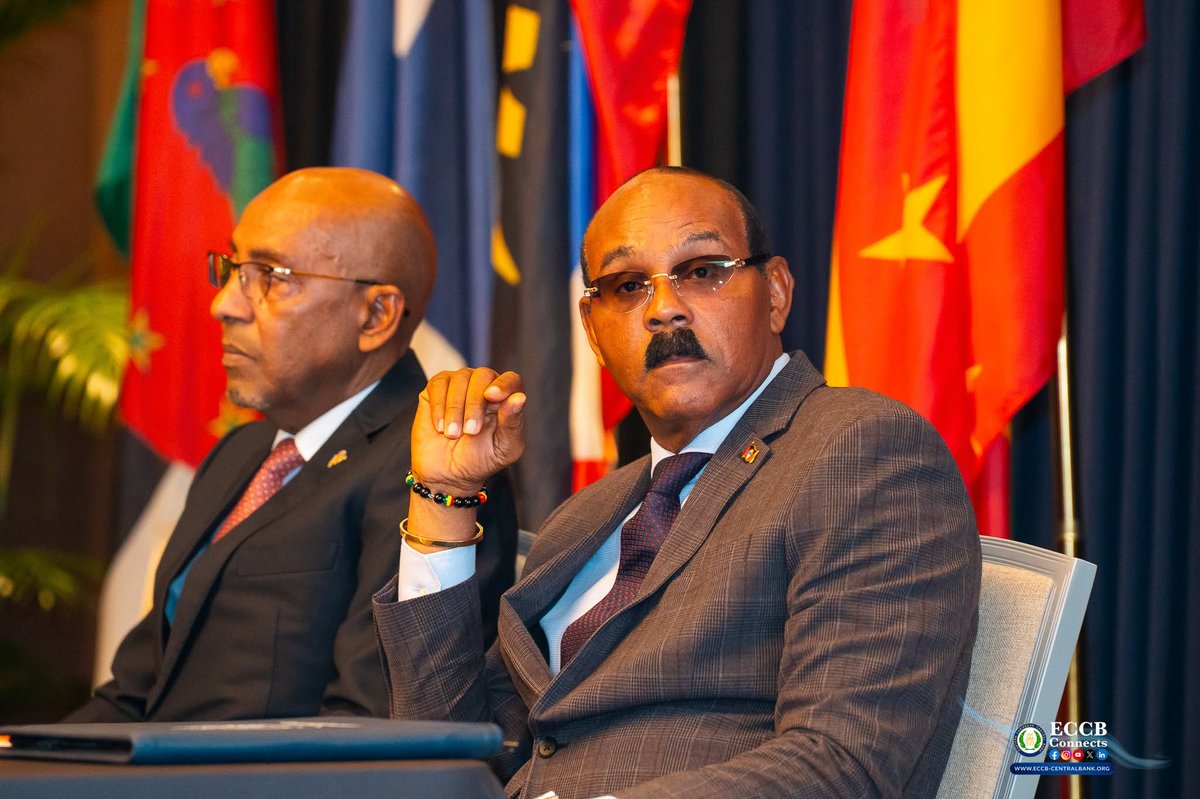
Prime Minister Gaston Browne is urging the Eastern Caribbean Central Bank (ECCB) to invest a portion of its foreign reserves in strategic regional development projects, arguing the move could accelerate economic growth while preserving the stability of the Eastern Caribbean Currency Union.
According to Antigua News Room, Browne made the proposal while addressing the 113th Meeting of the ECCB Monetary Council in Dominica on Thursday. He called on the Central Bank to allocate between five and eight percent of its reserves through innovative financing instruments to support renewable energy, infrastructure and other priority sectors across the region.
"The Bank must… assist in catalyzing funding for the Big Push to strengthen regional economies, by developing creative and innovative credit and securities instruments, utilizing a small portion (possibly 5-8 percent) of its reserves," Browne said.
The Prime Minister argued that stronger OECS economies with reduced dependence on foreign direct investment and imports are essential to maintaining a healthy backing ratio for the EC dollar. He contended that the Central Bank could bolster the long-term sustainability of its foreign currency reserves by directing funds toward projects that expand regional productive capacity, rather than relying solely on traditional reserve management practices.
Browne indicated the proposal will be taken up by Monetary Council members as a strategic priority.
He linked the initiative to the ECCB's "Big Push" agenda, which aims to double the size of the Eastern Caribbean economy and grow regional gross domestic product to approximately EC$50 billion over the next seven years. Browne described the initiative as a wealth-creation agenda focused on expanding entrepreneurship, investment, ownership and earning opportunities throughout the Currency Union.
The Prime Minister also highlighted ongoing efforts to expand renewable energy financing through the Resilient Renewable Energy Infrastructure Investment Facility. He noted that approximately US$200 million has already been secured from development partners and proposed scaling the facility up to US$300 million with additional support from the Central Bank.
Browne argued that investing in renewable energy and critical infrastructure would reduce the region's dependence on imported fossil fuels, curb foreign exchange leakage and strengthen the long-term economic resilience of Eastern Caribbean nations.