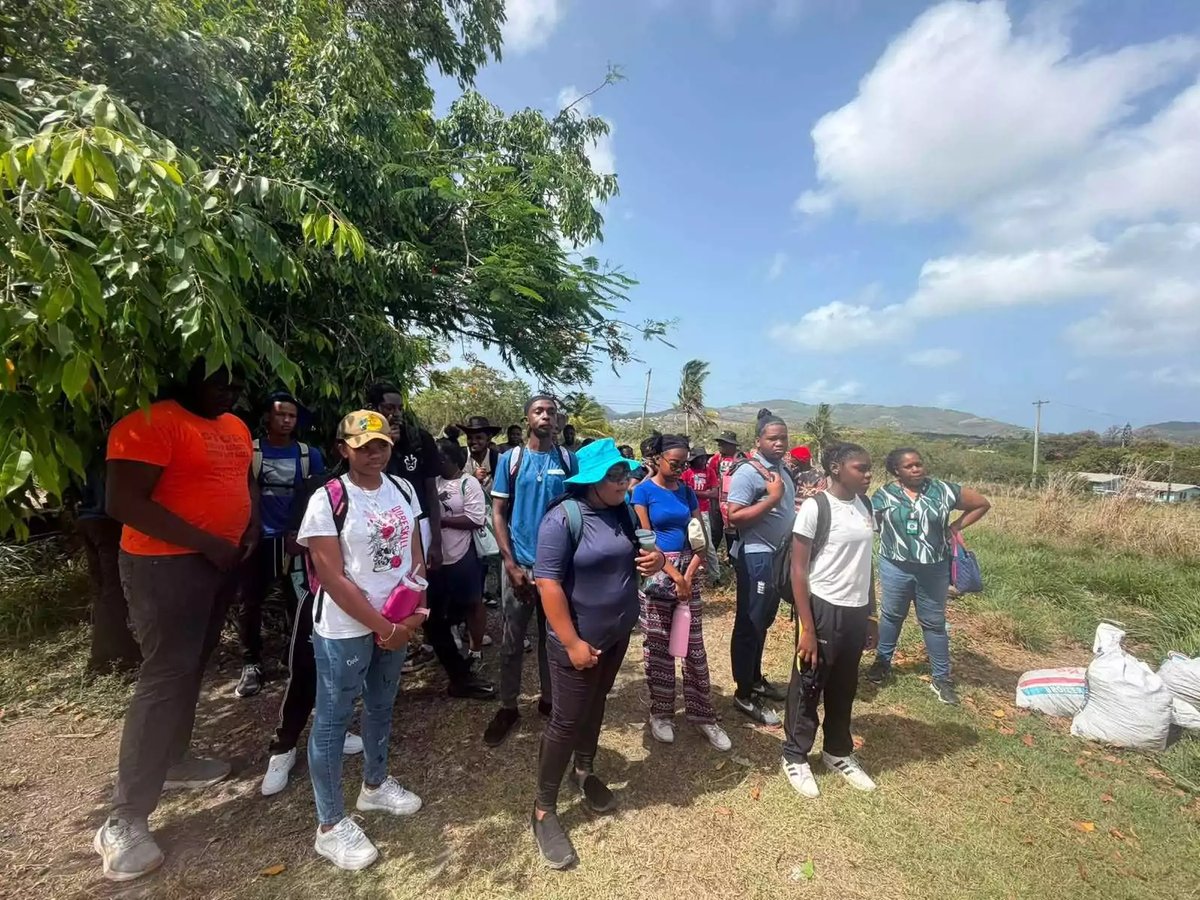
The Ministry of Agriculture's Summer Internship Programme took participants inside two local poultry operations this week, giving interns direct exposure to bird management and modern farming practices as part of the programme's ongoing field training.
The farm visits formed Day 11 of the programme, with interns touring Pelle Farm and the All Saints Secondary School Farm. At each location, agricultural professionals guided participants through poultry breeds, production methods and the practical demands of running a viable poultry enterprise.
At Pelle Farm — owned by former Agricultural Science teacher Kelvin Pelle — staff introduced interns to a range of birds, including rheas, ducks and black chickens, outlining the distinct care and management requirements for each species.
The group then moved on to the All Saints Secondary School Farm, where the school's agricultural team led an interactive session focused on poultry production and the significance of preserving pure poultry breeds. Interns observed quails, pheasants, partridges, layer chickens and broilers, and learned the key differences between birds raised for egg production and those bred for meat.
The session covered breeding practices designed to maintain desirable genetic traits, as well as practical techniques used to determine whether hens are actively laying — including examining the spacing between a hen's pelvic bones.
Interns also learned that chickens are photoperiodic birds, meaning daylight duration directly influences egg production, with laying rates typically rising during longer daylight periods.
Food safety received attention as well. The agricultural team explained that eggs should not be washed with water, as doing so strips away the shell's natural protective coating and allows bacteria to penetrate more easily. Instead, eggs should be gently wiped clean when needed.
A standout moment of the day came when many interns had the opportunity to safely handle several of the birds themselves, gaining firsthand insight into their behaviour and temperaments.
The Ministry of Agriculture noted that the Summer Internship Programme is designed to expose participants to the full range of agricultural disciplines, building technical knowledge through practical experience while fostering greater interest in the sector.
The programme continues with further field visits and training sessions aimed at deepening interns' understanding of agriculture's role in Antigua and Barbuda's economy and food security.