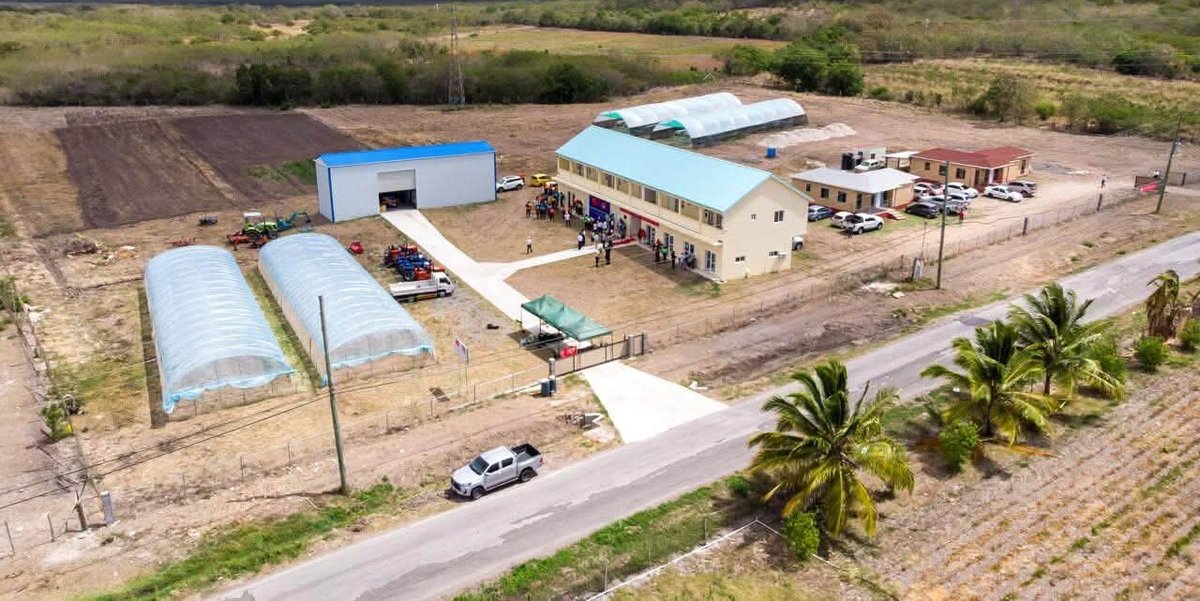
Antigua and Barbuda has opened its first tissue culture laboratory, marking a landmark moment for the nation's agricultural sector and its long-term push toward food security.
The facility gives the country the ability to produce disease-free, high-quality planting material locally — reducing dependence on overseas laboratories and strengthening protection of the nation's agricultural resources. Officials describe it as one of the most significant agricultural investments in recent years.
The need for such a facility was thrown into sharp relief during efforts to revive the iconic Antigua Black Pineapple. Without a local tissue culture laboratory, selected plant tissues had to be sent abroad to be cleaned of disease and multiplied before healthy plants could be returned to local farmers. While that programme successfully restored thousands of disease-free plants, it exposed a critical gap in the country's biotechnology capacity — one that the government was determined to close.
Under Minister of Agriculture Smith, the Ministry has embraced scientific innovation as a central pillar of national development. His vision extends beyond restoring the Antigua Black Pineapple to building an agricultural sector that is sustainable, productive, and capable of feeding the nation while preserving its unique crops for future generations. Smith has also called on younger Antiguans and Barbudans to enter the industry, framing agriculture as a viable and profitable career path.
The tissue culture laboratory will support the continued expansion of Antigua Black Pineapple cultivation while also improving the propagation of other crops, providing farmers with healthier plants, better yields, and greater resilience against disease.
The government's commitment to modernising agriculture through science and innovation positions the country to better meet future challenges while creating lasting opportunities for local farmers.