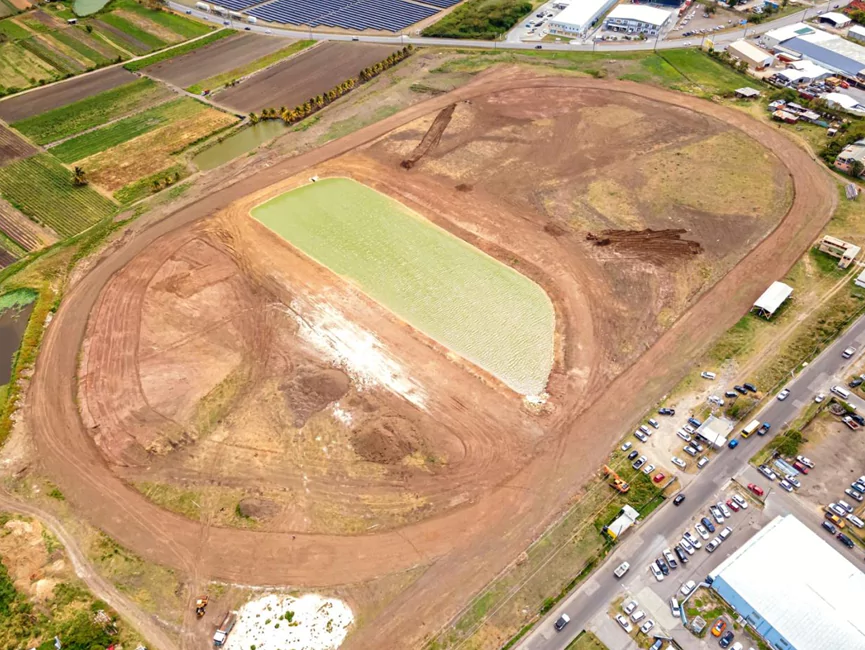
The Antigua Turf Club Inc. (ATC) is standing behind its proposed redevelopment of the Cassada Gardens Racetrack, arguing the project offers a significant opportunity to revive horse racing, generate employment, and transform a historic national asset into a sustainable economic venture.
According to Antigua.news, the ATC issued a detailed public statement amid growing discussion surrounding the proposal, including questions about the investment structure, requested government concessions, and the role of private investors.
The Club described Cassada Gardens as more than a sporting facility, calling it a vital part of Antigua and Barbuda's sporting and cultural heritage that has united horse owners, trainers, breeders, jockeys, grooms, vendors, families, and racing enthusiasts for generations. Its stated goal is to preserve that legacy while elevating horse racing from an informal pastime into a professionally managed and regulated industry.
The redevelopment proposal was submitted in February 2024 by the US Virgin Islands-based Caravelle Group. Valued at approximately XCD $30 million, it envisions a modern racing and entertainment complex featuring an international-standard racing surface, running rails, crowd barriers, a saddling paddock, a concessions area, a modern grandstand, quarantine and receiving barns, testing facilities, and a new clubhouse.
A central element of the proposal is the introduction of a gaming facility alongside the racetrack — a combination commonly known as a "racino." The ATC said the concept would be the first of its kind in a Caribbean racing jurisdiction outside of Puerto Rico and the Dominican Republic.
Under the proposed arrangement, 15 per cent of net gaming revenue — calculated after winnings are paid to patrons — would be allocated to the Antigua Turf Club to fund racing operations, maintain the facility, and support long-term development of the sport.
Beyond racing, the redevelopment plans include football and cricket areas, a children's playground, and the incorporation of a newly constructed 24-million imperial gallon dam into the wider development. The ATC said the aim is to create a year-round facility generating activity across sports, entertainment, tourism, and leisure — not only on race days.
The Club also outlined several social and economic commitments tied to the proposal, including the establishment of a Youth Equine Academy, scholarships for Antiguans and Barbudans pursuing equine studies, and the importation of more than 50 thoroughbred horses. Employment opportunities are projected across construction, hospitality, veterinary services, agriculture, transportation, security, administration, and racing operations.
Concession Discussions
The ATC addressed concerns over requests for tax concessions from the Government, stating that the measures form part of the financial structure required to make the investment commercially viable. The Club confirmed that the Government required the investor to establish an XCD $5 million performance bond or escrow account as a condition for receiving concessions and tax exemptions.
As reported by Antigua.news, the ATC said that requirement was fulfilled, but that discussions later reached an impasse over one outstanding exemption within the broader concession package.
The Club said any final agreement should include safeguards such as project milestones, reporting obligations, performance requirements, and clawback provisions to ensure commitments are met. It rejected suggestions that the concession request was designed to deprive the Government of revenue, describing the proposed framework — which it termed a "Quasi-Tax Reinvestment Framework" — as a mechanism to keep funds within the project while supporting the redevelopment of the publicly owned Cassada Gardens property and generating future economic activity and tax revenues.
Need for Sustainable Racing Industry
The ATC argued that horse racing cannot survive on race-day earnings alone. Maintaining a modern operation, it said, requires sustained investment in track upkeep, horse care, trainer and groom support, veterinary services, safety compliance, insurance, and security.
The Club noted that successful racing jurisdictions worldwide rely on recurring revenue sources such as gaming, wagering, sponsorships, media rights, and commercial partnerships. Without dependable revenue streams, it warned, the industry would remain vulnerable and reliant on government assistance.
Call for Racing Regulation
The ATC also called for the creation of a Racing Commission or Racing Authority underpinned by modern legislation. The proposed body would oversee licensing, racing rules, integrity controls, anti-doping measures, equine welfare, ownership registration, safety standards, and financial accountability. The Club said formal regulation would strengthen investor confidence and establish clear operating standards for all industry participants.
The ATC said an updated redevelopment proposal will be submitted shortly and expressed optimism that talks with the Government will continue. It maintained that the Cassada Gardens project represents a meaningful opportunity to preserve one of Antigua and Barbuda's oldest sporting traditions while creating new pathways in employment, tourism, youth development, and economic diversification.