The Government of Antigua and Barbuda has formally responded to a request from the European Union to phase out the country's Citizenship by Investment (CBI) Programme, making clear it will not abandon a revenue stream it describes as critical to national development.
In a letter dated 25 June 2026, signed by EU Commissioner Magnus Brunner and addressed to Prime Minister the Right Honourable Gaston Browne, the European Commission requested that Antigua and Barbuda phase out its CBI Programme by 1 June 2028. The request is grounded in a revised Visa Suspension Mechanism adopted by the EU on 31 December 2025, under which the mere operation of a CBI programme — regardless of how well it is managed — now constitutes a self-standing basis for suspending visa-free access.
The Commission's letter offers a 24-month transition period and proposes specific interim measures, including the full exclusion of individuals subject to EU restrictive measures and reinforced vetting procedures for all nationalities, to be in place no later than September 2026. The EU has also indicated it will reflect Antigua and Barbuda's response in its Visa Suspension Mechanism Report planned for December 2026.
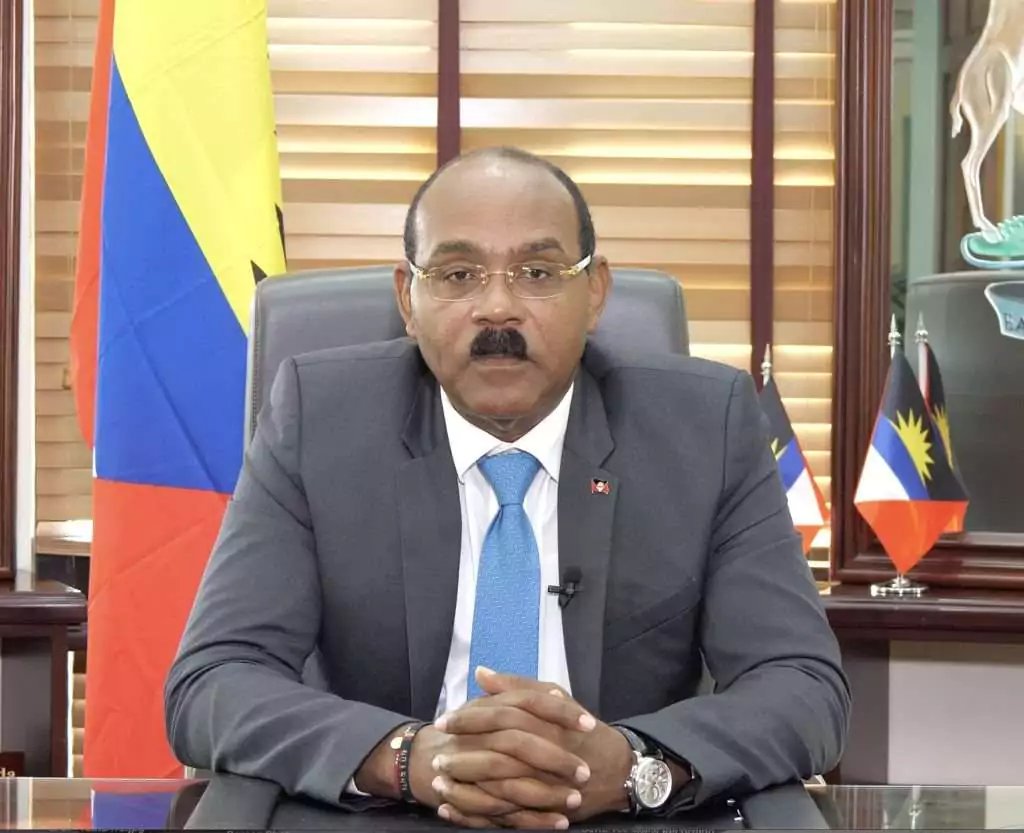
Prime Minister Browne has advised that the development did not come as a surprise. As he communicated to the nation on 20 June 2026, the Government had advance knowledge that such letters were forthcoming and had already begun regional consultations. The EU's request is not directed at Antigua and Barbuda alone — all OECS member states with active CBI programmes have received similar correspondence. Dominica, Grenada, St Kitts-Nevis, and St Lucia have each received comparable letters from the European Commission.
The Government's position is unambiguous. The CBI Programme is a critical pillar of the country's non-tax revenue base, and Prime Minister Browne has stated it will continue. The Government will not accept a unilateral phase-out it says would cause irreparable harm to the national economy and the welfare of Antiguan and Barbudan citizens.
Over the years, CBI revenues have funded hospitals, schools, infrastructure, and disaster recovery efforts — a necessary income stream for a small island developing state with limited fiscal space and acute vulnerability to climate change and external economic shocks.
The Government will continue to engage the European Commission in principled and constructive dialogue, consistent with the Samoa Agreement framework. It has welcomed the EU's expressed commitment to supporting sustainable development through the Global Gateway Investment Agenda and other mechanisms. However, the Government notes that none of these EU offers are quantified, binding, or explicitly framed as replacement revenues for the CBI income stream.
Consequently, Antigua and Barbuda will press the European Commission to ensure that any agreed path forward includes tangible EU assistance in generating equivalent replacement revenues to offset the economic impact of any transition. The Government has affirmed it will exercise its sovereign right to pursue economic development strategies in the best interests of its people, while continuing to respect the security concerns of other nations.
As a gesture of good faith toward the EU, the Government has committed to continuing to exclude from the CBI Programme any individuals subject to EU restrictive measures, reinforcing vetting procedures for all nationalities, and giving full attention to any additional safeguards required to meet EU security standards.
The public has been assured that the Government is pursuing all available diplomatic avenues — bilaterally and through the OECS and other channels — to protect the country's national interests. Further updates will be provided as discussions with the European Commission progress.