A newly completed Environmental Impact Assessment has cleared the way for a multi-million-dollar luxury villa at Pearns Point, concluding the development can proceed without causing significant long-term environmental or social harm — provided strict engineering safeguards are enforced. According to Antigua News Room, the report does flag serious coastal risks, including erosion, storm surge, flooding and challenging cliff-edge geology, but says these can be effectively managed.
The 538-page assessment, prepared by EcoUrban Planning Ltd. on behalf of developer Ariadine Ltd., finds that the proposed three-storey private residence on Lots 32 and 33 at Pearns Point is environmentally feasible, subject to full implementation of recommended mitigation measures, environmental monitoring and engineering controls throughout both construction and operation.
The project had already received approval in principle from the Development Control Authority. However, the Department of Environment required a full EIA given the site's sensitive coastal location and the inclusion of an on-site wastewater treatment system and a reverse osmosis desalination plant. The assessment also examined coastal setbacks, geological stability, drainage and long-term environmental management.
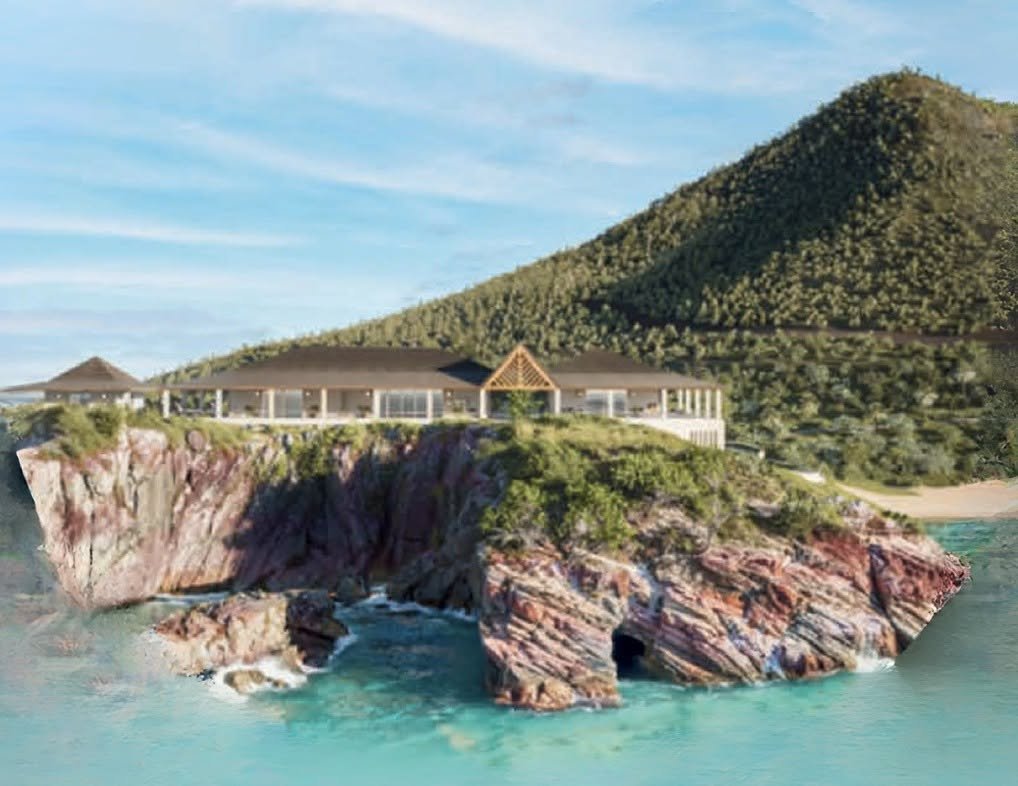
The villa will sit on approximately 6.69 acres atop a rocky headland overlooking the Caribbean Sea within the wider Pearns Point development. Future additions could include a spa, guest suite and pool house. Water supply will draw from groundwater supplemented by on-site desalination, while treated wastewater will be reused for irrigation where regulators permit.
The report identifies the headland's location as both its defining appeal and its greatest engineering challenge. Geological investigations confirmed that competent volcanic rock lies beneath shallow soils, making the site generally suitable for construction. However, investigators also documented localised weathering, fractured rock and naturally occurring cave systems along the cliffs. These features require careful excavation practices and adequate setbacks from cliff edges. Notably, the assessment found no major underground voids beneath the proposed villa footprint itself.
Coastal hazards received extensive attention throughout the report. Pearns Point experiences an energetic wave climate, and recent storms have already contributed to beach erosion and periodic flooding along the narrow tombolo linking the headland to the mainland. Computer modelling indicates that hurricane-driven storm surge and wave action could temporarily inundate this low-lying strip during extreme weather events, potentially cutting off access to the property — even though the villa itself would sit at a higher elevation.
Consultants concluded that these risks can be substantially reduced through a series of engineering measures. These include maintaining minimum cliff-edge setbacks of between eight and 10 metres, elevating habitable areas to at least three metres above mean sea level, constructing drainage infrastructure capable of handling 100-year rainfall events, and incorporating permeable surfaces, vegetated swales and natural drainage features. Annual inspections of cliffs, drainage systems and shoreline conditions are also recommended, with full hazard assessments to be repeated every five to 10 years to account for climate change and sea-level rise.
The EIA further found that surface runoff naturally converges toward the tombolo and access road, making stormwater management one of the project's most critical design considerations. Without adequate drainage, construction activity could worsen localised flooding, erosion and sediment movement into adjacent marine areas. The report calls for a comprehensive Drainage Master Plan, regrading of low-lying areas where necessary, and the installation of engineered drainage systems to safely handle heavy rainfall.
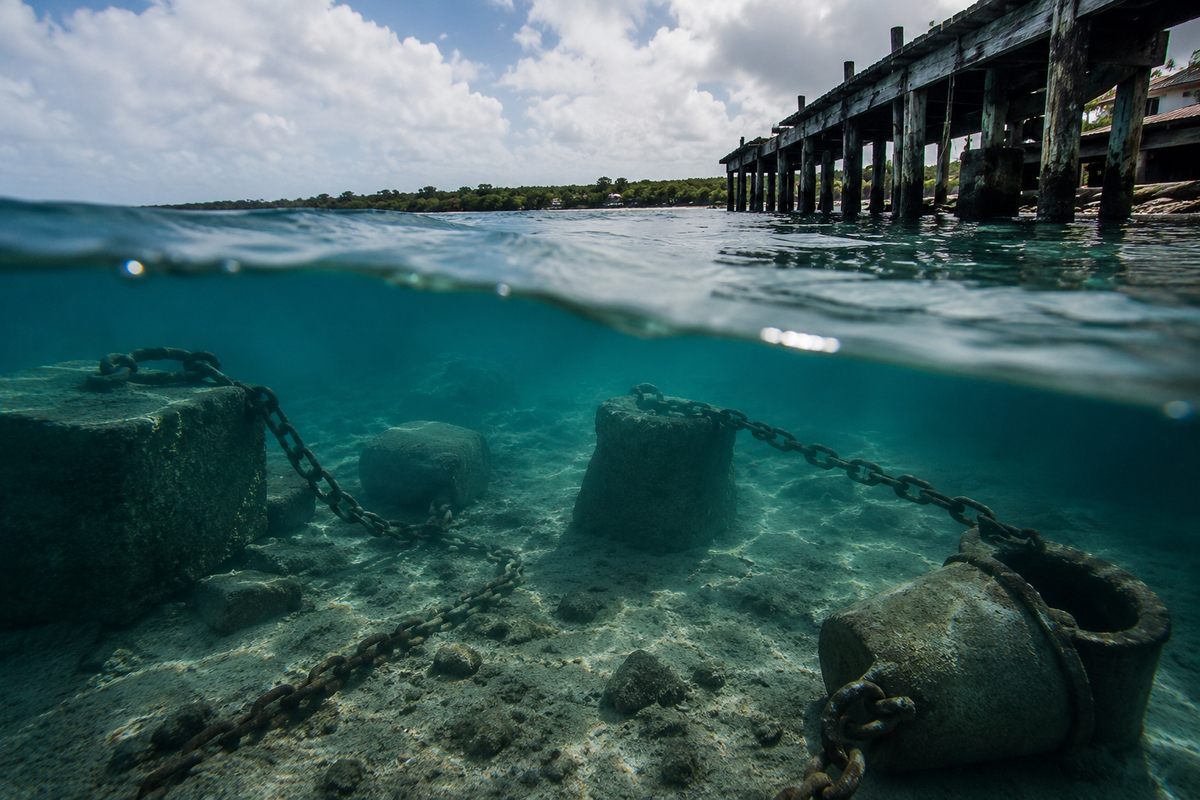
Marine surveys found generally healthy baseline conditions in nearshore waters. Seagrass beds dominated by turtle grass, manatee grass and Halophila stipulacea grow over sandy substrates in the area. Because the project involves no in-water construction and proposes to recycle treated wastewater, consultants determined that impacts on marine ecosystems should remain minimal — provided erosion controls, wastewater management and runoff protections are properly maintained.
On land, the development footprint showed relatively limited ecological sensitivity. Native vegetation is present on the site, including three isolated button mangroves, while wildlife observations consisted mainly of seabirds and invasive mongooses. The report recommends minimising vegetation clearance, installing erosion controls, securing construction waste and using turtle-friendly lighting.
Construction is expected to produce temporary impacts including dust, noise, increased traffic, sediment runoff and minor disturbances to neighbouring properties and coastal areas. The assessment characterises these as localised, short-term and manageable through standard construction practices such as dust suppression, phased clearing and routine environmental inspections.
Long-term operational impacts are expected to be comparatively limited, with the primary ongoing risks tied to maintenance of the wastewater treatment system, desalination plant and drainage infrastructure — all of which the report says can be managed through proper upkeep and regulatory compliance.
The assessment also addresses public beach access at Pearns Point. While affirming that beaches in Antigua and Barbuda remain legally public, the report acknowledges that existing informal access routes cross privately owned land. It notes that the Development Control Authority retains responsibility for formally establishing access routes within the development, and that any official pathway should balance public access rights with private property interests.
Overall, consultants concluded that the Ariadine Villa project is compatible with its surrounding environment and can proceed without significant long-term harm if the recommended safeguards are implemented. Key recommendations include maintaining coastal setbacks, protecting marine habitats, executing the Drainage Master Plan, controlling erosion during construction, retaining natural vegetation buffers, properly managing wastewater and desalination systems, avoiding coastal works that interfere with natural sediment movement, and incorporating climate-resilient design capable of withstanding increasingly severe storms.