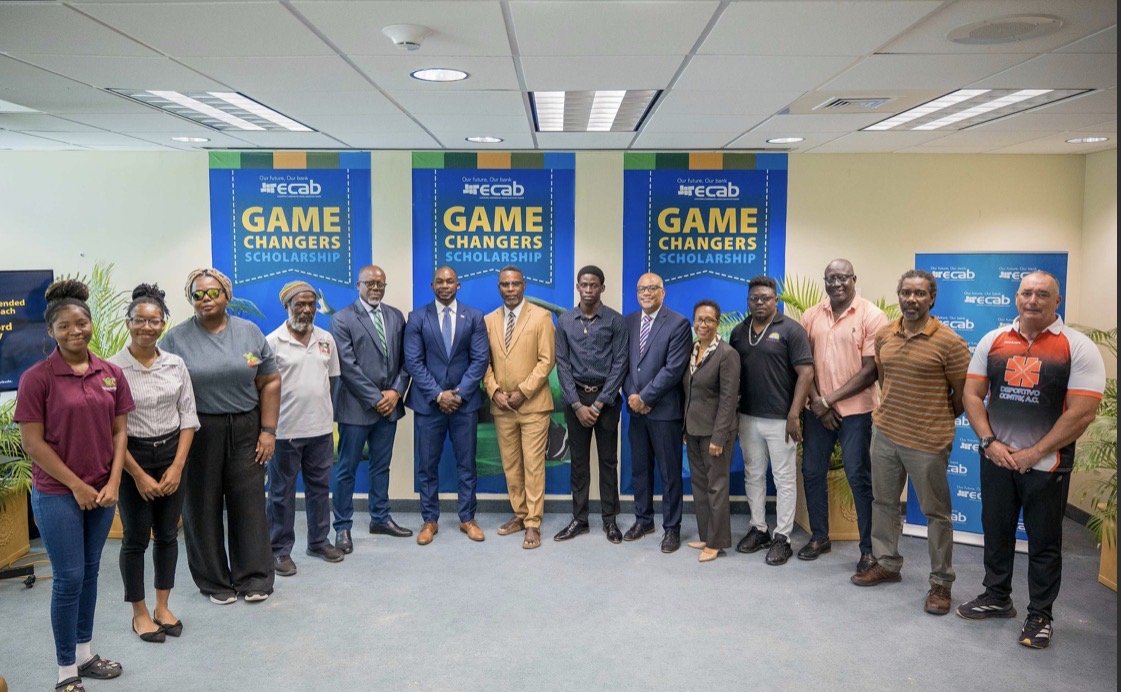
Antigua's iconic party stand atmosphere helped transform how cricket is experienced around the world, Cricket West Indies Chief Executive Officer Chris Dehring has said. According to Antigua News Room, Dehring made the remarks during a symposium jointly hosted by the Antigua and Barbuda Intellectual Property and Commerce Office (ABIPCO), Cricket West Indies and the University of the West Indies Five Islands Campus.
Dehring said the concept of blending music, entertainment and live cricket originated in Antigua before spreading across the Caribbean and eventually influencing international venues.
"I took one week of vacation a year when I was an investment banker in Jamaica to come to Antigua for cricket," Dehring recalled. "Why Antigua? Well, you had this incredible phenomenon called the double-decker stand… I went nowhere else for cricket."
He described the atmosphere at Antigua's grounds as something fans simply could not find elsewhere. "It was just such a joy to be part of that," he said. "That particular culture and that intellectual property, unfortunately, the rest of the world stole because it was started right here in Antigua — the whole idea of playing music in the stands and party stands."
Dehring openly acknowledged that he was among those who adapted the concept. "I totally confess. I copied it and took it to Jamaica to create the Mound," he said. "I then made sure when I went to the West Indies Cricket Board that our party stand was installed at every ground in the Caribbean."
The idea, however, did not go unchallenged. Dehring said the festive format faced resistance from certain cricket administrators and even the International Cricket Council, whose match officials considered the music and celebrations a distraction from play.
"We actually had battles with some of the boards because the rest of the world hadn't caught on to this thing yet," he said. "It was seen by the ICC and match officials as disrupting the game. But it was, in fact, adding to the game."
The Caribbean's approach to fan culture eventually drew international interest. Dehring recalled that representatives from England's Channel 4 television network travelled to Antigua to study the party stand atmosphere firsthand, with the aim of replicating it during cricket broadcasts in England.
"They sent down people to one of our party stands to take notes because they were going to try and do this in England," he said. When one visitor asked how he managed to get everyone to join in, Dehring's response was straightforward: "Lady, if you have to explain why, you'll never get it. We're just dancing. We're just having a good time. That's what we do."
Dehring argued that the vibrant fan culture became a defining element of the Cricket West Indies brand and significantly boosted the commercial appeal of Caribbean cricket. Television audiences, he said, were drawn not only to the sport itself but to the music, sunshine and energy that set Caribbean matches apart from those played elsewhere in the world.
"It wasn't just the cricket," he said. "It was when you came home in England and turned on your television and saw this wonderful sea of Caribbean sunshine, people dancing, swimming pools and entertainment. It was great programming."
Dehring delivered the remarks as part of his presentation titled "Building a Regional Brand: The Cricket West Indies Story," which examined how cricket's history, culture and intellectual property have contributed to building one of sport's most recognisable global brands.