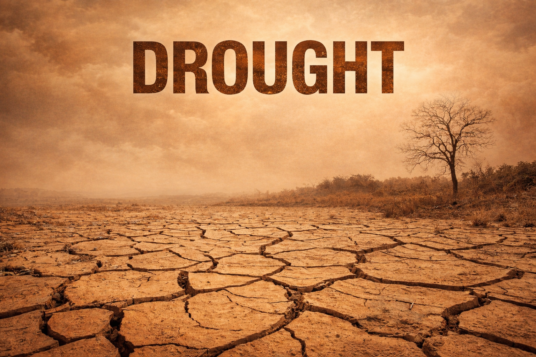
AccuWeather climate experts are warning that an exceptionally strong El Niño, expected to peak later this year and persist into 2027, could set the stage for a multi-year drought threatening crop yields and water supplies across the United States. According to Antigua News Room, there is a 70% chance the current event escalates into a so-called Super El Niño — a designation reserved for the most powerful occurrences on record.
AccuWeather long-range expert Paul Pastelok said the aftermath of such events has historically brought prolonged dry conditions to large swaths of the country. "After El Niño ends, the following two to three years can end up being significantly drier in parts of the Plains from Texas into the Dakotas, which are already experiencing extreme drought conditions," Pastelok said. "The stronger the upcoming El Niño conditions get, the longer it takes for weather patterns to return to their historical average."
While El Niño is widely associated with above-average rainfall across the southern United States during its peak, dryness and drought are common across the Northwest and other northern regions of the country.
Drought conditions across the Plains have deteriorated sharply over the past 12 months. As of June 16 of this year, several states are experiencing "Extreme Drought" conditions — compared to virtually no drought in those same regions a year ago, according to the Drought Monitor. Key Midwestern growing areas have recorded year-to-date precipitation running 40% or more below normal, placing the current growing season under serious threat.
AccuWeather Founder and Executive Chair Dr. Joel N. Myers described the scale of the current dryness in stark terms. "Here we are before El Niño is really getting going, and many areas of the country are already experiencing drought," Dr. Myers said. "In fact, when you average the rainfall across the country and give equal weight to all parts of the nation, you are talking about a level of dryness that occurs in less than 5% of the historical record. That is less than one in 20 years on average."
Dr. Myers added that the situation could worsen considerably. "There is real concern the drought conditions could worsen as the precipitation deficit grows, given the expected strength of El Niño."
Other states, including Utah, Idaho, Virginia, North Carolina, Florida, and Oregon, are also experiencing significant dryness. However, some states are recording normal precipitation levels, and parts of the South are currently extremely wet.
Historical precedent adds weight to the concern. El Niño events in 1965–66, 1982–83, and 1997–98 — each classified as Super El Niños — were followed by prolonged dry conditions across much of the Plains, in some cases lasting years after the events themselves ended. AccuWeather experts say the current El Niño, which began in early June, is expected to be among the strongest on record and to persist through early 2027.
Dr. Myers raised the possibility of a "mini-Dust Bowl" scenario if current trends continue. "If the long-term drought is as bad as it could be, and you are starting off already with severe drought, this raises the real possibility of a 'mini-Dust Bowl'," he said. "Soybeans will be stressed further in the months and years ahead, and yields on some of these crops will be reduced in parts of the country. If that happens, it will have a negative impact on food production, leading to price inflation. Furthermore, water supplies will be harmed, as well."
Dr. Myers drew comparisons to the Dust Bowl of the 1930s, explaining how drought conditions can become self-reinforcing. In his 2024 book, Invisible Iceberg: When Climate and Weather Shaped History, he describes how very dry conditions generate higher temperatures, which increase evaporation, which in turn intensifies drought — creating a compounding cycle. "This cycle of drought, heat, drought, heat, extreme dryness, record high temperatures, and so on matters," Dr. Myers said. "Despite global warming that is occurring, the record high temperatures for many states still stand from the 1930s, 90 years ago."
Dr. Myers also explained the atmospheric dimension of the problem. "When the soil is drier, there tends to be more dust and soil in the air. Heat then leads to increased drought. You have more soil particles in the atmosphere, more dust competing for nuclei for droplets, so you get more water droplets that are smaller and have trouble falling out of the clouds, so you get less rain. Less rain means drier and hotter soil which brings drought and drought brings heat and you have a cycle that is running away. That is the concern."
Despite the alarming comparisons, Dr. Myers was careful to distinguish the current situation from the historical disaster. "We are not predicting a Dust Bowl, which was disastrous during the 1930s, to occur now because there were poor farming practices back then and other things that we do better today. But we are taking the situation we are experiencing today very seriously."
Earlier this year, AccuWeather released a broader climate study examining long-term trends across the contiguous United States. Experts warned that if those identified trends continue, they are likely to carry major consequences for the U.S. economy, food and water supply, energy needs, and public health in the decades ahead.