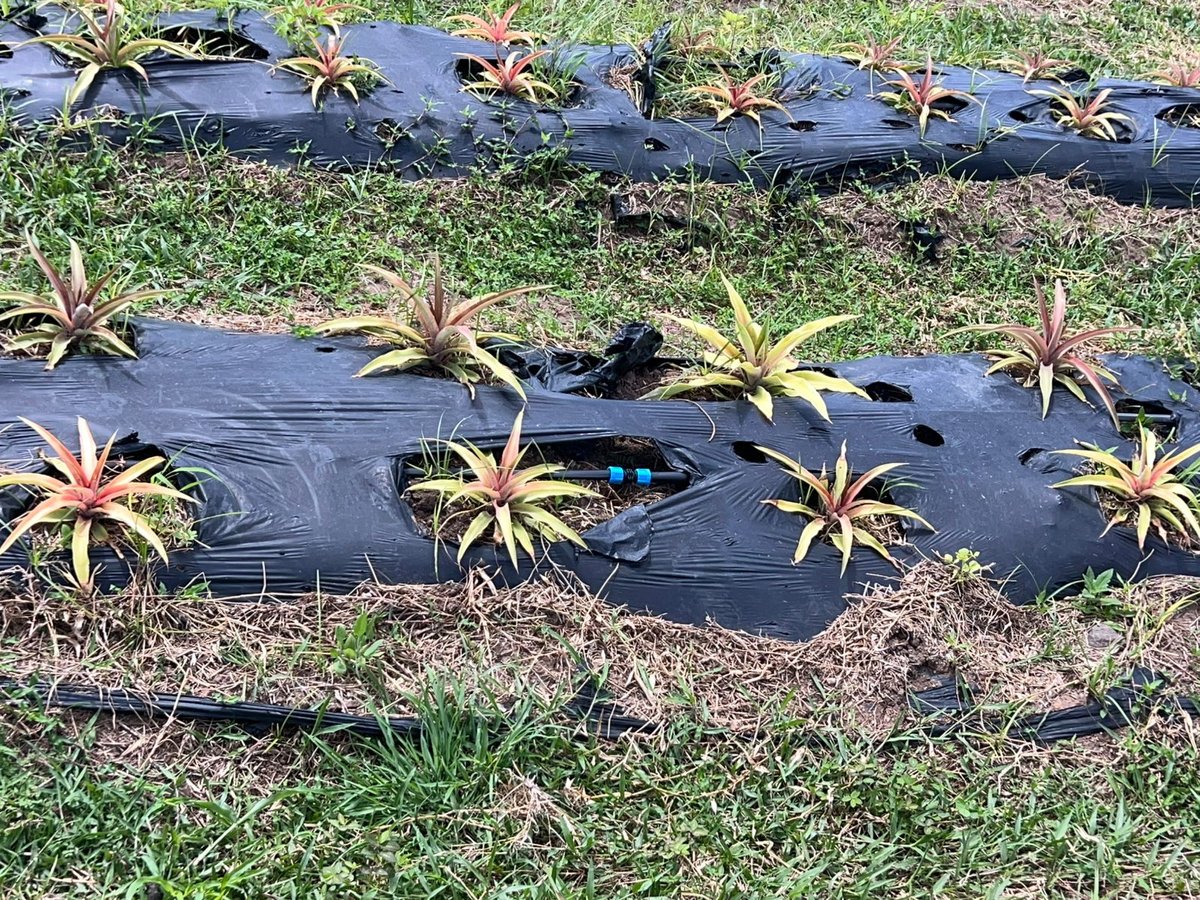
The government is moving to revive Antigua's celebrated Black Pineapple industry, with plans to propagate at least 200,000 plants as part of a long-term agricultural development programme.
The initiative was outlined at Thursday's post-Cabinet briefing. Officials announced that a second shipment of 15,000 tissue-cultured Antigua Black Pineapple plants is expected to arrive within days.
Director General of Communications Maurice Merchant said the incoming shipment will join a previous batch of 15,000 plants already established at the Cades Bay Agricultural Station.
"Another 15,000 tissue cultures will arrive in the coming days and they will be propagated at the Cades Bay Station," Merchant said. "The aim is to have at least 200,000 Antigua Black Pineapple plants propagated there at Cades Bay."
The expansion is part of a broader effort to restore and improve production of the fruit, widely regarded as one of Antigua and Barbuda's most distinctive agricultural products.
More than a year ago, approximately 50 samples of the Antigua Black Pineapple were sent to St. Vincent as part of a scientific process aimed at improving the crop's genetic stock. Researchers sought to address concerns raised by farmers that the fruit was no longer achieving its traditional size and productivity.
The tissue-culture process has helped preserve the defining characteristics of the Antigua Black Pineapple while producing healthier planting material for future cultivation. "The scientific process cleaned up the genetics so it remains Antigua Black Pineapple," Merchant said.
Propagation is being carried out at the Cades Bay facility, where young plants are multiplied before eventual distribution and wider cultivation across the island.
Merchant acknowledged that pineapples require a lengthy growing period, and increased production will take time to reach the market. Nevertheless, officials are optimistic about the programme's long-term impact. "It is anticipated that we should have regenerated growth of Antigua Black Pineapple very soon on the market," he said.
The project forms part of the Ministry of Agriculture's wider strategy to strengthen food production, preserve local agricultural heritage and expand opportunities within the sector.