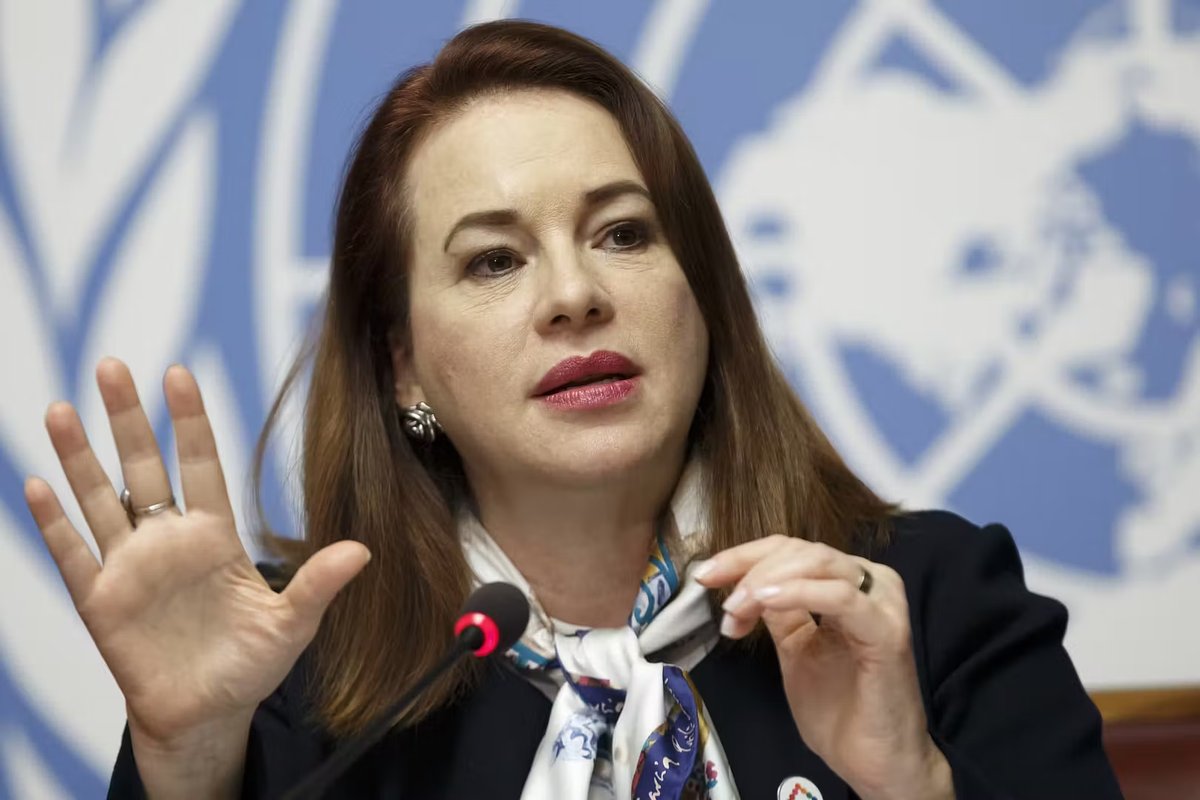
The Government of Antigua and Barbuda has formally nominated Her Excellency María Fernanda Espinosa Garcés — former President of the United Nations General Assembly and former Foreign Minister of Ecuador — as its candidate for Secretary-General of the United Nations. The candidacy was transmitted to the President of the General Assembly and the President of the Security Council in accordance with the joint letter of 25 November 2025 outlining the process for the selection and appointment of the next Secretary-General.
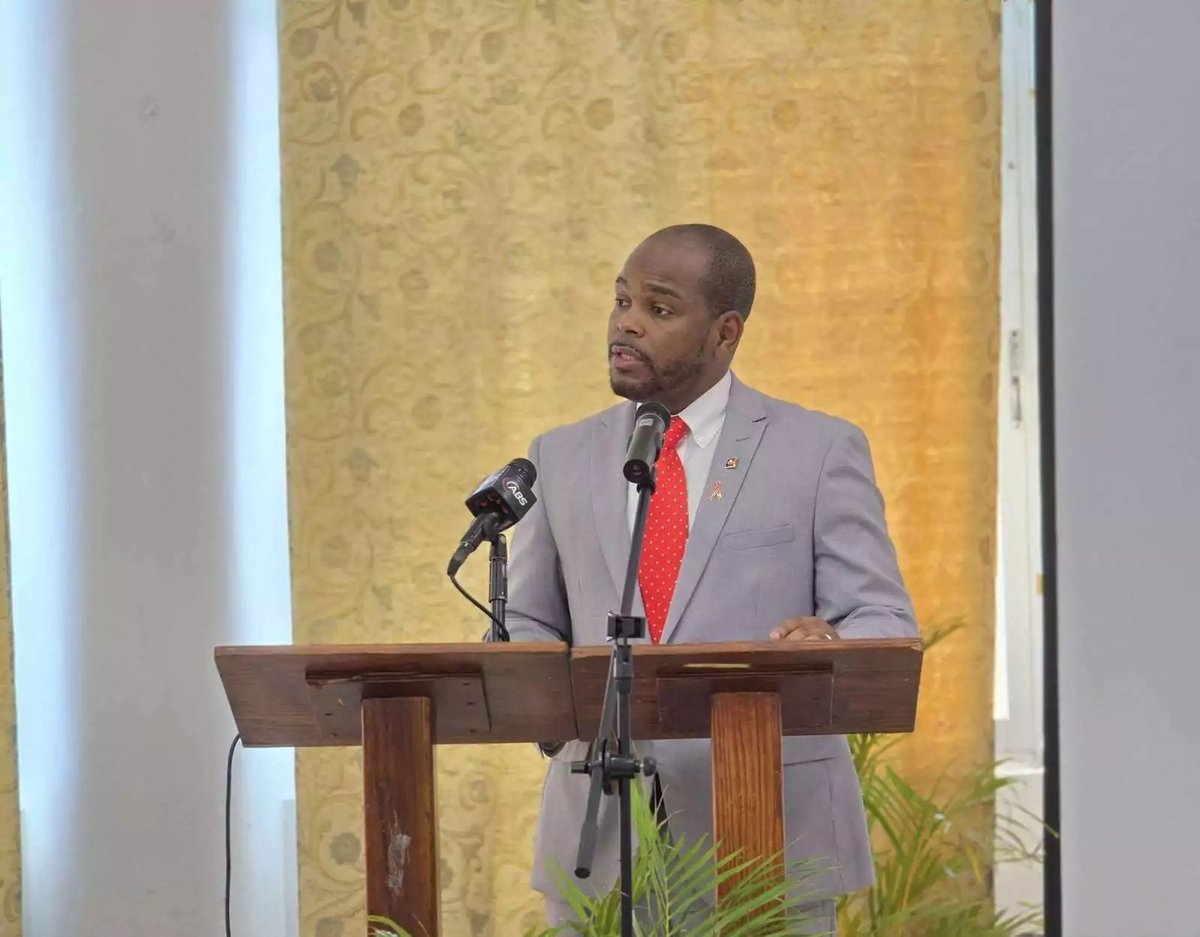
In his formal letter of nomination, Prime Minister Gaston Browne stated that the Government submitted the candidacy "with deep conviction to the purposes and principles of the Charter." He described H.E. Espinosa as possessing "the experience, judgment, independence, credibility and legitimacy" required to lead the Organisation with "balance, integrity, strategic vision and crucially, with impact." Browne also highlighted her ability to "engage constructively with all regional and political groups" and her track record of "innovation and delivery, including in transforming large bureaucracies."
H.E. Espinosa is putting herself forward at one of the most consequential moments in the United Nations' eighty-year history. The Organisation faces multiple crises simultaneously — more than one hundred armed conflicts, record levels of forced displacement, and the most severe liquidity crisis in its history. Her candidacy is framed as a call to action for a renewed United Nations, one that delivers with discipline and accountability on the promise of its Charter.
In a vision statement released to Member States, H.E. Espinosa argues that the Organisation faces fundamentally a crisis of credibility, not of principle. She proposes a transformation agenda built on five pillars: peace and prevention; sustainable development; digital and energy transformation; closing the delivery gap; and resourcing results.
"The world does not need a larger United Nations. It needs a more effective one," H.E. Espinosa said. "The UN must be judged not by the number of convenings it holds, but by how many lives it improves, and how effectively it prevents conflict and contributes to peace and stability."
Pillar One — Peace and Security: Under this pillar, H.E. Espinosa proposes placing peace and prevention at the centre of the Secretary-General's office. She would establish a Prevention and Early Action Hub reporting directly to her office, providing consolidated capacity for risk analysis, early warning, and rapid political engagement. She has called for prevention, peacemaking, peacekeeping and post-conflict peacebuilding to be staffed, funded and politically supported as a single continuum. She has also called for stronger UN responses to transnational organised crime — a major driver of instability that was not envisioned in 1945 and has had a profound negative impact on her region. Throughout, she emphasises close coordination with regional organisations, national leaders and diplomatic coalitions, while the UN remains the final custodian of universal legitimacy and international law.
Pillar Two — The Development Imperative: On development, H.E. Espinosa champions a "local first" approach designed to strengthen national and local capacities to lead implementation of the Sustainable Development Goals through the final stretch to 2030. This would shift the UN system from direct implementation toward strategic guidance, coordination, resources and capacity-building. She has called for stronger domestic resource mobilisation, expanded South-South cooperation, and renewed investment alongside a more coherent international response to debt pressures facing highly indebted and climate-vulnerable countries. She has committed to addressing the special needs of Africa, Least Developed Countries, Landlocked Developing Countries, and Small Island Developing States, working with regional bodies including the African Union, CARICOM, ASEAN, CELAC, the League of Arab States, and the European Union.
Pillar Three — Energy and Digital Transformation: H.E. Espinosa would deploy the UN's convening power and political neutrality to bring governments, scientists, civil society and private-sector actors together on the technologies and energy systems reshaping economies and security. She would propose a Global Energy Security coordination mechanism to help Member States manage the consequences of energy and supply-chain shocks — particularly for the most vulnerable, where energy insecurity rapidly translates into food insecurity, inflation and social instability. She would also launch a sustained Secretary-General's Dialogue on Emerging Technologies, building on the Global Digital Compact adopted under the Pact for the Future. Her goal is to ensure that conversations shaping these transitions are genuinely global, inclusive and consequential, and that the digital divide is closed alongside the development gap.
Pillar Four — Closing the Delivery Gap: H.E. Espinosa would treat the Pact for the Future as the reference for a system-wide delivery mandate and support Member States in making mandate review a permanent institutional discipline rather than a one-off exercise driven by financial crisis. Drawing on the General Assembly's landmark resolution of 23 March 2026 on mandate creation, implementation and review, and on her experience chairing the Open-ended Working Group on the Revitalization of the General Assembly, she would pursue predictable relevance reviews, sunset clauses and stronger prioritisation across the system. She has called for the UN80 Initiative to be understood as "modernisation for results, not austerity disguised as reform."
Pillar Five — Resourcing Results: H.E. Espinosa proposes a differentiated, mandate-aligned approach to financing the United Nations, recognising four distinct streams: the regular budget as the institutional backbone of the Secretariat; peacekeeping financing as integral to the UN's peace and security credibility; voluntary and often earmarked operational resources sustaining development, human rights and field activity; and humanitarian continuity, which she has stated is "not discretionary, to be turned on and off with callous disregard for immediate human consequences." She also signals that more costly peacekeeping operations should be subject to continuous evaluation and corrective measures aimed at consolidation, drawdown and eventual withdrawal where appropriate. Underpinning all five pillars are three interlinked institutional reforms: a stronger accountability architecture for results; better stewardship; and rebuilt trust between the Organisation and its Member States.