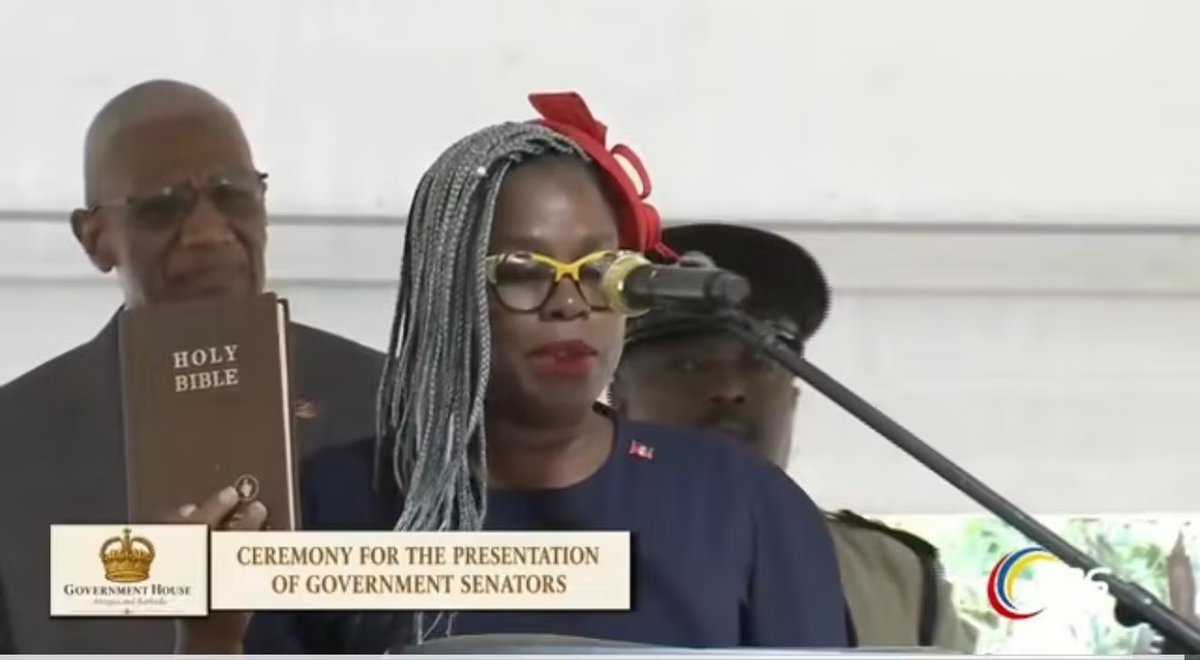
Senator Alincia Williams-Grant says strengthening public understanding of Parliament and improving the legislature's institutional autonomy will be among her top priorities as she prepares to return as President of the Senate for a fourth consecutive term.
According to Antigua News Room, Williams-Grant spoke following Friday's swearing-in ceremony at Government House, describing her reappointment as both emotional and humbling. "It's emotional and it's an honor," she said. "It is a daily task, public service… and you come to the office with humility and gratitude."
Williams-Grant first assumed the role after the Antigua and Barbuda Labour Party took office in 2014 and acknowledged the weight of returning once again. "It's been a tremendous task these past — this is my fourth term actually — in the position and so I'm looking forward to the challenges that will come with this dispensation," she said.
On the question of female representation, Williams-Grant welcomed the appointment of four women to the Senate on Friday but expressed hope the numbers had been higher. "If you check the stats, it's kind of a step back because we've had better numbers in the Senate in particular when we first came to office in 2014," she said. She nonetheless praised what she described as the Gaston Browne administration's continued commitment to women's empowerment at every level.
Williams-Grant also paid tribute to former senator Mary-Claire Hurst, citing her as a mentor and inspiration for many women in public life. "Her motto has always been mentoring and empowering others — the youth, the women," she said. "In this celebration, we must honor that legacy because of her, so many of us are."
The Senate president-designate said she has been encouraged by growing interest among young women in political and civic life — a sharp contrast, she noted, to the atmosphere when the administration first came to power. "When we first came to office in 2014, there was a general apathy, especially from the young people. They did not want anything to do with politics," she said. She added that young women are now actively approaching her to ask how they can become senators.
Looking ahead to the Senate's operation, Williams-Grant stressed the importance of the Upper House's role as a legislative review body. "We are the most civilized chamber," she said. "We are very particular about the work that we do because… we are the review body. We're the last before it hits the eyes or the public feels the effect of the legislation."
She revealed she has already begun reaching out to regional and international partners to arrange training for incoming first-time senators, saying, "We want to make sure that they understand the role."
Williams-Grant argued that many Antiguans and Barbudans still conflate the legislature with the executive branch. "I think too often in this country, persons do not appreciate the legislative function," she said. "There's no deference given to the legislature separate from the executive. It's confusing. People don't understand." She said raising civic awareness around how Parliament functions independently will be a key goal this term.
She also called for greater structural autonomy for the legislative branch, comparable to that enjoyed by the judiciary and the executive. "We as a legislature need some autonomy," she said. Williams-Grant disclosed that she had previously discussed potential reforms with the late parliamentarian Sir Gerald Watt and signalled that changes are on the horizon. "You will be seeing some changes… more in terms of tightening up how we function as a legislative arm of the government and constitutionally," she said.
Closing on an optimistic note, Williams-Grant credited youth programmes and civic engagement efforts for making parliamentary life more attractive to a new generation. "Politics, political life, parliament is not just for the ordinary boring person," she said.