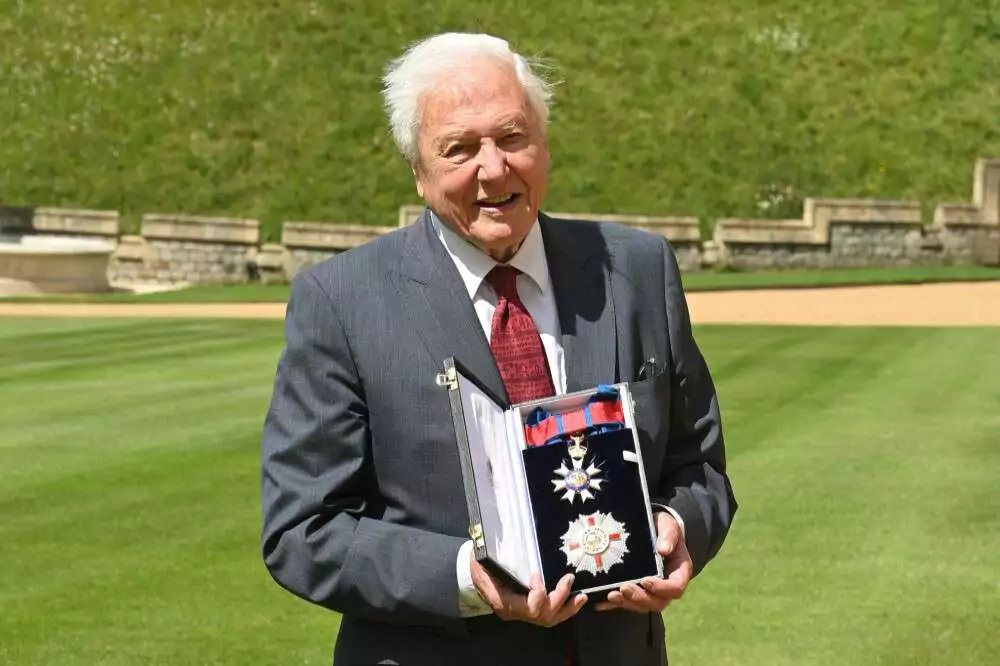
Sir David Attenborough, widely regarded as one of the most influential figures in natural history broadcasting, will turn 100 years old on 8 May 2026. According to Antigua.news, the milestone is being marked with a wave of national celebrations across the United Kingdom in honour of a man whose distinctive voice and storytelling have reached billions of people worldwide.
Fans gathered in Trafalgar Square in central London on 7 May, many dressed as animals or in Attenborough-inspired outfits, to sing Happy Birthday to the television icon. The centrepiece of the national festivities on his birthday itself will be a 90-minute live event at the Royal Albert Hall, where the BBC Concert Orchestra will perform iconic scores from his most celebrated wildlife sequences — including the racer snakes versus iguanas chase from Planet Earth II and the orca wave-hunting scenes from Frozen Planet II.
Attenborough's career in broadcasting spans more than seven decades. It began in the 1950s with Zoo Quest, a pioneering series that brought global wildlife into British homes for the first time. He is perhaps best known, however, for his sweeping "Life Collection" — nine monumental documentary projects beginning with Life on Earth, followed by such landmark productions as Planet Earth, The Blue Planet, and Frozen Planet. Those programmes transformed wildlife filmmaking through their groundbreaking cinematography.
To mark his centenary, Attenborough has had an entirely new genus named in his honour. A tiny parasitic ichneumon wasp, measuring just 3.5mm in length, will now be known as Attenboroughnculus tau — joining lizards, bats, frogs, weevils, flatworms, snails, and spiders already named after him.
In the later decades of his career, Attenborough has used his platform to sound the alarm over biodiversity loss, climate change, and the fragility of Earth's ecosystems. His achievements have been recognised with BAFTA awards spanning black-and-white, colour, HD, 3D, and 4K formats — a reflection of his remarkable longevity and adaptability across generations of broadcasting. He has also received dozens of honorary degrees, international prizes, and global accolades, and is widely regarded as a national treasure.