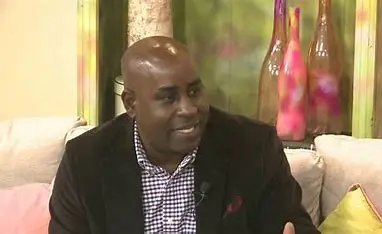
By Garfield Joseph, MBA
Antigua and Barbuda's recent general election has prompted a broader conversation about what truly determines political outcomes — and according to Antigua News Room, one local strategist argues the answer lies far deeper than election-day campaigning.
Garfield Joseph, Executive Director of a public sector organisation in Antigua and Barbuda and a former Adjunct Lecturer at the University of the West Indies Five Islands Campus, writes that most elections are decided long before ballots are cast. The observation, he says, mirrors patterns visible across business, sport, and organisational life throughout the Caribbean.
Joseph drew his argument from a Sunday broadcast of The Big Issues, in which commentators and callers reflected on the recent general election, discussing momentum, messaging, leadership, voter mood, and whether late campaign events truly shaped the result. The discussion, he noted, closely echoed conversations held in boardrooms and classrooms over many years.
"Outcomes are rarely accidental," Joseph writes. "They are usually the product of strategy, applied over time, and made real through leadership."
To illustrate the point, Joseph turns to a familiar local example — the supermarket. Every supermarket in Antigua and Barbuda, he notes, operates under broadly similar conditions: heavy import dependence, rising costs, thin margins, and a small market where reputation travels quickly. Customers value trust, familiarity, and reliability, often as much as price. A business owner who ignores those realities will fail. Success, he argues, requires accepting reality first and then making deliberate strategic choices.
The same logic, Joseph contends, applies directly to electoral politics. He identifies three primary ways any organisation — business or political — can compete: by offering efficiency and stability, by standing for something meaningfully different, or by focusing on serving a specific group better than anyone else. Attempting to occupy all three positions simultaneously, he warns, produces confusion. And voters, like customers, are quick to sense it.
Joseph is also direct about the limits of campaign activity. Rallies, slogans, social media campaigns, and advertising all serve a purpose, but they support a strategy — they do not replace one. "Many Caribbean elections have been lost not because people failed to work hard, but because there was motion without direction — noise without strategic clarity," he writes.
Leadership, in Joseph's framework, is the bridge between strategy and reality. Effective leaders tell the truth about their environment, make difficult choices, accept trade-offs, and maintain discipline under pressure. When leadership wavers, strategy unravels. He points to patterns across Jamaica, Barbados, Trinidad, and St. Lucia as evidence that momentum without strategy fades, while clear positioning backed by disciplined leadership tends to strengthen over time.
Returning to Antigua and Barbuda specifically, Joseph argues the recent election was shaped not by last-minute speeches or rapid mobilisation, but by longer-term forces: perceptions built over years, trust accumulated or eroded, and the presence or absence of strategic clarity at the leadership level.
"In small societies like ours, memory is long," he writes. "Trust accumulates — or erodes — over years, not weeks."
His conclusion is deliberately non-partisan. Whether leading a supermarket, a classroom, a business, or a political movement, he argues the principle holds: strategy determines direction, and leadership determines whether that strategy lives or dies.
"Elections, like businesses, are rarely won at the last moment. They are usually won — or lost — by decisions made long before anyone notices."
Garfield Joseph is the Executive Director of a public sector organisation in Antigua and Barbuda, where he oversees strategic execution, financial oversight, and stakeholder engagement. He has also served as an Adjunct Lecturer at the University of the West Indies Five Islands Campus, teaching capstone courses in Business Strategy and Policy and Business, Government and Society. He writes regularly on investment, entrepreneurship, and long-term decision-making.