The Organization of American States (OAS) has called for sweeping reforms to Antigua and Barbuda's electoral system, citing gaps in voter registration, campaign finance transparency, and gender representation in the wake of the April 30 general elections.
According to Antigua News Room, the OAS Electoral Observation Mission issued the recommendations in its post-election assessment, acknowledging that the polls were conducted credibly and were well-managed overall, while identifying several areas requiring improvement.
On voter registration and constituency boundaries, the Mission flagged the absence of formal mechanisms to remove deceased individuals or long-term emigrants from the electoral roll. It recommended establishing data-sharing arrangements between institutions and introducing a unique national identifier to improve registry accuracy.
The Mission also raised concerns about significant disparities in constituency sizes. Registered voter counts ranged from 1,263 in St. Philip South to 5,997 in St. George, raising questions about unequal vote weight. The OAS attributed delays in boundary adjustments to outdated census data, noting the last completed census was conducted in 2011.
On technology and results reporting, the Mission praised the real-time online publication of election results but noted that the broader tabulation process remains largely manual. It recommended developing a central computerised results system and publishing scanned Statements of Polls to strengthen transparency and public verification.
The report also raised concerns about the narrow scope of campaign finance regulations, which currently apply only during the formal election period — from the issuance of the writ to its return, a window typically spanning less than one month. The Mission warned that this limited timeframe excludes much of the political cycle, allowing significant fundraising and spending to occur beyond reporting requirements. It further noted that financial disclosures focus primarily on contributions, with little information on expenditures. The OAS called for stronger laws, including spending limits, broader reporting obligations, and enhanced oversight by the Antigua and Barbuda Electoral Commission (ABEC).
Regarding the legal framework, the Mission described the Representation of the People Act (ROPA), first enacted in 1975, as fragmented due to successive amendments without full consolidation. It called for a comprehensive revision to improve the clarity and accessibility of electoral laws. The OAS also expressed concern over the seven-day deadline for filing election petitions, suggesting it may be insufficient, and noted the absence of defined timelines for resolving disputes — a gap that can lead to prolonged uncertainty.
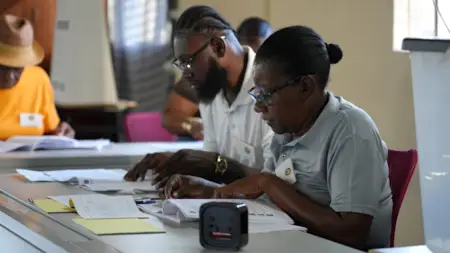
Despite women comprising 54.31% of registered voters and playing a prominent role as election workers, their representation among candidates declined. Only five of 37 candidates — 13.51% — were women, down from 20.75% in 2023. Just two women were elected to Parliament, representing 11.7% of seats. The Mission cited structural barriers including limited access to financing, male-dominated party structures, and societal biases, and called for targeted measures such as training programmes, mentorship initiatives, and possible affirmative action policies.
The Mission concluded that while Antigua and Barbuda's elections were credible, meaningful reforms are necessary to modernise the system, enhance fairness, and strengthen public confidence. It urged authorities, political parties, and civil society to collaborate on implementing changes ahead of future electoral cycles.