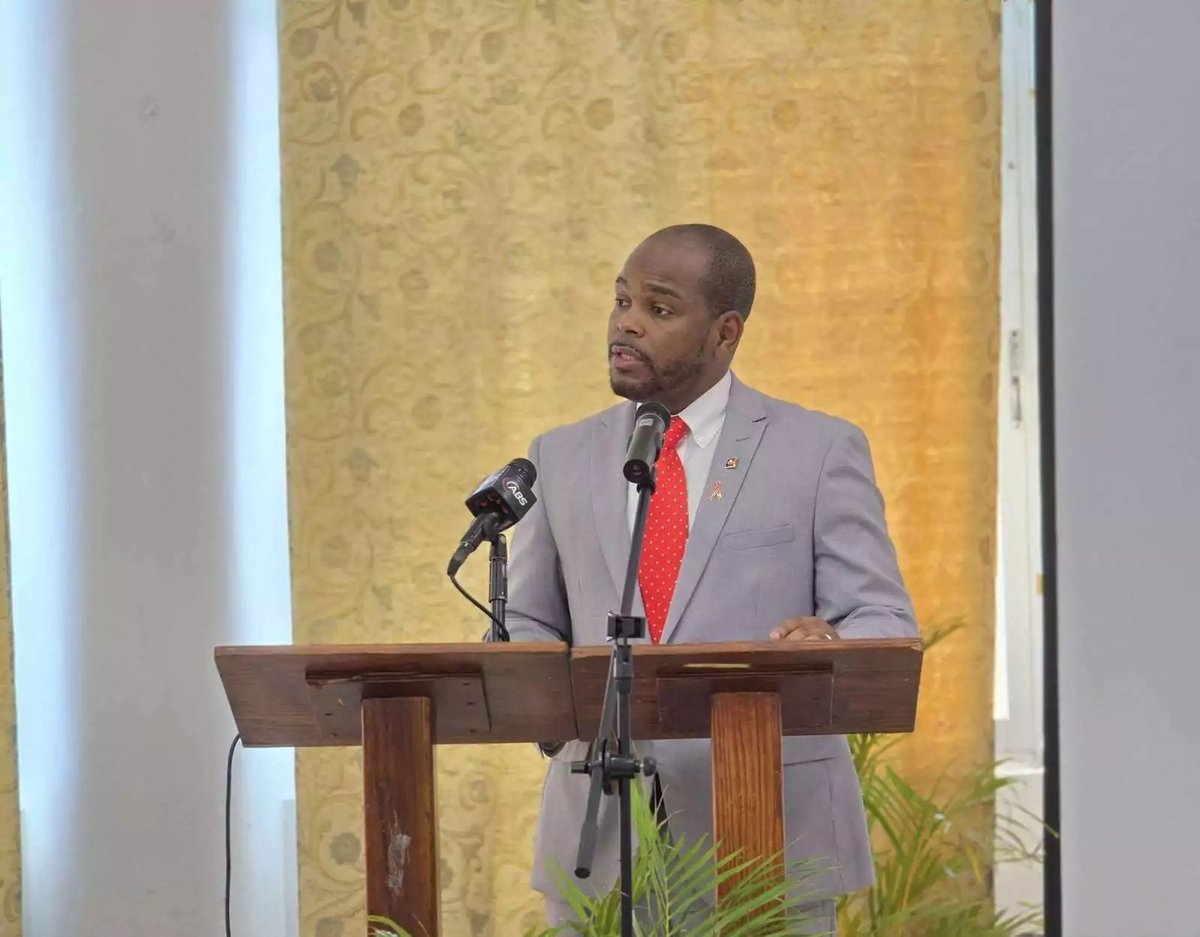
United Progressive Party (UPP) Chair Gisele Isaac has pushed back against a sharp critique of her party's general election campaign, rejecting claims that internal dysfunction was responsible for the party's defeat at the April 30 polls.
According to Antigua News Room, political analyst Audley Phillip argued that the UPP's poor showing was "mainly due to internal disarray and a series of high-profile defections," pointing to at least five members who crossed over to the ruling Antigua and Barbuda Labour Party (ABLP) ahead of the election.
Phillip, a political, social and current affairs commentator, said the party now faces a broader crisis of confidence, warning that "the current electorate appears to have lost confidence in the party's broader slate." He suggested the UPP may need to "transition to extra-parliamentary leadership or conduct a significant internal overhaul" to remain a relevant political force.
He also cited the departure or public silence of several prominent former members — including Bertrand Joseph, Chandlah Codrington, Errol Cort, Justin Simon, Namba Adams and Wilmoth Daniel — as evidence of deeper structural problems. Phillip further called for many of the party's recent candidates to "make way for fresh blood" as part of a rebuilding effort.
Isaac, however, disputed the characterisation of the campaign as a failure. "Further, why do you describe the UPP's performance as 'poor'?" she asked, insisting the party conducted a credible and responsible campaign in the lead-up to the election.
"In the four weeks to election, the UPP did everything a responsible party should do, including put out its plans and programs through public meetings and door-to-door engagement," she said.
Isaac suggested that voter behaviour may have been shaped by factors outside the realm of policy and outreach. "The people showed a preference for what we didn't do: distribute plywood and galvanize, electronic items, 'scholarships' and cash," she said, framing the result as a matter of voter choice. "People made choices."
She also offered an analogy to separate the quality of the campaign from its outcome. "A chef can prepare a meal, set the table and serve it. Because an invited guest does not show up, it doesn't mean the chef or the meal was bad," Isaac said.
The exchange reflects a growing debate within and around the UPP following one of its most decisive electoral defeats. The ABLP secured 15 of the 17 seats in Parliament, leaving the opposition holding a single seat.
Phillip's analysis points to structural and organisational failures, while Isaac's response maintains that the campaign itself was sound and the outcome driven by voter priorities. The differing perspectives underscore the difficult questions the UPP must now confront as it charts a path forward.