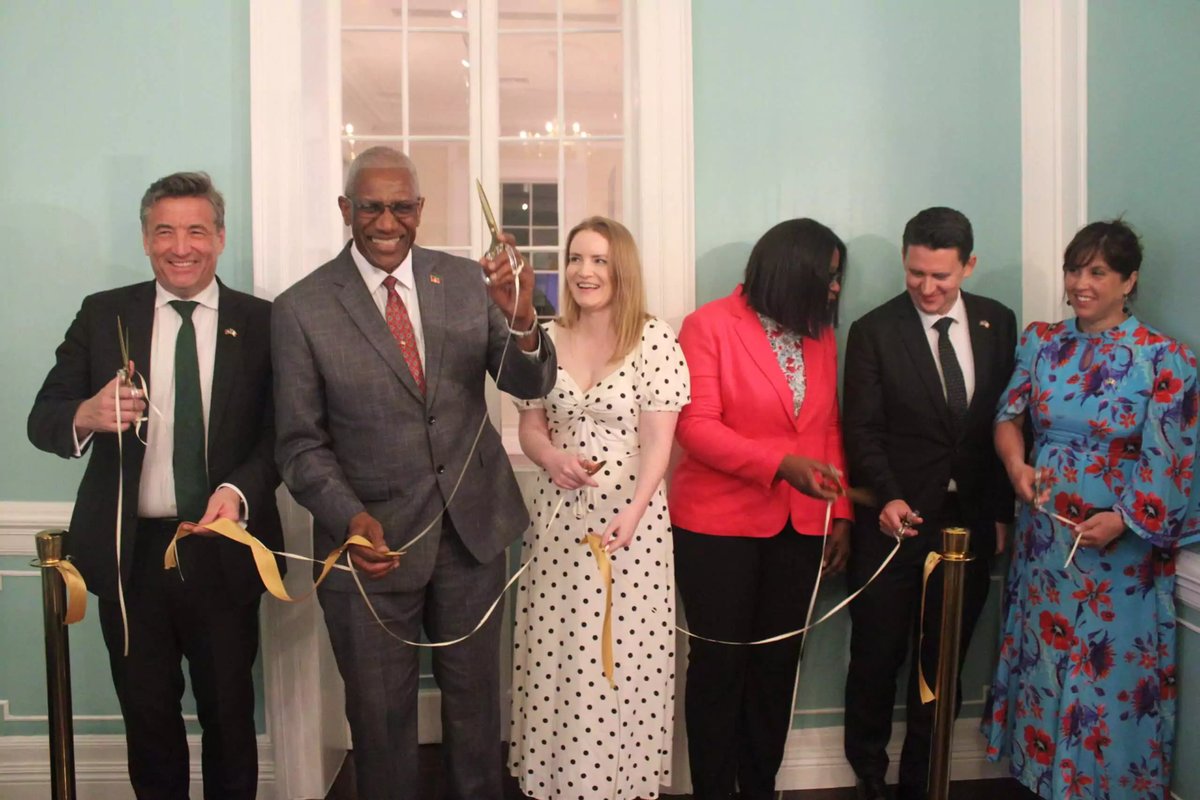
The newly restored Government House became the setting for a landmark cultural moment on Monday evening, as the "Entangled Islands: Ireland and the Caribbean" exhibition officially opened before an audience of diplomats, officials, and cultural figures. According to Antigua.news, the event marked the first exhibition staged at the historic venue since its renovation.
The opening ceremony featured a striking musical fusion, as Irish musicians Jim Murray and Dermot Byrne joined Antiguan steel pan artist Khan Cordice and Irish dancer Kait Rock in a performance that blended Irish polka with Caribbean pan — a fitting prelude to an exhibition built around the theme of shared heritage.
Governor General Sir Rodney Williams, who officially opened the exhibition, described the relationship between Ireland and the Caribbean as one spanning more than 400 years, rooted in the 17th-century slave trade and evolving into cultural and institutional ties that continue to shape Antigua and Barbuda today.
"This exhibition invites us to reflect on those connections not only to understand our past, but to better appreciate the richness of our present," Sir Rodney said.
He credited High Commissioner for Antigua and Barbuda to the United Kingdom, Karen-Mae Hill, as the driving force behind bringing the exhibition to the country, following a 2025 visit by Sir Rodney and Lady Sandra Williams to the Republic of Ireland.
Irish Ambassador John Concannon, who attended the opening with his wife Mary, traced the origins of the exhibition to a conversation held in Galway during that visit. He noted that the opening at Government House carried personal significance, recalling the warmth with which he and his wife were received when presenting credentials at the same venue the previous year.
The exhibition was curated by Dr. Catherine Healy, historian in residence at EPIC, the Irish Emigration Museum in Dublin, who delivered the evening's historical address. Drawing on the 1678 census for Antigua, Dr. Healy noted that Irish people comprised more than a quarter of the white population at the time, and that the census itself was commissioned by Irishman William Stapleton — who later governed the Leeward Islands and died holding large estates across the region.
"Colonial authorities here as in Ireland saw Irish Catholics as very much an underclass — socially inferior rogues, they were called vagabonds and rebels — and yet other Irish people climbed into positions of power and privilege," Dr. Healy said.
She also highlighted Irish abolitionists, including members of the United Irish movement in Belfast who boycotted plantation-produced sugar, and noted that St. Lucian Nobel laureate Derek Walcott, educated by Irish Presentation Brothers, found in Irish literature a model for writing defiantly from within a colonised tradition.
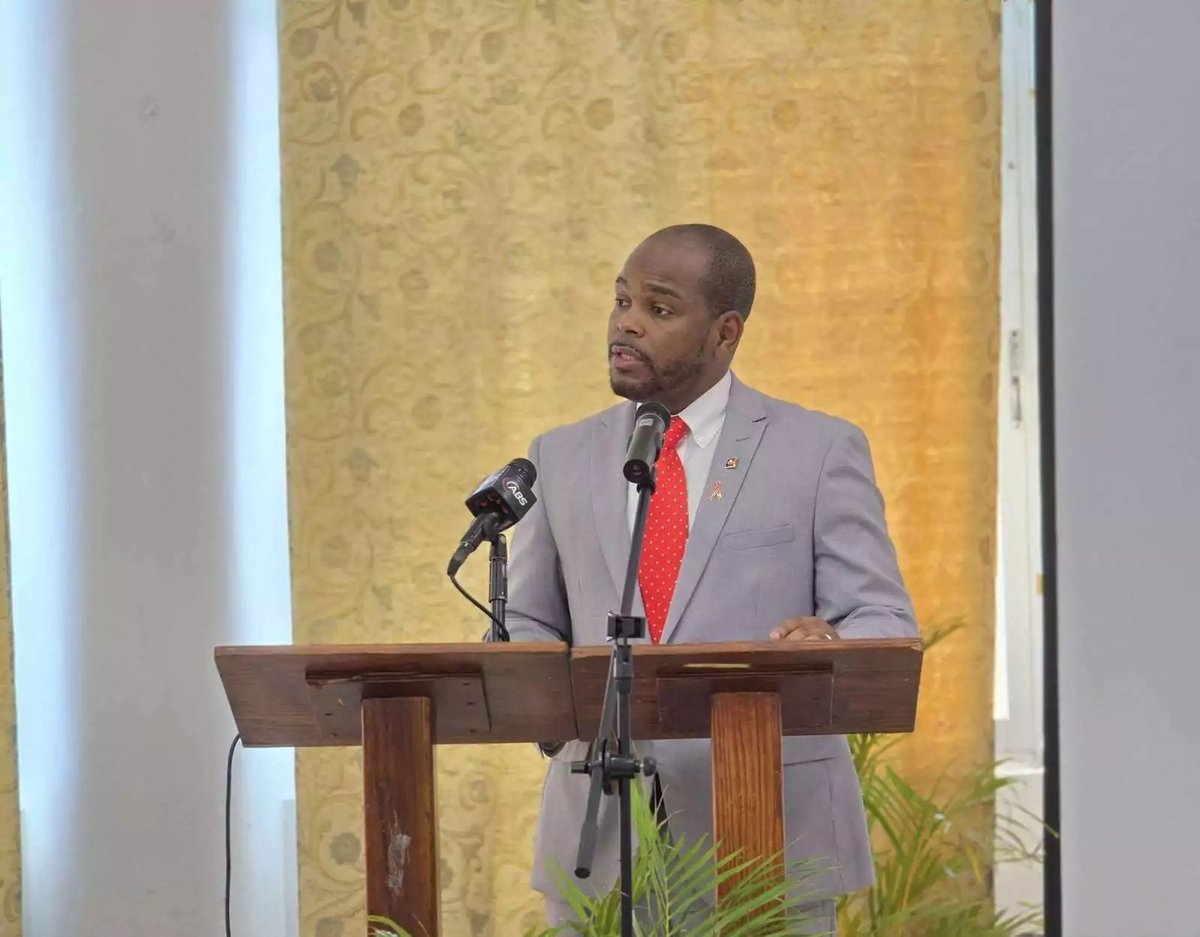
Minister of Foreign Affairs E.P. Chet Greene pointed to the many Irish surnames still carried by Antiguans and Barbudans as living evidence of the historical connection between the two nations. "Those names speak to the connections, historical ties between our two countries," Greene said.
Greene also used the occasion to raise diplomatic priorities with the Irish delegation. With Ireland set to assume the presidency of the European Union in approximately two months, he called on the country to advocate for small island developing states on issues including access to finance and citizenship by investment programmes. He also pressed for progress on a direct air service between Dublin and St. John's.
The exhibition previously showed in Barbados and is expected to travel to The Bahamas later in the year.