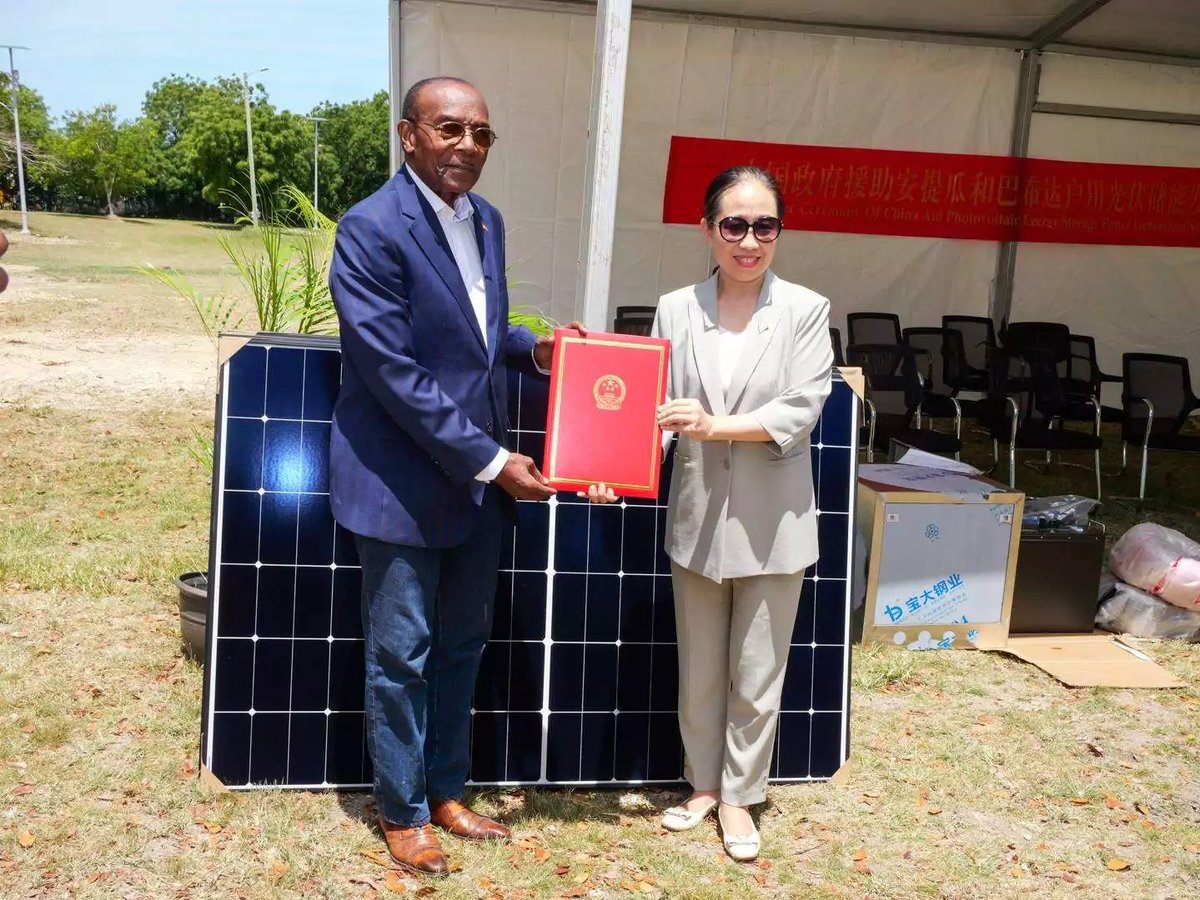
The Government of Antigua and Barbuda has received a shipment of solar energy kits from the People's Republic of China, targeting vulnerable households that struggle with reliable access to electricity. The handover ceremony, hosted by the Department of Environment, marked a concrete step forward in the nation's clean energy and climate resilience agenda.
Sir Molwyn Joseph, speaking at the event, framed the initiative as more than a charitable gesture. He described it as a strategic investment in both sustainability and social protection, emphasising the particular importance of renewable energy solutions for families facing energy insecurity.
"These solar kits will directly improve the lives of those who need it most, while helping us move toward a cleaner, more resilient future," he said.
The programme extends beyond the donation itself. A training component will equip local residents with the skills to install and maintain the systems — an element officials say is critical to the initiative's long-term success.
Wang Baolong, representing implementing agency Hengtianyuan Lighting Group, reaffirmed the company's commitment to delivering dependable and sustainable energy solutions as part of the broader Climate Change Assistance Project. Chinese Ambassador Jiang Wei highlighted the partnership's significance, noting that the donation reflects China's continued support for Antigua and Barbuda's climate adaptation and development goals.
The ceremony concluded with Ambassador Jiang and Minister Joseph formally signing the handover certificate, officially transferring the solar kits to the Government.
Once distributed, the kits are expected to deliver clean, consistent energy to households previously underserved by the electricity grid — offering immediate relief alongside the longer-term benefits of reduced energy costs and lower carbon emissions. Officials say the initiative reinforces the country's commitment to sustainable solutions that directly serve communities while strengthening international cooperation on climate change.