By A Concerned Citizen, Antigua and Barbuda to the Bone
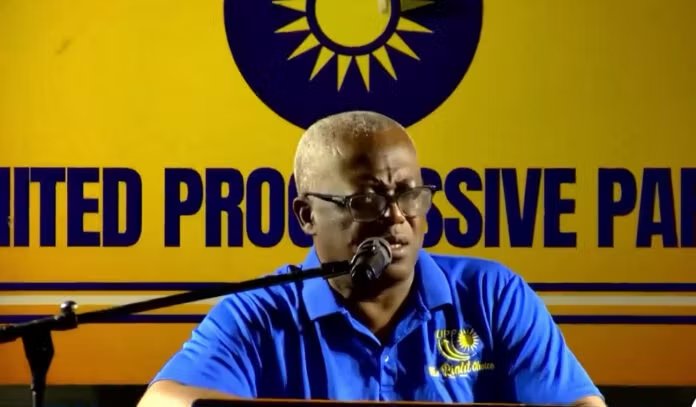
A statement made at a United Progressive Party public meeting has drawn sharp public criticism, according to Antigua News Room. The remarks, attributed to UPP candidate and sitting parliamentary representative the Honourable Sheffield Bowen, have prompted one concerned citizen to issue a strongly worded public letter condemning what they describe as an open invitation for foreign interference in Antigua and Barbuda's democratic process.
As reported by Antigua News Room, Mr. Bowen allegedly told those gathered at the meeting that the United States and European powers are looking for Antiguans and Barbudans to change their government in order for those countries to work with Antigua and Barbuda. The letter's author argues that this statement amounts to more than political commentary — it represents, in their view, a fundamental challenge to national sovereignty.
"In plain terms, he advanced the notion that our democratic decisions should be influenced, even shaped, by the preferences of foreign governments," the letter states. "That is not only troubling. It is unacceptable."
The writer draws on Antigua and Barbuda's history of struggle toward independence and self-determination, arguing that the nation's electoral process belongs exclusively to its people. To suggest otherwise, the author contends, is to undermine the very foundation of sovereignty.
"A leader who believes we must bend to the will of foreign powers in order to be accepted is not a leader who is prepared to stand firm for Antigua and Barbuda," the letter reads. "It signals a willingness to bow, to yield, to place external comfort above national interest. That is not strength. That is submission dressed as strategy."
The author is careful to draw a distinction between international cooperation and national capitulation. While acknowledging that Antigua and Barbuda must maintain productive relationships with global partners — through trade, diplomacy, and communication — the letter insists that cooperation must never come at the expense of sovereign authority.
The writer also challenges the premise of Mr. Bowen's statement on regional grounds. Several Caribbean nations, including Dominica, St. Vincent and the Grenadines, Saint Lucia, and St. Kitts and Nevis, have faced similar external pressures, particularly regarding visa policies and international scrutiny. The suggestion that Antigua and Barbuda faces a unique predicament solvable only through a change in government is, according to the author, both misleading and intellectually dishonest.
"Are we to believe that all these Caribbean nations must also change their governments to satisfy external powers?" the letter asks. "That is not logic. That is fear-driven politics."
The author further argues that powerful nations have always acted in their own interests first — and that it is equally Antigua and Barbuda's right and duty to do the same. Leadership, the letter asserts, must be measured by its willingness to stand firm under pressure, not yield to it.
"When a politician openly suggests that we should change our government to align with foreign expectations, they are telling you exactly how they will govern. They are telling you that when pressure comes, they will bend. And a leader who bends so easily will not stand when it matters most."
With the general election scheduled for April 30, 2026, the author frames the coming vote as a question of principle rather than partisan preference — a decision about whether Antiguans and Barbudans will defend their right to chart their own course free from external influence.
"Antigua and Barbuda is not a pawn to be repositioned at the request of others," the letter concludes. "We are an independent nation with a proud history and a resilient people. Our votes are not bargaining tools. They are expressions of our will and our future. Antigua and Barbuda must always come first."