A Jolly Harbour property owner has taken his dispute with a private developer to the Eastern Caribbean Court of Appeal, challenging whether a registered freeholder can be lawfully billed thousands of dollars monthly without a binding contract. According to Antigua.news, the case raises questions that could have implications for hundreds of homeowners across Antigua.
Cyprian Kowalczyk, representing himself, is appealing a 2 April 2026 ruling by High Court Justice Williams that dismissed his application for an interim injunction against Caribbean Developments (Antigua) Limited (CDAL) and ordered him to pay $2,000 in costs.
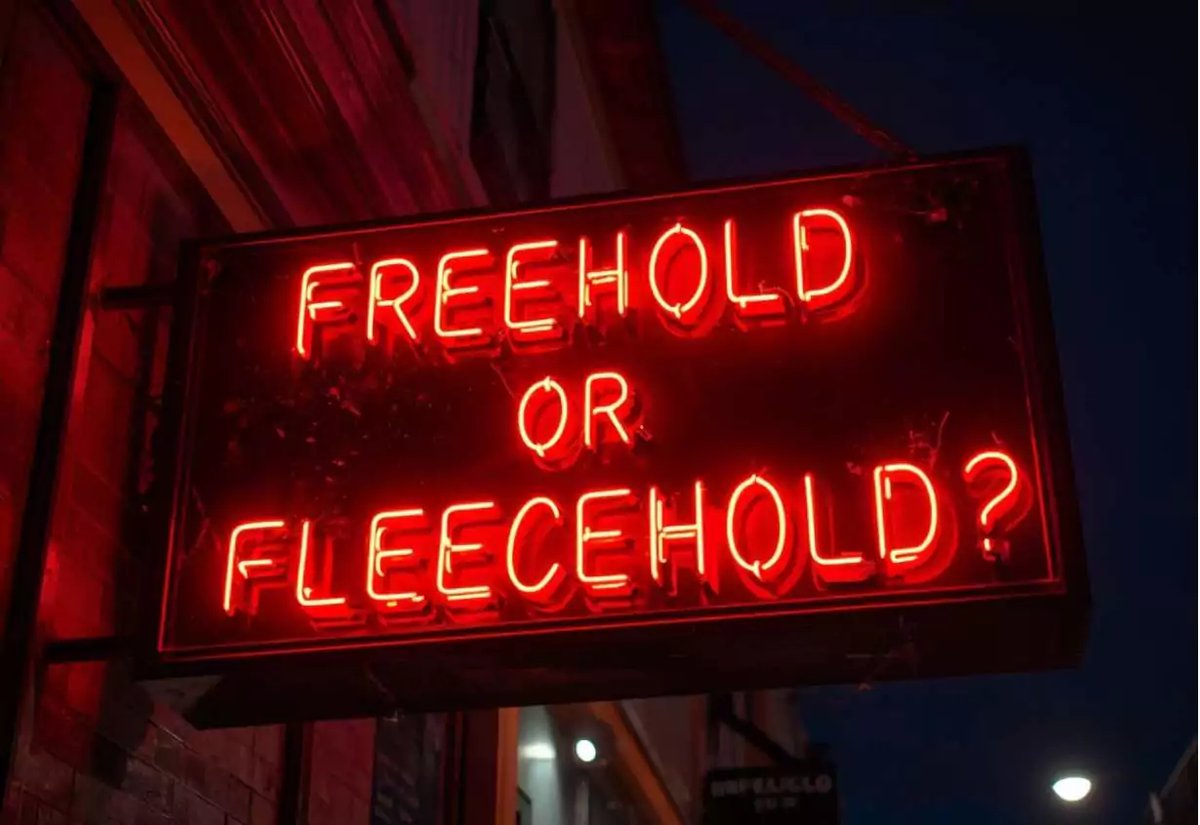
Kowalczyk has framed the central question of his appeal bluntly: "Do I own a freehold, or a fleecehold?" He argues the answer carries weight well beyond his own property. "The answer matters for every homeowner in this country who bought land from a developer," he said. "If a developer can bill you forever with no contract and no cap, what exactly did we buy?"
At the heart of the appeal is an arrangement that Kowalczyk says was agreed upon in open court during a 12 February Zoom hearing — but never reflected in the subsequent ruling. According to the certified transcript of that hearing, Justice Williams himself proposed that CDAL cease sending monthly demands and instead issue an account statement once every 90 days. "Is there a possibility that you can send it every 90 days and just update it?" the judge asked CDAL's counsel, Dr. Errol Cort. "It just changes the interaction with the individual."
Dr. Cort agreed, offering a formal undertaking on the record. "I give you the undertaking that CDAL will only send him invoices every three months, notwithstanding how this application goes, because there's no intention to harass him," he told the court. Justice Williams then confirmed the arrangement to Kowalczyk directly, stating that no publicity would be given to labelling him a bad debtor and that billing would be reduced to once every 90 days. Kowalczyk accepted.
When the ruling was issued six weeks later, neither term appeared. The application was dismissed in full.
"I logged off that Zoom hearing believing the monthly demands would stop and that my name would not appear on any non-payer list, regardless of how the case went next," Kowalczyk said. "The ruling does not mention the undertaking the defendant gave in open court."
The High Court dismissed the injunction application primarily on the ground that Kowalczyk had not provided a cross-undertaking in damages — a standard assurance to compensate the opposing party if an injunction is later found to have been wrongly granted. Kowalczyk disputes that characterisation. The transcript shows Justice Williams asked Dr. Cort whether a court could dispense with such an undertaking, to which Dr. Cort conceded it could. Kowalczyk says he offered to provide one if directed to do so.
"Nowhere in my application did I decline an undertaking," he said. "The judge acknowledged he could dispense with it. None of that made it into the ruling."
The appeal advances two questions Kowalczyk describes as matters of broader public importance. The first concerns whether section 94 of Antigua's Registered Land Act permits anything beyond restrictions on land use to be registered against a freehold. He argues it does not, citing section 94(3), which states that registration cannot give a covenant "any greater force or validity" than it would otherwise have. The second is whether repeated monthly demands for a disputed sum, combined with public "debtor" labels before any court determination, constitute actionable harassment. He relies on Rhone v Stephens and Cayman Shores v Strata Plan No. 79 on the property law question, and on Ferguson v British Gas, Roberts v Bank of Scotland, and Iqbal v Dean Manson Solicitors on harassment.
Kowalczyk also draws a comparison with the Cayman Islands, whose land law derives from the same legislative source as Antigua's. In 2017, the Cayman legislature passed the Registered Land (Amendment) Law to expressly permit positive covenants to run with the land — a legislative step, he argues, that would have been unnecessary if the original wording already covered payment obligations. Antigua has made no equivalent amendment.
Separately, Kowalczyk has filed a restitution claim for charges he says were paid under mistake of law and duress. He has also initiated an action concerning another Jolly Harbour property where, according to correspondence from CDAL's attorneys, payment had been based on a 1994 agreement for sale that was never renewed when the property changed hands. He further notes that CDAL's community charges include a line item for the developer's own legal fees, distributed across all homeowners.
"I am paying the lawyers who are suing me," Kowalczyk said. "CDAL knows how to write contracts when it wants to. It does not want to write one with me, because the moment it does the charges become negotiable — the last thing a developer billing 849 homeowners wants."