The Antigua and Barbuda Labour Party's 2026 general election manifesto signals a governing party far more assured of its standing than it was three years ago — a marked shift in tone that reveals as much about the current political landscape as any policy pledge within its pages. According to Antigua.news, the contrast with the party's 2023 document is striking.
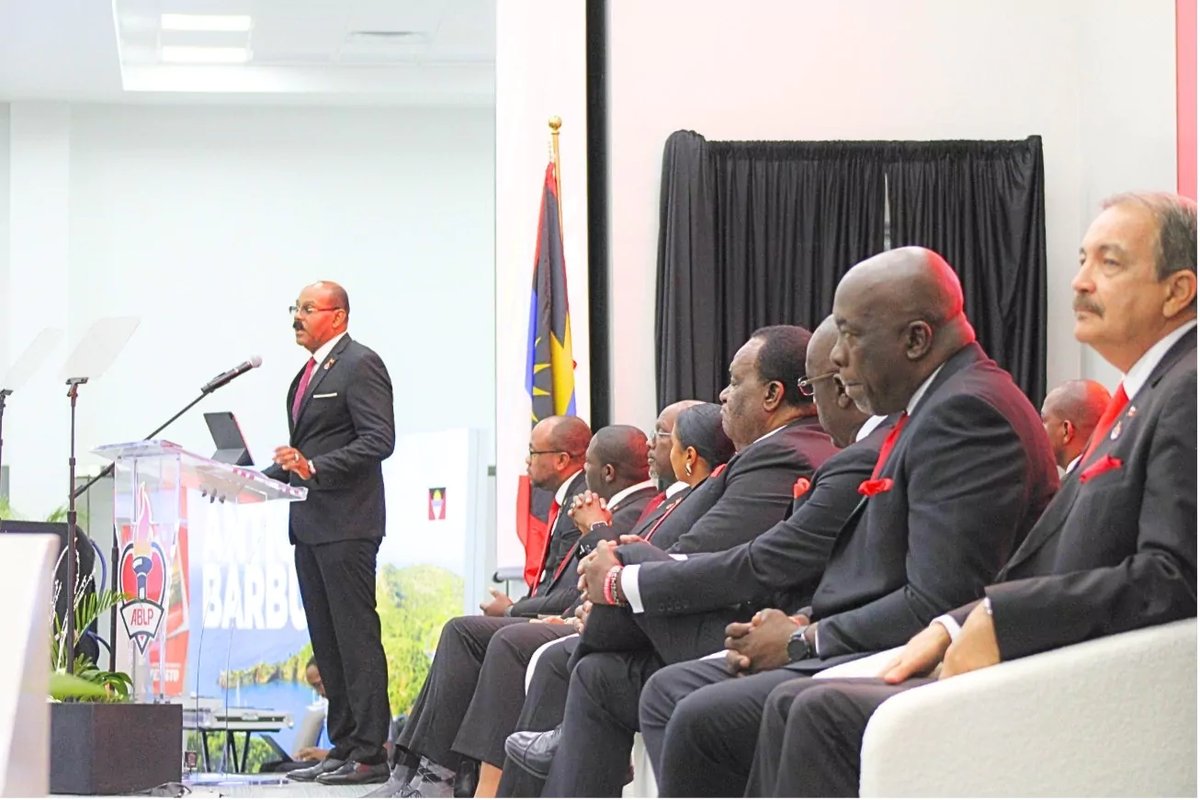
The 104-page manifesto, released at the American University of Antigua on April 20 ahead of the April 30 general election, carries the tone of a confident incumbent largely unbothered by its critics — a departure from the combative posture that defined the party's previous campaign document.
The 2023 manifesto devoted three distinct chapters to attacking the United Progressive Party: one dissecting UPP pledges, another alleging UPP contempt for women, and a third outlining the economic conditions the Labour Party claimed it had inherited in 2014. The language was unambiguously combative, deploying words such as "deceitful," "ruinous," and "mismanagement," and declaring that the UPP "is a disaster in and of itself." These were the words of a party that felt compelled not only to present its record but to prosecute a case against the opposition.
By January 2023, the UPP had been campaigning for more than a year, sustaining momentum through constituency outreach, an active youth arm, and a steady rhythm of rallies that kept the prospect of elections on the national agenda. The opposition was in the ascendancy, and the ABLP spent much of that cycle responding to the UPP rather than leading with its own record. That defensiveness showed at the 2023 manifesto launch, where Prime Minister Gaston Browne emphasised that "business people do not invest in a country and a government in which they have no confidence," and declared that the ABLP had "not only earned the trust of the people… not only delivered for the people… but we deserve to be returned to office."
The 2026 document carries none of that anxiety. The UPP still appears — dismissed in the foreword as representing "one of failure in government and disruption in opposition" — but functions throughout the text as a weak comparator rather than a live threat warranting sustained rebuttal.
This year, the ABLP has sought to expand its coalition, calling on citizens not to "be permanently defined by old political loyalties where the national interest now calls for wider unity and common purpose." Rather than defend its flagship Citizenship by Investment programme, the party chose to challenge the opposition to name an alternative — an offensive move from a party confident in its position.
On the persistent issue of water supply and distribution, where the government adopted a more measured tone, it framed the matter as one requiring patience and continued effort — a sign of greater comfort with its own progress on a long-standing problem.
At Monday's launch, Prime Minister Browne spent comparatively little time addressing the opposition, framing the election instead as a referendum on continuity. He described the manifesto as "a covenant with the people, grounded in delivery, shaped by experience, and directed to the future," and cast the choice before voters as one between "tested leadership" and an untested alternative. When he did turn to the UPP, he focused narrowly on questioning Opposition Leader Jamale Pringle's capacity to engage local and regional leadership.
The difference in tone also reflects the campaign readiness each side has brought into the race. The pandemic is no longer the defining fact of political life, and while cost-of-living pressures of 2022 and 2023 have given way to new economic anxieties linked to global tariffs and overseas conflicts, the opposition has not replicated the campaigning infrastructure that defined its 2022 posture. The ABLP, meanwhile, has refreshed its slate, replacing a number of its 2023 candidates with younger figures in contestable, opposition-held seats.
The result is a manifesto that reads less like an attack advertisement and more like a government white paper. Where the 2023 document sought to remind voters what they stood to lose, the 2026 document assumes they already know what the ABLP intends to deliver.
As reported by Antigua.news, the manifesto signals that the party views a weakened opposition as an opportunity to secure a strong mandate before any new wave of global disruption alters the political calculus.
Voters will render their verdict on April 30, as the public continues to await the opposition's response and its own manifesto.