By Yves Ephraim
According to Antigua News Room, commentator Yves Ephraim is raising pointed questions about land ownership and property rights in Antigua and Barbuda ahead of the upcoming election cycle — arguing that citizens should demand stronger protections for private property rather than surrender them.
Ephraim opens his commentary by referencing Agnes Meeker's book, "Plantations of Antigua," which he describes as compelling and enlightening. He was struck, he writes, by a particular passage: "The chief desire of the newly emancipated people was to own a portion of land 'in perpetuity', but this proved to be extremely difficult."
That observation, Ephraim argues, cuts to the heart of a problem that has never been fully resolved. Land ownership, he contends, is not merely a matter of economics — it is foundational to human dignity and individual freedom. He cites land as one of the four classical factors of economic production, alongside capital, labour, and entrepreneurship, and argues that without access to land, meaningful participation in society becomes nearly impossible.
"If you do not have access to land, then you become homeless and subject to unimaginable abuse," he writes.
Ephraim turns a critical eye toward successive governments since independence in 1981, questioning why no administration undertook a deliberate effort to empower ordinary citizens through land grants. By his own calculation, the landmass of Antigua alone comprises approximately three billion square feet. Granting every one of the country's 100,000 citizens a 5,000-square-foot plot would require only 0.5 billion square feet — leaving 2.5 billion square feet remaining.
He acknowledges he has not been able to verify the total acreage of the Syndicate Lands but suspects it would have exceeded that threshold. He suggests that had citizens received land grants at or shortly after independence, the country's current affordable housing crisis might largely have been avoided. Furthermore, he argues that such grants would have been fair compensation, given that ordinary taxpayers helped finance the loan used to acquire the Syndicate Lands in the first place.
Instead, Ephraim contends, those lands were distributed to foreign investors at concessionary rates, and what limited grants did occur benefited political cronies rather than the general public. Now, he argues, the government has turned to acquiring land from private citizens — people who purchased and paid taxes on their properties — to address a housing shortfall of its own making.
"How can this be right or just?" he asks.
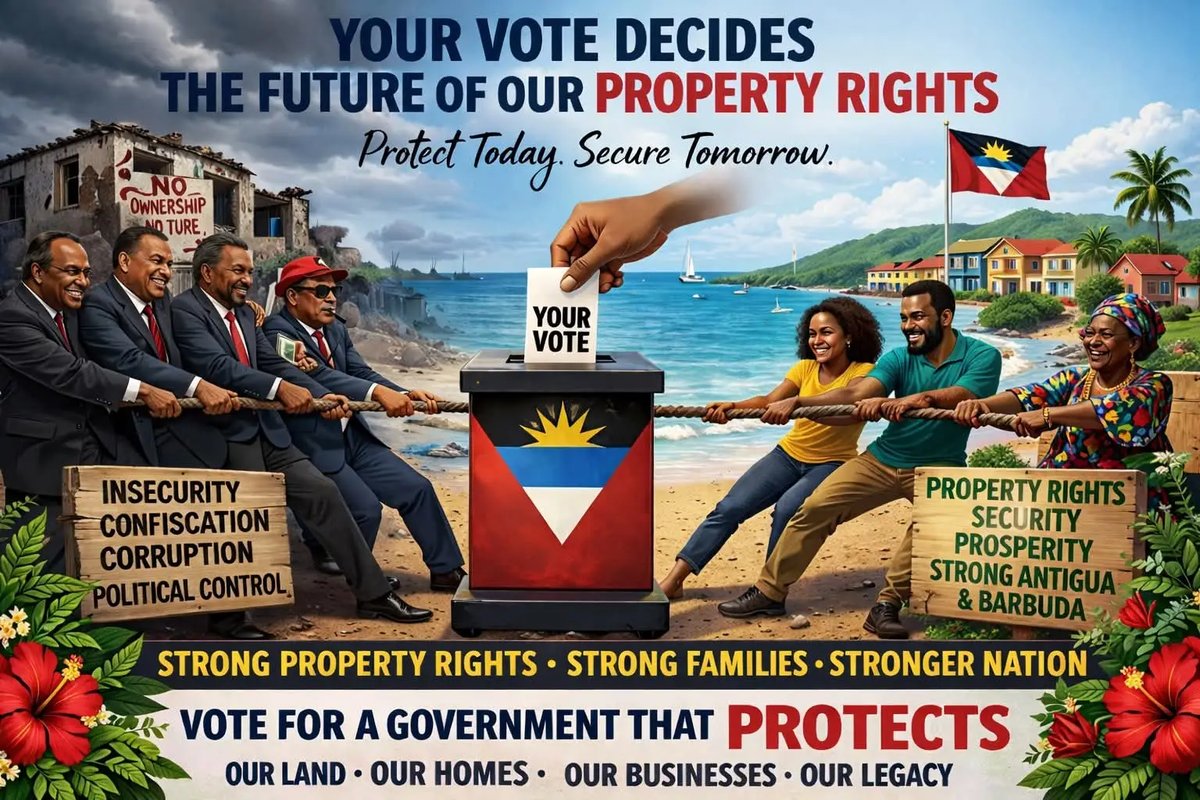
Ephraim is sharply critical of what he characterises as government overreach into private property rights, drawing a philosophical line from historical slavery to modern-day confiscation. As a self-described advocate of free-market principles, he argues that the protection of private property rights is essential to economic stability and growth — and that the threat of state seizure undermines both investment and individual sovereignty.
With an election on the horizon, Ephraim uses his closing remarks as a call to action. He urges Antiguans and Barbudans to scrutinise candidates' positions on property rights and to vote for an administration that commits to protecting rather than eroding them.
"I would challenge all Antiguans and Barbudans to vote for an administration that vows to protect your private property rights, thus ensuring a free, stable and growing economy in which you can thrive," he writes.