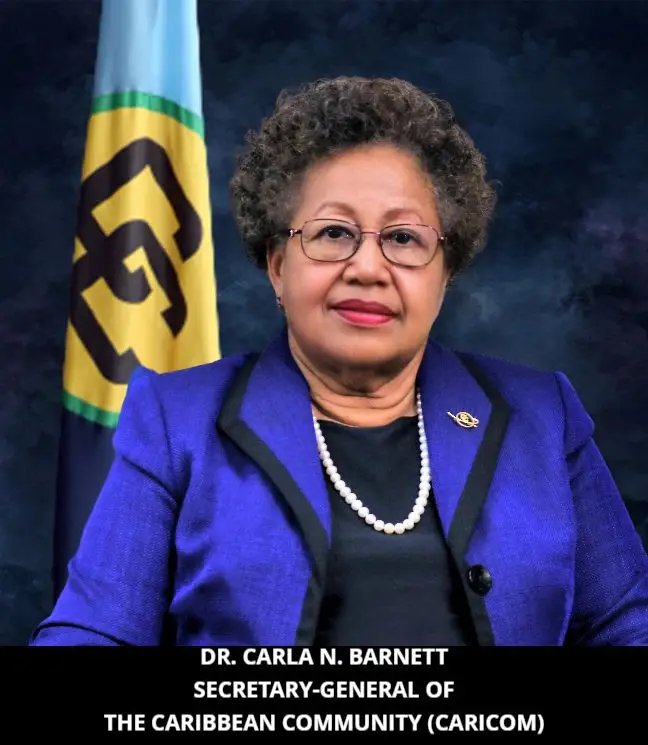
CARICOM Heads of Government convened a special emergency meeting on April 10, 2026, to address governance concerns raised by Trinidad and Tobago, including the reappointment of the Community's Secretary-General. According to Antigua News Room, neither Prime Minister Keith Rowley nor any representative from Trinidad and Tobago attended the meeting.
Following discussions among the Heads, CARICOM released supporting documents detailing communications with Member States in preparation for the 50th Regular Meeting of the Conference, as well as decisions taken during a private Heads-only Retreat. The statement, dated April 11, 2026, expressed hope that the Community could return to using internal mechanisms to resolve disputes, warning that "unfortunate and erroneous statements" risk undermining regional integration.
According to documents released by CARICOM, all Member States were formally notified of the schedule, agenda, and programme of work ahead of the 50th Meeting of the Conference of Heads of Government, held in St Kitts and Nevis from February 24 to 27, 2026. All Member States acknowledged receipt of that official correspondence.
The Prime Minister of Trinidad and Tobago departed St Kitts and Nevis on the evening of February 25, the first day of the Conference, before the Retreat scheduled for February 26. At 10:33 PM that same evening, Trinidad and Tobago Foreign Minister Sean Sobers contacted the Secretary-General via WhatsApp to ask whether he should attend the Retreat in the Prime Minister's absence. The Secretary-General confirmed he could attend and noted that other absent Heads had been represented by their Foreign Ministers. Minister Sobers indicated he suffered from seasickness and might be unable to attend due to the boat journey involved.
At 10:55 PM, the Secretary-General relayed the exchange to the Conference Chairman via WhatsApp, noting that Trinidad and Tobago might not be represented at the Retreat the following day. At 12:37 AM on February 26, the Secretary-General messaged Minister Sobers directly, stating: "Minister, if the boat trip will cause nausea am sure the Chairman would understand if you chose not to come tomorrow." The Minister did not subsequently inform the Chairman or the Secretary-General of any intention to attend.
During the Retreat, under the agenda item on Financing and Governance of the Community, Heads agreed to reappoint the Secretary-General in accordance with Article 24 of the Revised Treaty of Chaguaramas. The Secretary-General was not present in the room during the discussion. Heads also decided to delay the public announcement as a courtesy, in order to first notify those not in attendance — including Trinidad and Tobago. Attempts to reach the Prime Minister of Trinidad and Tobago by email and telephone were unsuccessful, and the Chairman subsequently spoke with the country's Foreign Minister.
Separately, Heads agreed during the Retreat to establish a sub-committee comprising Barbados, Dominica, Guyana, and Jamaica to review governance and financing arrangements across Community institutions. They also agreed to issue a statement on CARICOM's meeting with United States Secretary of State Marco Rubio.
Full supporting documents, including the timeline of correspondence and programme of work, are available on the CARICOM website.
The Caribbean Community was established on July 4, 1973, with the signing of the Treaty of Chaguaramas, revised in 2001 to provide for a single market and economy. CARICOM comprises fifteen Member States and six Associate Members, with a combined population of approximately sixteen million people. The CARICOM Secretariat is headquartered in Georgetown, Guyana.