Sport holds a unique and powerful capacity to drive social transformation — connecting communities across borders, reducing isolation among marginalised groups, and creating space for dialogue, solidarity, and mutual respect. According to Antigua News Room, these principles are at the heart of the United Nations' International Day of Sport for Development and Peace (IDSDP), observed globally each year on April 6.
This year's theme, "Sport: Building Bridges, Breaking Barriers," underscores sport's ability to foster connection, inclusion, and peace in an increasingly fragmented world. The adoption of the IDSDP by the UN General Assembly reflects growing recognition of sport's positive influence on the advancement of human rights and social and economic development.
The United Nations has declared that the 2026 International Day will highlight evidence-based approaches and best practices demonstrating how sport contributes measurably to the 2030 Agenda for Sustainable Development — particularly in advancing health, gender equality, reduced inequalities, and the building of peaceful, inclusive societies. Through dialogue, partnerships, and shared experiences, IDSDP 2026 will reaffirm sport's role as a strategic tool for breaking down barriers to inclusion, leaving no one behind.
Athletes and sports officials often carry the weight and hope of their nations. The 1998 FIFA World Cup qualification by Jamaica stands as a vivid example — a historic feat that united an entire nation behind the Reggae Boyz, transcending the social divides that so often fragment communities. The sense of national pride that comes with seeing one's flag raised and national anthem played at international competitions is a unifying force few other experiences can match.
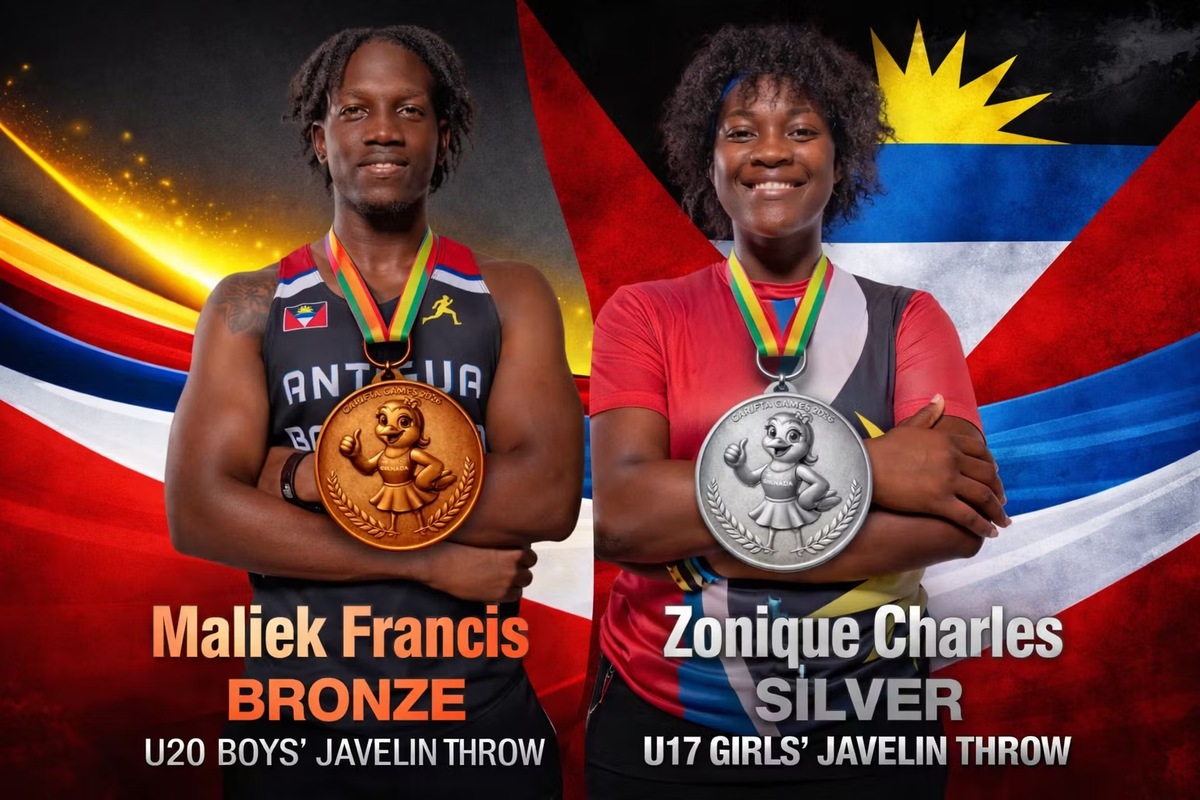
Regionally, the CARIFTA Games serve as a powerful vehicle for that same spirit of unity. The annual athletics competition — featuring track and field, middle distance, sprint, hurdle, jumping, throwing, and relay events — was founded by the Caribbean Free Trade Association and first held in 1972. Austin Sealy, then president of the Amateur Athletic Association of Barbados, inaugurated the Games to mark the transition from the Caribbean Free Trade Association (CARIFTA) to the Caribbean Community (CARICOM). Held over three days during the Easter period, the Games feature more than 150 separate competitions and serve as an instrument of regional integration, cooperation, peace, and inclusion among CARICOM member states.
On the global stage, Football for the Goals (FFTG) is a UN membership-based initiative that provides a platform for the global football community to engage with and advocate for the Sustainable Development Goals (SDGs). The initiative guides football organisations — from grassroots clubs and NGOs to professional leagues and international confederations — to implement SDG-related strategies that lead to meaningful behavioural change. Members also use their visibility and outreach to raise the profile of the SDGs through amplification and advocacy.
As the international community marks the IDSDP, the call grows louder for governments to invest more in developing and nurturing young athletes. Equally important is a renewed focus on realigning physical education in schools with the United Nations Sustainable Development Goals. Too often, physical education is treated as an afterthought, receiving insufficient attention and resources. A recalibration is needed — one that connects physical education directly to national development and the pursuit of peace.
Development, by its nature, is a consultative process that must engage all stakeholders within a society. It should not be viewed solely as a top-down model. A bottom-up approach is equally valuable, and governments must actively share their development plans with citizens. People are the real wealth of a nation, and the fundamental objective of development is to create an enabling environment in which people can enjoy long, healthy, and creative lives. Athletes, as national treasures, deserve to be treated as such.
The tradition of sport as a vehicle for peace stretches back to ancient Greece. The ekecheiria, or "Olympic Truce," born in the eighth century B.C., was revived in 1992 when the International Olympic Committee called upon all nations to observe the truce. The UN General Assembly subsequently urged member states to observe the Olympic Truce from the seventh day before the opening to the seventh day following the closing of each Olympic Games. The 2030 Agenda for Sustainable Development, adopted by world leaders in 2015, reaffirmed sport as an "important enabler" of sustainable development.
In the words of Nelson Mandela: "Sport has the power to change the world. It has the power to inspire. It has the power to unite people in a way that little else does. It speaks to youth in a language they understand. Sport can create hope where once there was only despair."
Wayne Campbell is an educator and social commentator with an interest in development policies as they affect culture and gender issues.