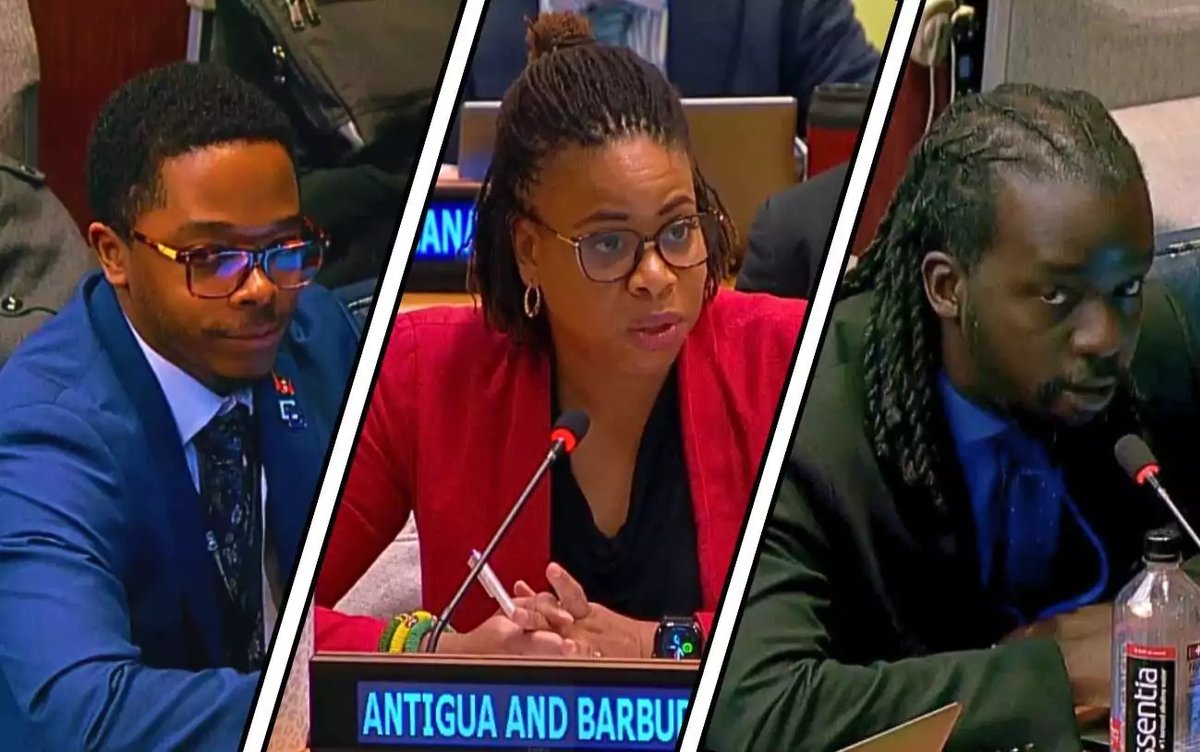
Antigua and Barbuda has reaffirmed its commitment to ocean protection following two weeks of intensive negotiations at the United Nations, where the country played an active role in the third session of the Preparatory Commission for the Biodiversity Beyond National Jurisdiction (BBNJ) Treaty.
According to Antigua.news, the session ran from March 23 to April 2 in New York. The government acknowledged that while important progress was made, key gaps remain in advancing the treaty toward full operationalization. Antigua and Barbuda stated it remained "fully committed" to bridging those gaps and continuing to advocate for strong, equitable, and effective ocean governance.
The BBNJ Treaty, also known as the High Seas Treaty, entered into force in January 2026, establishing the first legally binding framework for the conservation and sustainable use of marine biodiversity in international waters. The session was the final preparatory stage before the first Conference of the Parties (COP1), expected in January 2027, at which the agreement will become fully operational. For island states like Antigua and Barbuda, the government has said the oceans are a lifeline, sustaining people, economies, and futures.
Leading the delegation was Asha Challenger, First Secretary at Antigua and Barbuda's Permanent Mission to the United Nations and Vice President of the Preparatory Commission. She was supported by Legal Officer Darius Joseph of the Department of Marine Services and Merchant Shipping (ADOMS) and Crown Counsel I Zachary Phillips from the Office of the Attorney General.
Challenger intervened on the floor on multiple occasions throughout the two weeks, speaking on behalf of the Caribbean Community (CARICOM). Her interventions focused on three central issues that will shape how the treaty functions in practice and who stands to benefit.
The first was the Special Fund — a dedicated financial mechanism intended to ensure developing countries share in the benefits when marine genetic resources found in international waters are commercially exploited. CARICOM supported establishing an ad hoc committee to design the fund's rules ahead of COP1. When proposals emerged that would have restricted the committee's access to the Voluntary Trust Fund — the mechanism covering the cost of bringing developing country delegates to treaty meetings — Challenger pushed back firmly. Singling out the committee for special restrictions, she argued, would make it harder for developing countries to participate in the very body designing how they share in the benefits of their own ocean resources.
The second issue concerned the financial relationship between the Conference of the Parties and the Global Environment Facility (GEF), which is expected to play a central role in funding the treaty's implementation. Negotiations over how much guidance the COP could give the GEF, and what role a Finance Committee would play in reviewing the treaty's budget, occupied much of the two weeks. Challenger raised concerns about the absence of timelines in the proposed arrangement, telling the room it would be "a big challenge for us to remain silent on the timeline" and that the preparatory process offered the opportunity to address that gap "for the benefit of us all." CARICOM also opposed expanding the Finance Committee's powers before it has been formally established, arguing it made no sense to define the role of a body that would not be operational before COP1.
The third issue was eligibility for the Voluntary Trust Fund itself — specifically, which countries qualify for financial support to attend treaty meetings. CARICOM's position was that eligibility should be limited to state parties rather than the broader category of signatories. Challenger also confirmed CARICOM's support for a practical mechanism under which the secretariat would consult with the Bureau whenever funds were insufficient to cover all participation requests.
On the treaty's cooperation framework, Crown Counsel Zachary Phillips led Antigua's interventions, stating during the April 1 talks that CARICOM was concerned that overly prescriptive language in the draft text risked limiting the agreement's effective implementation. He called for a flexible approach that would "allow for cooperation arrangements to adapt to emerging needs and priorities that evolve over time."
Legal Officer Darius Joseph delivered CARICOM's closing statement, expressing appreciation for the progress achieved while articulating the region's disappointment at what remained unresolved. He noted that "SIDS in this PrepCom have had to fight for the operationalization of special circumstances of SIDS at every step," adding that recognition of those special circumstances "is not and has never been a tool for us to seek additional benefits at the expense of others. It is a matter of equity." Joseph affirmed that CARICOM's "resolve remains unshaken" and that the region looks forward to working with all partners before and at COP1 to close the remaining gaps.
The Permanent Mission of Antigua and Barbuda to the United Nations commended the delegation's performance, saying Challenger's leadership continues to elevate the voice of small island states and that Joseph and Phillips brought critical legal and policy expertise to the negotiations. Antigua and Barbuda said it will continue to champion the protection of its oceans for generations to come.