The Caribbean's abundant sunshine, trade winds, and geothermal resources represent an untapped energy powerhouse — one that could dramatically reshape the economic and environmental future of Antigua and Barbuda and its regional neighbours. According to Antigua News Room, the United Kingdom is actively working to help Caribbean nations convert those natural assets into affordable, sustainable energy through a growing clean energy partnership.
The assessment comes from Ingrid Lavine, Climate and Renewable Energy Adviser with the Caribbean Development Team at the UK's Foreign, Commonwealth and Development Office, who outlined both the region's extraordinary potential and the structural barriers standing in the way of progress.
The Caribbean has the capacity to generate more clean energy than it can consume, with many islands theoretically able to run entirely on renewables and export surplus power to neighbours. Some nations could also convert renewable electricity into transportable fuels such as green hydrogen, ammonia, and methanol. Yet today, approximately 87% of CARICOM's energy mix remains dependent on fossil fuels — a reality that drives electricity prices to between two and nearly three times what households in other regions pay.
That dependence, Lavine argues, perpetuates economic vulnerability, rising debt burdens, and persistent energy insecurity across the region.
Since 2015, the United Kingdom has invested USD $39 million to support the Caribbean's energy transition. That funding has backed geothermal development, solar photovoltaic installations, energy efficiency upgrades to public buildings, workforce training programmes across the Eastern Caribbean, and early-stage groundwork for a regional offshore wind market.
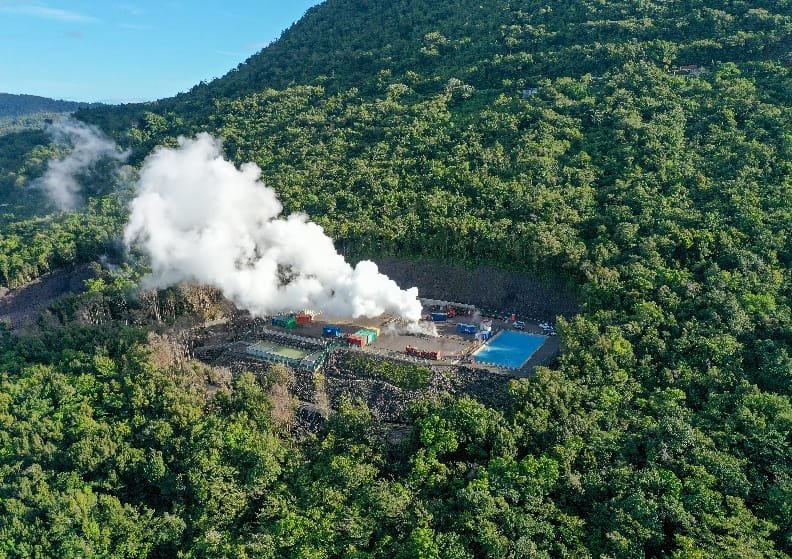
One notable outcome of that investment is Dominica's geothermal project. UK support helped absorb the high upfront costs of exploratory drilling, giving private investors the confidence to commit. Dominica is now on track to commission the first geothermal plant in the English-speaking Caribbean in April 2026. Similar projects are currently underway in Grenada and St Lucia.
In St Vincent and the Grenadines, UK-backed installations of energy-efficient street lighting and a solar PV plant at the international airport have saved millions of dollars and prevented hundreds of tonnes of carbon dioxide emissions.
Despite these advances, the region's overall progress remains slow. CARICOM set an ambitious target in 2013 to achieve 47% renewable electricity generation by 2027. By 2023, the region had reached only around 13%. Progress has been uneven, with some countries making meaningful strides while others continue to lag behind.
Lavine identifies the core challenges as structural: small grid sizes, high capital costs, limited technical capacity, and fragmented markets that prevent economies of scale. Many countries also lack the modern grid infrastructure and updated regulatory frameworks needed to integrate solar and wind power effectively.
Solutions, however, are within reach. Regional pooled procurement and project aggregation could reduce costs and attract larger investors. Modernising electrical grids and updating energy regulations could open markets to greater private sector participation. Blended and concessional financing could help governments manage prohibitive upfront costs, while investment in local engineering capacity could ensure long-term sustainability.
Looking ahead, the UK has agreed on a concrete Caribbean action plan for 2026 to 2028 through the Global Clean Power Alliance, offering private-sector expertise and technical support to address key barriers and attract the investment needed to accelerate the region's clean energy transition.
For Antigua and Barbuda and its Caribbean neighbours, the message is clear: the natural resources are already here. The question is whether the region can marshal the political will, regional coordination, and strategic partnerships to fully exploit them.