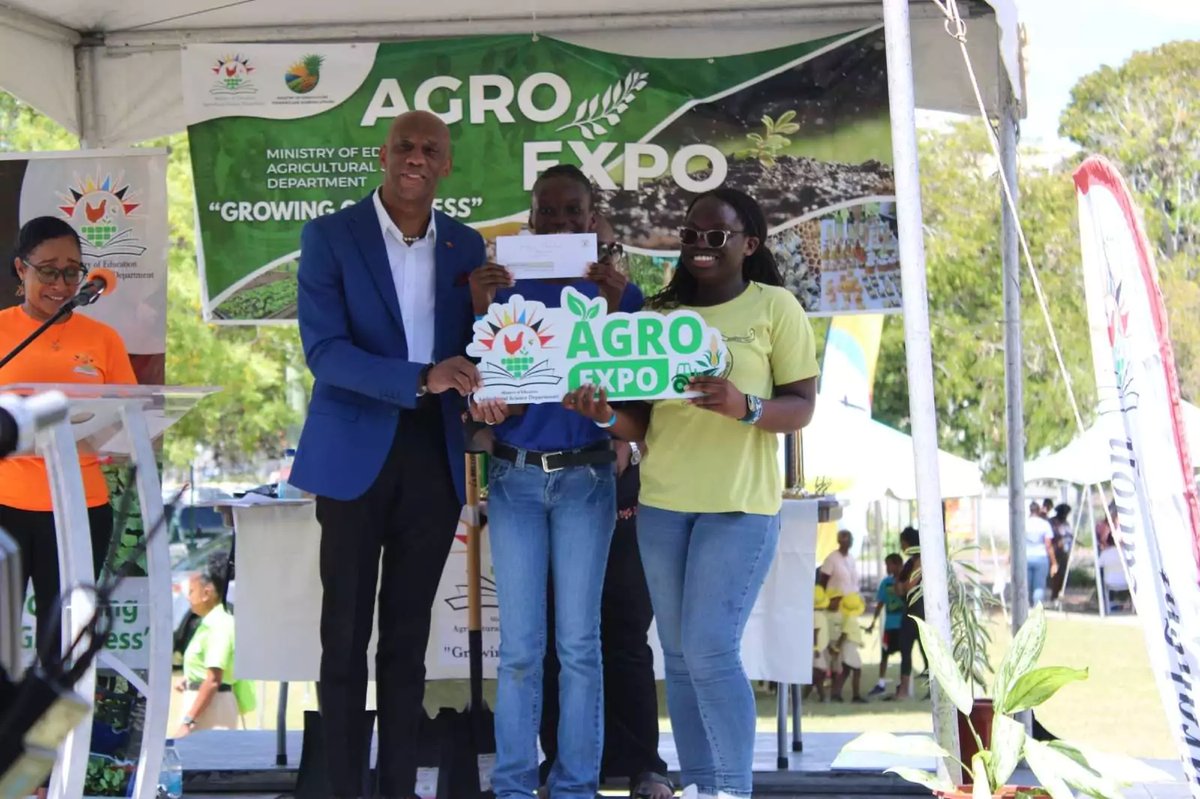
Students across Antigua and Barbuda have delivered one of the most competitive showings in the history of the Inter-school Garden Competition, with judges praising a marked rise in knowledge, innovation, and student engagement at the 2026 edition of the annual contest.
Head Judges Carol-Faye Bynoe-George and Angela Ephraim, supported by a panel drawn from the Ministry of Agriculture and the Gilbert Agricultural and Rural Development Center, described the overall quality of entries as high, reflecting significant progress from previous years. Given the large number of participating schools, the adjudication team was divided into two groups to complete the judging process.
At the preschool level, judges noted dramatic improvements, with students demonstrating an understanding of planting techniques, identifying crops, and explaining their uses. Beginners Academy claimed first place, followed by Sir Luther Wynter Preschool in second and Eleven Hours Sunshine Preschool in third. Special recognition was extended to newcomers Hundred Acres Preschool and Beehive Preschool for their strong debuts.
The primary school category proved tightly contested, with only a few points separating the top performers. Cedar Grove Primary School took first place, Old Road Primary School placed second, and S.R. Olivia David Primary School finished third. Judges also commended first-time participants Buckleys Primary, Liberta Primary, and Cobbs Cross Primary for their impressive entries.
At the secondary level, the competition highlighted a growing shift toward climate-smart agriculture, with an increased use of hydroponic systems as part of Agri-science programmes. Ottos Comprehensive School emerged as both the secondary category winner and overall champion, with Jennings Secondary School placing second and Sir Novelle Richards Academy third. Antigua Girls' High School was singled out as a standout newcomer.
Judges described this year's adjudication as particularly challenging given the high standard across all categories, noting that students are becoming increasingly engaged with modern agricultural practices.
The panel did, however, recommend greater use of drip irrigation systems, mulch, and natural fertilizers such as compost and animal manure to further boost productivity. Judges also urged schools to strengthen record-keeping practices — including tracking planting schedules, expenses, expected yields, and potential revenue — emphasising that these skills are vital in preparing students for entrepreneurship in agriculture.
The panel commended both students and educators for their commitment, describing the growing interest in agriculture at the school level as an encouraging sign for the future of the twin-island state.