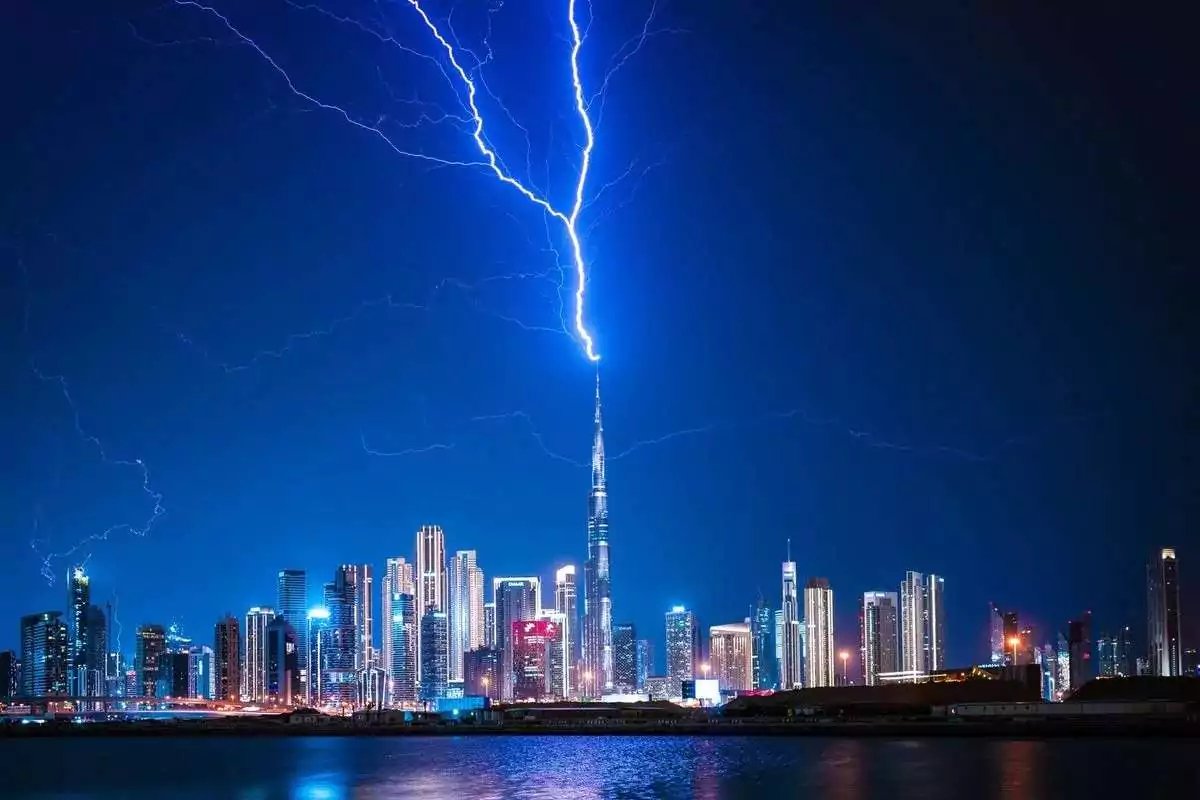
A powerful lightning bolt struck the Burj Khalifa, the world's tallest building, as violent storms swept across the United Arab Emirates, producing a dramatic spectacle captured on video. According to Antigua.news, the 829-metre (2,722-foot) structure took a direct hit during what authorities described as an "unstable weather system" driving in from west of the Gulf city.
Despite the striking imagery, neither the iconic 163-floor tower nor its occupants were ever in serious danger. Smart engineering design means the building functions effectively as the city's lightning rod, safely attracting electrical charges and directing them away from surrounding areas.
When lightning strikes the structure, the electrical current is guided along a network of metal conductors running down the building's exterior. Those conductors channel the electricity to a grounding system at the base, which safely disperses it into the earth — protecting interior lighting, elevators, and all other equipment from damage, and posing no risk to occupants.
While the strike appeared dramatic, it ultimately delivered little more than a spectacular light show for Dubai residents. It marks the second time the tower has been struck during March, following an earlier incident in which missile debris hit the building during the ongoing US-Israeli and Iran conflict.
The wider city did not emerge unscathed. Heavy flooding and significant travel disruption followed intense downpours across the UAE. Authorities urged residents to avoid beaches, flood-prone areas, and mountainous regions, while emergency measures were activated and safety alerts issued nationwide. Officials were keen to stress, however, that the storm did not constitute a cyclone.