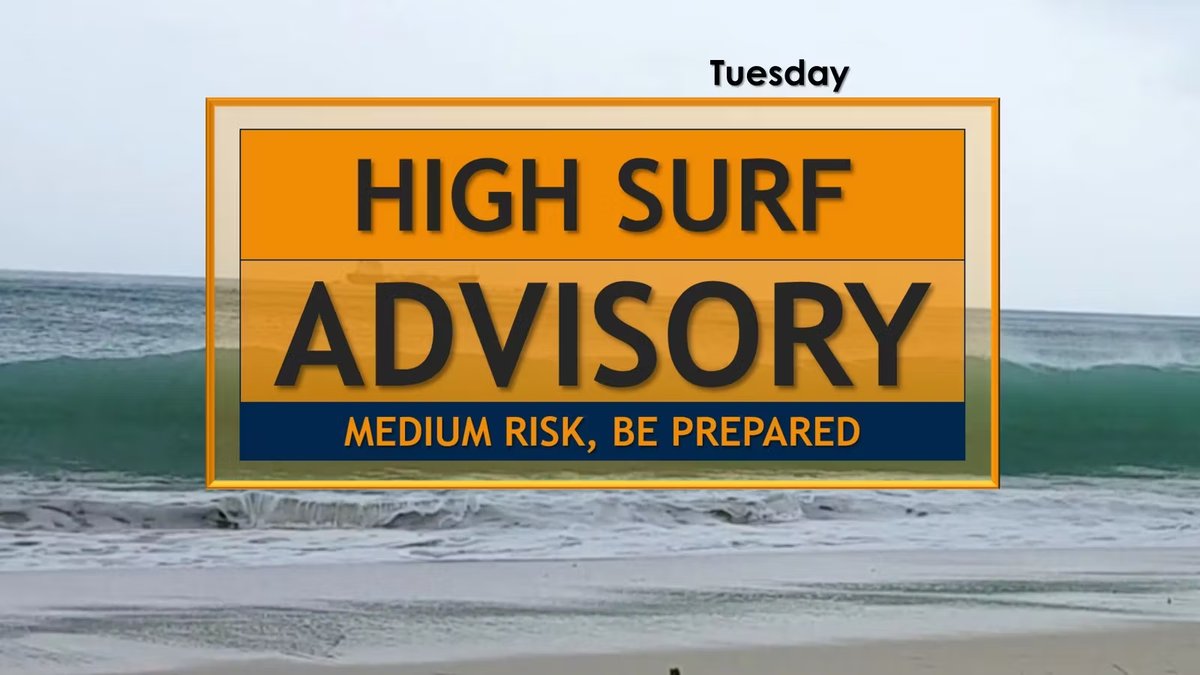
The Antigua and Barbuda Meteorological Service has issued a High Surf Advisory for Antigua, warning residents and visitors of hazardous coastal conditions expected to persist through Sunday. According to Antigua News Room, the advisory was issued at 1:40 pm on Monday, March 30, 2025, with dangerous surf conditions set to begin Tuesday morning for Antigua and Tuesday afternoon for Montserrat, St. Kitts and Nevis.
The advisory affects reefs and exposed, mainly north-facing coastlines with relatively shallow, gently to moderately sloping nearshore areas. Meteorological authorities warn that moderate long-period swells are forecast to generate life-threatening surf and rip currents along affected coastlines. Officials have rated the risk to life, livelihood, property, and infrastructure as medium, and have cautioned that the advisory could be upgraded to a warning for some areas.
Expected sea conditions include significant wave heights of 1.5 to 2.4 metres (5 to 8 feet), occasionally reaching near 3.0 metres (10 feet). Northerly swells of 1.5 to 2.4 metres are forecast, with a swell period of 10 to 13 seconds. Breaking surf is expected to exceed 2 metres (6 feet), with authorities noting that surf heights can reach as much as twice the height of swells depending on the depth and slope of nearshore areas.
Coastal flooding is also a concern. High tides combined with onshore winds and swell action could result in localised flooding and beach erosion along vulnerable coastlines.
The Meteorological Service has outlined a range of potential impacts, including loss of life from strong currents, injuries to beachgoers, beach erosion, seawater splashing onto low-lying coastal roads, beach closures, and disruptions to marine recreation and businesses. Additional risks include damage to coral reefs, saltwater intrusion, and disruptions to potable water from desalination facilities. Officials also warn that high surf can knock spectators off exposed rocks and jetties.
Residents and visitors are urged to exercise extreme caution. Beachgoers are advised to swim only where lifeguards are present or on sheltered beaches, primarily those facing south. Those accessing rocky or non-beach coastlines are also warned to take extreme care.
Authorities provided guidance on rip current safety, advising that anyone caught in a rip current should relax and float, avoid swimming against the current, and instead swim parallel to the shoreline. Those unable to escape a rip current are urged to face the shore and call or wave for assistance.