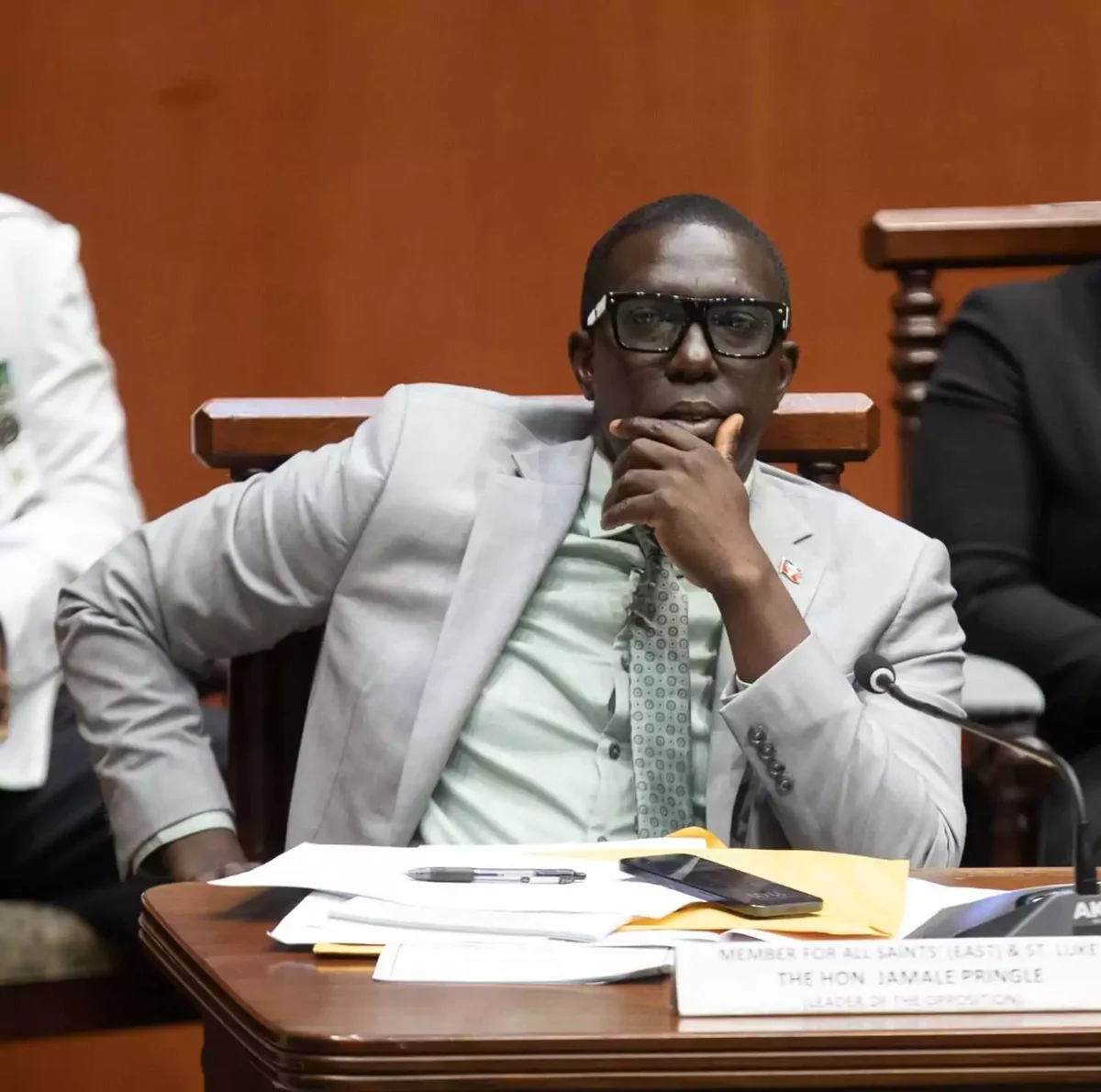
The United Progressive Party is grappling with one of its most serious internal crises in recent memory, as details surrounding Opposition Leader Jamale Pringle's near-resignation lay bare significant fractures in the party's leadership and its strategy heading into the next general election.
According to Antigua.news, last week's media reports suggesting Pringle was on the verge of stepping down were grounded in fact. Multiple party insiders indicate that the Opposition Leader had decided to resign after two internal polls — conducted by regional political analysts Linley Winters and Don Anderson — reportedly showed that the UPP stands little chance of winning the upcoming general election under his leadership. Those findings are said to have triggered urgent discussions at the party's highest levels.
Sources indicate that Pringle met with former Political Leader Harold Lovell and Deputy Leader Sherfield Bowen, where he signalled his willingness to step aside and allow Lovell to return to the helm in a bid to strengthen the party's electoral prospects. What appeared to be a calculated strategic pivot, however, quickly unravelled.
Insiders say the proposed transition did not sit well with Deputy Leader Bowen, who reportedly believed he should be the one to ascend to the leadership — particularly given his standing in the party hierarchy. The disagreement surfaced long-simmering tensions over succession and authority within the UPP. Before any formal announcement could be made, news of the internal deliberations was leaked to the media.
That leak proved to be a turning point.
Following the reports, Pringle faced immediate backlash from his constituents, many of whom reportedly warned that stepping down could cost him his parliamentary seat. That reaction appears to have driven a dramatic reversal — Pringle ultimately chose to remain as party leader.
However, insiders argue the damage had already been done. Some within the party question whether constituent pressure was truly the decisive factor. "Whether constituents learned about it 24 hours before or after an official announcement, the political reality wouldn't have shifted," one source told Antigua.news.
Pringle's decision to stay has since deepened unease among several candidates and executive members, with concerns now centring on the party's ability to mount a credible challenge at the polls. One notable development is the withdrawal of St. Paul candidate and attorney Wayne Marsh. While some attributed his exit to constitutional concerns over dual citizenship, insiders suggest his decision was driven more by broader doubts about the party's direction under its current leadership.
"Marsh is a very intelligent attorney who knows the law. The constitution did not catch him by surprise, but he wasn't willing to give up his US citizenship with Pringle as leader, knowing the UPP could not form the next government," a source said.
Some party members have grown increasingly candid in their private assessments. "Politics is about people and numbers," one executive member told Antigua.news. "We have to separate personal feelings from reality. This is not about personalities or sentiment. It's about winning elections — and right now, we are not positioned to do that." The same source added that while there is no personal animosity toward Pringle, serious questions remain about his readiness for national leadership at such a critical political moment.
The situation now unfolding points to a deeper identity crisis within the UPP — one that extends well beyond a single leadership decision. At its core lies a fundamental question: can the party unify behind its current leader and present a credible alternative to the electorate, or will internal divisions continue to erode its chances?
Perhaps most striking are indications that the current tensions may not end with the election itself. Sources suggest that, depending on the outcome, the UPP could face a wave of resignations at the executive level. More significantly, there are whispers that some departing members may seek to establish a new political movement — one aimed at reshaping the opposition landscape entirely.
If realised, such a development could mark a watershed moment in Antiguan politics, potentially fragmenting the opposition vote while simultaneously creating space for new leadership and ideas to emerge.
With the country edging toward a general election possibly as soon as the end of April, the battle within the UPP may prove just as consequential as the one at the polls. The decisions made inside the party in the coming weeks could determine not only its electoral fortunes, but its very survival as a cohesive political force.