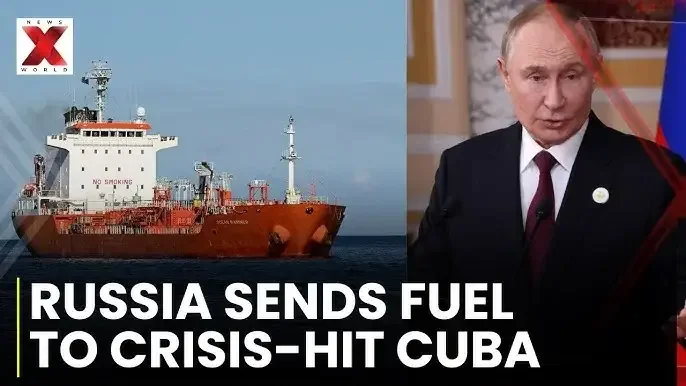
A Russian oil tanker has entered Cuban waters carrying a major crude shipment, marking the first delivery to reach the island since January, according to Antigua News Room, citing reports from Russia's Interfax news agency.
The arrival of the tanker comes just days after US President Donald Trump signalled a possible softening of the de facto oil blockade his administration has maintained against Cuba since the start of the year. Trump told journalists aboard Air Force One on Sunday that he had "no problem" with Russia or other countries sending supplies to the island.
As reported by Antigua News Room, Russia's Interfax agency identified the vessel as the tanker Anatoly Kolodkin, carrying what it described as a "humanitarian shipment" of 100,000 tonnes of crude oil. The tanker is expected to offload its cargo at the Matanzas terminal within hours.
Cuba has been enduring a series of nationwide blackouts as the blockade compounded already severe existing energy shortages. Last week, the World Health Organization warned that fuel scarcity had left Cuban hospitals struggling to maintain emergency and intensive care services.
Russian Energy Minister Sergei Tsivilev said on Wednesday that Cuba "had found itself in a difficult situation as a result of sanctions pressure," adding, "That is why we are currently sending humanitarian supplies to Cuba."
Cuba's crisis deepened sharply after 3 January, when US forces seized Venezuelan leader Nicolás Maduro — a close ally of the Cuban government who had been supplying the island with oil under highly preferential terms.
Trump had previously threatened tariffs on any nation sending oil to Cuba, and the US Treasury Department added Cuba to a list of countries barred from receiving Russian oil deliveries just over a week ago. His Sunday remarks therefore appeared to represent an abrupt reversal, though it remained unclear whether the statement signals a permanent policy shift or a temporary accommodation.
"We have a tanker out there. We don't mind having somebody get a boatload because they need... they have to survive," Trump said.
Cuba's communist government, led by President Miguel Díaz Canel, has been in negotiations with the Trump administration in search of a path out of the crisis. However, both sides have publicly outlined significant political and economic red lines, leaving the prospect of common ground uncertain. Trump has recently said he could "take" Cuba, while the island's leadership has firmly rejected any enforced changes to its government or political direction.
The oil shipment is expected to provide Cuba with only a short-term lifeline. The country was already grappling with its worst economic and energy crisis since the end of the Cold War — a situation driven by declining tourism following the coronavirus pandemic, government economic mismanagement, and now the added pressure of the fuel blockade.