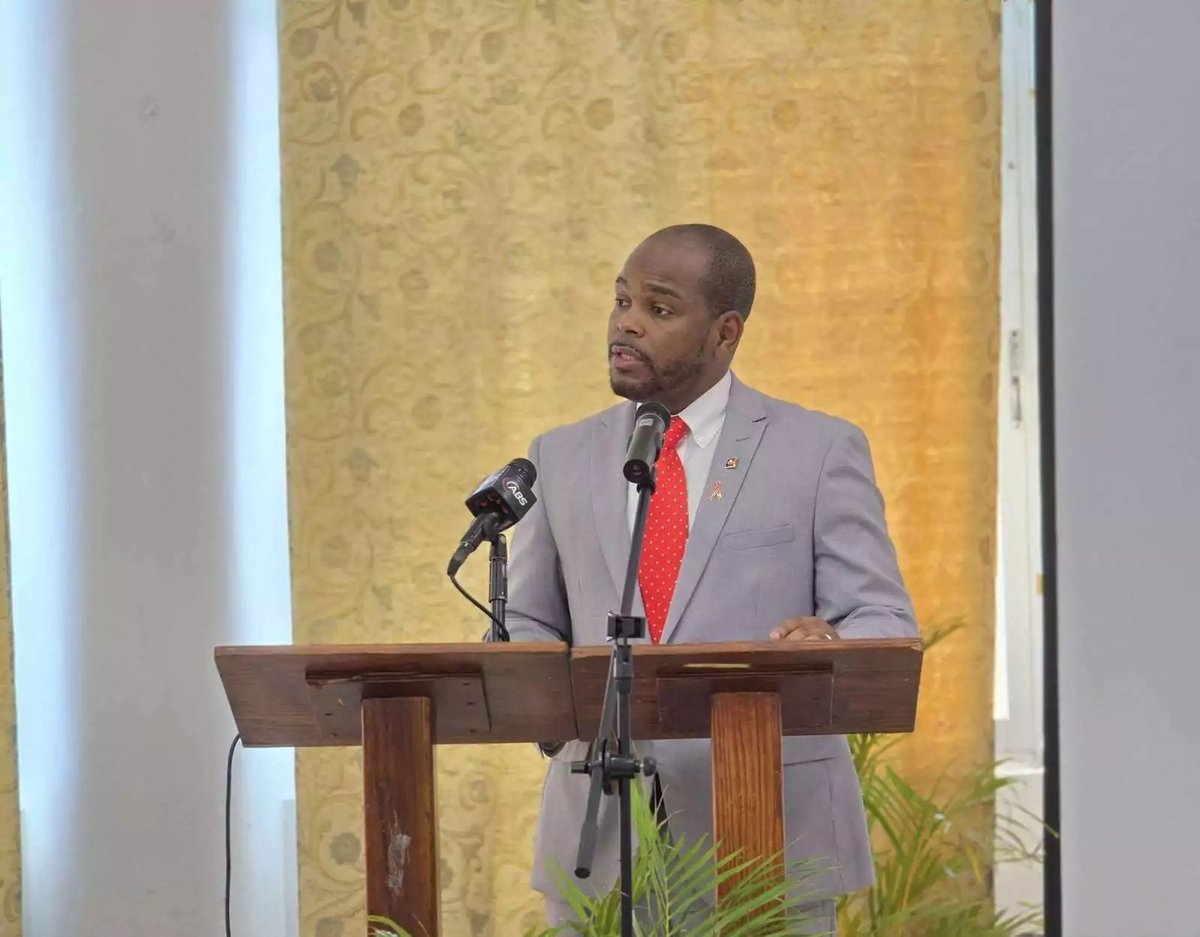
By Ambassador Dr. Clarence E. Pilgrim
As reported by Antigua News Room, Antigua and Barbuda's Permanent Secretary H.E. Clarence E. Pilgrim has published the concluding installment of his multi-part commentary series examining global conflict and the institutional frameworks needed to address it. In it, he argues that peace is no longer a matter of sentiment — it is a strategic necessity requiring deliberate construction at every level of human organisation.
Pilgrim opens by drawing on earlier entries in the series, which surveyed escalating tensions from the Middle East and Africa to Eastern Europe and fragile states throughout the developing world. His central finding: modern conflict is no longer isolated. It is interconnected, systemic, and global in its consequences.
"Peace does not endure by sentiment alone; it must be deliberately built, structured, and sustained," he writes.
The commentary advances three interdependent principles as the foundation of any durable global order: peace among nations, peace among peoples, and peace with the natural environment. Pilgrim frames these not as abstract ideals but as concrete conditions required for stability, prosperity, and the continued advancement of human civilisation.
Central to his argument is the need to reform the United Nations. While acknowledging the organisation's unmatched scope — comprising 193 member states — Pilgrim contends that its structure still reflects the geopolitical realities of 1945. Institutions that fail to evolve, he warns, risk losing legitimacy, and weakened legitimacy erodes compliance. He calls for a re-examination of the Security Council's composition and functioning, and for removing procedural constraints that render collective action ineffective.
But global institutions alone, Pilgrim argues, cannot secure lasting peace. Regional bodies must form coordinated partnerships dedicated to dialogue and early dispute resolution. Where regional diplomacy is strong, he writes, conflict can often be prevented before the wider international community is required to respond.
Economic interdependence features prominently in the framework. Nations bound together through trade and shared economic interests, Pilgrim contends, are less inclined toward conflict because stability becomes mutually beneficial. He extends this logic to environmental and scientific cooperation, pointing to the sustainable management of ocean resources, biodiversity protection, and climate systems as collective responsibilities that demand coordination rather than competition. He notes that oceans cover approximately seventy percent of the Earth's surface, yet their potential through the Blue Economy remains only partially realised.
Philosophically, Pilgrim challenges the utilitarian principle of the greatest good for the greatest number, arguing it is insufficient in a world where inequality and exclusion remain deeply linked to instability. The higher standard, he writes, is the pursuit of the greatest possible good for all. "Peace, to be durable, must be inclusive."
The commentary invokes Nelson Mandela and Martin Luther King Jr. as historical evidence that dialogue, justice, and moral clarity can transform societies — and that reconciliation represents strength, not weakness.
Pilgrim also addresses what some have begun calling the "Pilgrim Doctrine," a term he acknowledges is used in certain quarters with skepticism, suggesting his vision is overly ambitious. He accepts the characterisation with humility but not hesitation, noting that many ideas which ultimately shaped human progress were once dismissed as unrealistic.
"The circumstances we now face are not theoretical. They are immediate, measurable, and consequential," he writes. "To respond effectively requires not caution in thinking, but clarity of purpose."
The commentary concludes with a call for the creation of zones of peace — not passive spaces free of conflict, but structured environments in which nations commit to dialogue, cooperation, and mutual respect as primary means of resolving disputes. The choice before the international community, Pilgrim argues, is stark: continue down a path of geopolitical rivalry and fragmented cooperation, or take deliberate steps toward a system built on stability and shared progress.
"If we fail, instability will continue to define this century," he writes. "If we succeed, peace will become not merely an aspiration, but the governing architecture of human progress."
H.E. Clarence E. Pilgrim serves as Permanent Secretary and has contributed this commentary as part of an ongoing series on global peace and international governance.