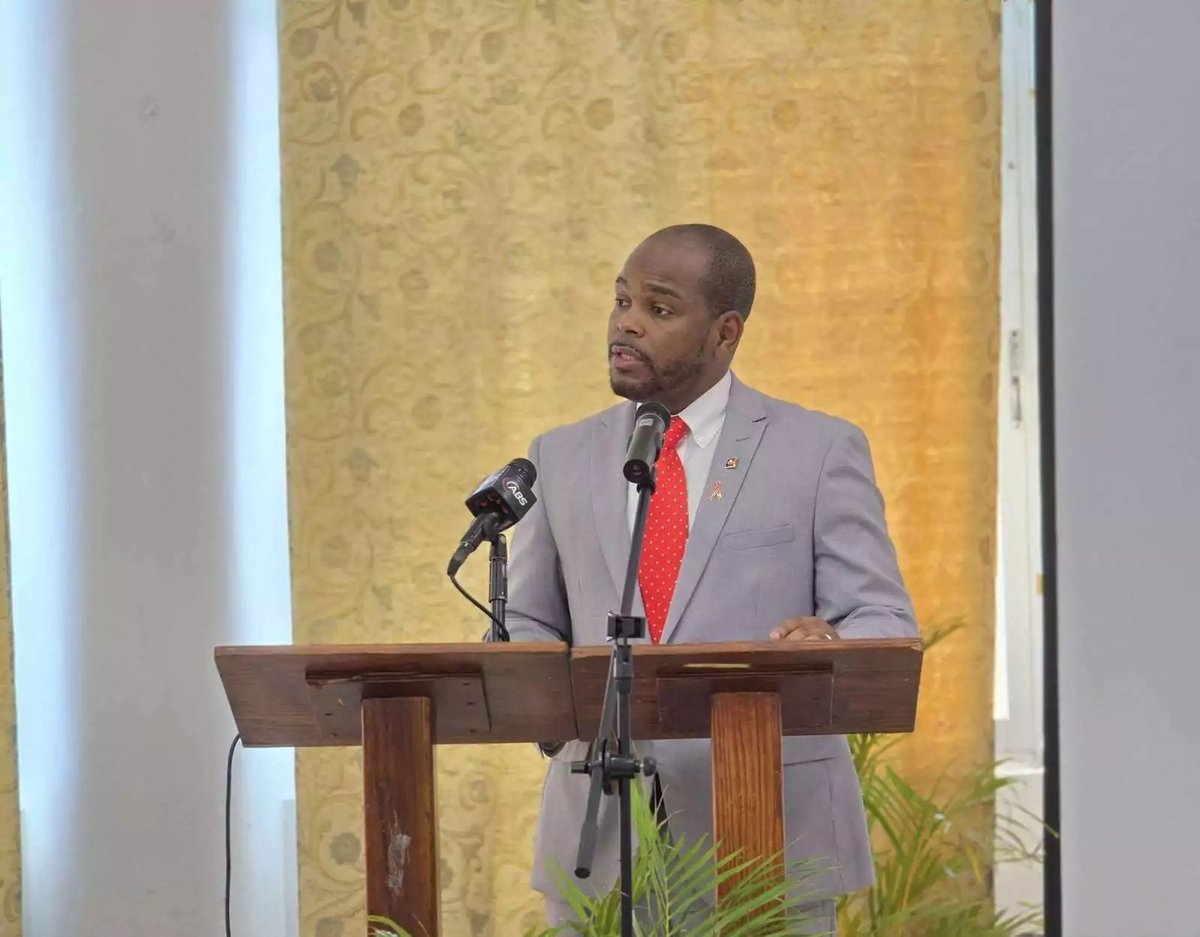
H.E. Jiang Wei, Ambassador of the People's Republic of China to Antigua and Barbuda, has outlined China's development priorities and their implications for bilateral relations following the conclusion of the country's annual Two Sessions legislative meetings.
In March 2026, China held the fourth session of the 14th National People's Congress and the fourth session of the 14th National Committee of the Chinese People's Political Consultative Conference. The sessions reviewed and approved key documents, including the Government Work Report, which established clear development goals for 2026 and set the key directions of China's 15th Five-Year Plan (2026–2030).
Ambassador Jiang described the Two Sessions as a demonstration of what he termed "whole-process people's democracy," noting that some 5,000 deputies and members brought perspectives drawn from rural field research, community consultations, and frontline work to deliberate on plans for advancing Chinese modernization.
China's economy posted strong results over the past year. GDP grew by 5 percent, reaching 140.19 trillion yuan. Urban employment rose by 12.67 million jobs, while the average surveyed urban unemployment rate stood at 5.2 percent. The number of employed people among those lifted out of poverty remained above 30 million. Foreign trade registered rapid growth, export diversification advanced significantly, and a basic equilibrium was maintained in the balance of payments.
China continued to expand its presence in emerging technology sectors, leading in the research, development, and application of artificial intelligence, biomedicine, robotics, and quantum technology. R&D spending reached 2.8 percent of GDP, the value of technology contract transactions rose by 10.8 percent, and value added from core digital economy industries exceeded 10.5 percent of GDP. Over the past five years, the Chinese economy has grown at an average annual rate of 5.4 percent, accounting for around 30 percent of global growth.
The Government Work Report identifies expanding high-standard opening up as a major task for 2026, calling for mutually beneficial cooperation, institutional-level openness, and broader international economic flows. China's 15th Five-Year Plan explicitly commits to building new institutions for a more open economy and promoting the high-quality joint development of the Belt and Road Initiative, alongside an equal, multipolar world order and inclusive economic globalisation.
Trade between China and Latin America and the Caribbean reached US$565.28 billion in 2025, a year-on-year increase of 6.5 percent — the second consecutive year that bilateral trade has exceeded US$500 billion, growing faster than China's overall foreign trade. Chinese President Xi Jinping addressed the Fourth Ministerial Meeting of the Forum of China and the Community of Latin American and Caribbean States last May, announcing the launch of five cooperation programmes: the Solidarity Program, Development Program, Civilization Program, Peace Program, and People-to-People Program.
China's Policy Paper on Latin America and the Caribbean, released last December, elaborated on Beijing's policy priorities for the region in the new era. During this year's Two Sessions, Foreign Minister Wang Yi stated that China-LAC cooperation reflects mutual support among Global South countries and emphasised that China does not engage in geopolitical schemes, interfere in other countries' internal affairs, or ask nations to choose sides. He expressed strong confidence in the future of China-LAC relations.
Ambassador Jiang drew a direct parallel between China's stated commitment to common prosperity and the people-centred growth and development framework outlined in Antigua and Barbuda's 2026 Budget Statement. He said China is ready to work with Antigua and Barbuda to deepen governance experience-sharing, align development strategies, advance both major signature projects and smaller community wellbeing initiatives, and expand practical cooperation across all fields to benefit both peoples.