COMMENTARY: The Cost of Silence — How the OAS Is Undermining Its Own Relevance
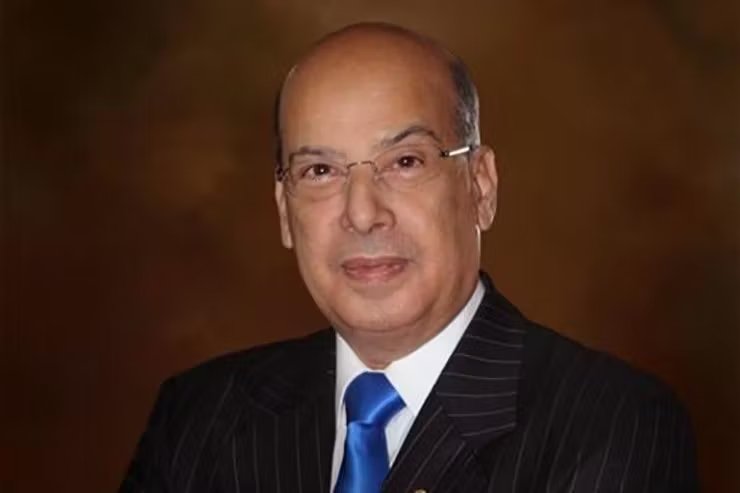
By Sir Ronald Sanders
The Organization of American States faces a defining test — not of its existence, but of its significance. According to Antigua News Room, the commentary below was authored by Sir Ronald Sanders, Ambassador of Antigua and Barbuda to the United States and the OAS, and Chancellor of the University of Guyana.
The OAS continues to convene and to commemorate, but it has conspicuously failed to tackle the pressing political issues of the day. At a time of global turmoil, economic strain, and mounting pressure on democratic governance, the organization's silence has been deafening. Issues of real consequence to the peoples of the Americas have arisen with urgency. Yet the OAS, as a collective body, has neither addressed them directly nor issued even a modest statement of concern.
Instead, its attention has turned to commemorations — some stretching over several days. These observances carry value, but they stand in stark contrast to the absence of engagement on matters that directly affect the stability, security, and welfare of the hemisphere. The impression conveyed is not one of deliberation, but of avoidance.
This silence is not accidental. It reflects a growing reluctance among member states to expose divisions on difficult issues. Differences exist, and in some cases they are deepening. Rather than confront those differences through diplomacy, member states appear to prefer setting them aside — proceeding as if unity remains intact. It does not. The effort to preserve the appearance of consensus, while avoiding its substance, is steadily diminishing the organization's credibility.
The OAS was not conceived as a ceremonial body. Its Charter assigns it clear purposes: strengthening peace and security, promoting and consolidating representative democracy, and eradicating extreme poverty. These are obligations, not aspirations.
The organization also faces mounting financial constraint. Some of its wealthier member states are pressing for a zero-growth budget in the coming year, even as the current budget has already been reduced, mandates scaled back, and staffing cut. In these circumstances, further constraint is not a neutral act. It weakens institutional capacity and signals a diminished commitment to the organization itself.
The question, therefore, is not only what the OAS does — but what its member states are prepared to allow it to become.
For small and vulnerable states, this question carries particular weight. Multilateral institutions provide a framework in which law, dialogue, and collective action can moderate imbalances of power. When that framework weakens, the consequences are immediate and real.
If the OAS is to remain relevant, several steps are essential.
First, member states must demonstrate a willingness to engage substantively on issues that matter, even where agreement is not assured. Silence cannot serve as a substitute for diplomacy.
Second, the organization must show measurable impact in the areas where it holds a mandate. Its effectiveness will be judged by outcomes, not by process.
Third, the question of resources must be addressed with candour. No organization can be expected to respond to expanding challenges while its means are steadily reduced.
Finally, member states must accept that managing disagreement is an inherent part of multilateralism. Avoiding disagreement does not preserve unity — it erodes it.
The OAS remains a vital institution, but its relevance cannot be assumed. It must be demonstrated. The choice is clear: act with purpose and retain influence, or continue along the present course and risk gradual marginalisation.
At this juncture, the hemisphere should expect more than continuity. It should expect engagement.
(The author is Ambassador of Antigua and Barbuda to the United States and the OAS, and Chancellor of the University of Guyana.)