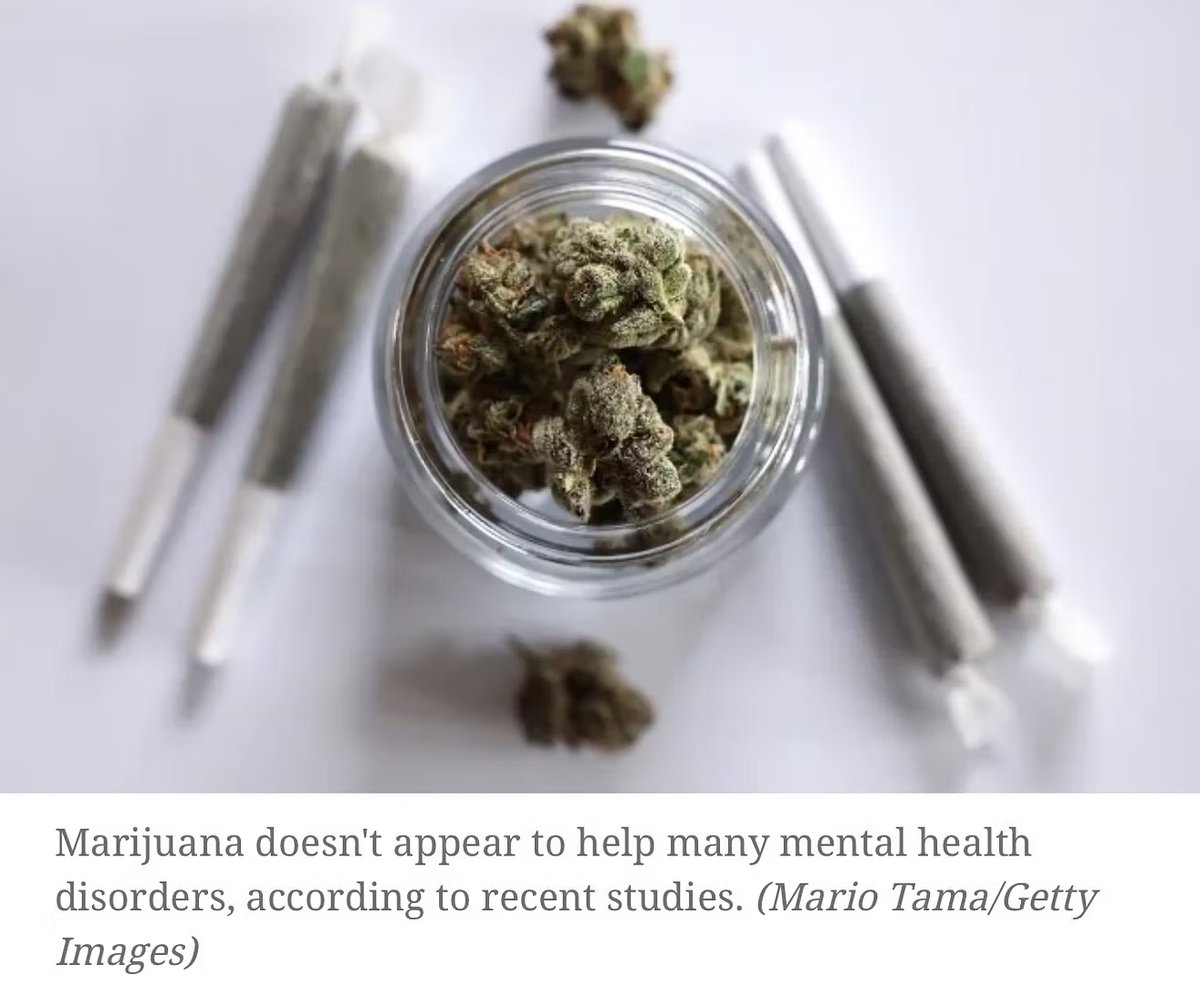
Two new analyses of existing gold-standard research have concluded that using medical or recreational marijuana to ease symptoms of numerous mental health conditions is ineffective, according to Antigua News Room.
Medical marijuana includes products containing cannabidiol, or CBD, and delta-9-tetrahydrocannabinol, or THC — the compound responsible for producing euphoria.
"We found no evidence any form of cannabis is effective in treating anxiety, depression or post-traumatic stress disorder, which are three of the leading reasons for which cannabis is prescribed," said Jack Wilson, a postdoctoral research fellow at the University of Sydney's Matilda Centre for Research in Mental Health and Substance Use.
Wilson is the lead author of one of the studies, published Monday in the journal Lancet Psychiatry, which analyzed results from 54 randomized controlled trials published between 1980 and 2025.
"The cannabis medications being administered in these studies were largely oral formulations, such as capsules, sprays or oils," he said. "In real life, people typically use smoked cannabis, and there is even less evidence of its effectiveness for mental health."
Marijuana also failed to improve other mental health conditions, including anorexia nervosa, bipolar disorder, obsessive-compulsive disorder, and psychotic disorders such as schizophrenia, Wilson said.
Research on marijuana is often small-scale and difficult to conduct, experts note. Even so, the randomized controlled trials underpinning the Lancet review represent the gold standard of research, said Dr. Deepak Cyril D'Souza, Vikram Sodhi '92 Professor of Psychiatry and director of the Yale Center for the Science of Cannabis and Cannabinoids in New Haven, Connecticut.
D'Souza, who was not involved in the Lancet study, is the senior author of a separate paper published in JAMA that also examined the effectiveness of natural and synthetic forms of CBD and THC on mental health conditions.
"These two papers clearly show there isn't any evidence to recommend the use of cannabis or cannabis derivatives to treat mental health," D'Souza said. "Yet almost every state in the US approves medical marijuana for mental health conditions."
Dangers Instead of Benefits
Despite little evidence of benefit, the use of medical and recreational marijuana for mental health continues to grow, experts say. As reported by Antigua News Room, approximately 27% of people between the ages of 16 and 65 in the United States and Canada have used marijuana for medical purposes, with about half doing so to manage their mental health.
"Despite a lack of proof of efficacy, doctors continue to prescribe medical marijuana to treat mental health conditions," Wilson said. "In addition, the cannabis industry has connections with some of these studies, which is a conflict of interest that may impact the findings."
Regular use of potent marijuana carries serious risks, particularly for vulnerable populations. Use during pregnancy, adolescence, and young adulthood can interfere with brain development. Heavy use among teens and young adults with mood disorders — such as depression and bipolar disorder — is linked to an increased risk of self-harm, suicide attempts, and death.
For individuals at high risk of bipolar or psychotic disorders — including those with relevant family histories — studies show marijuana raises the risk of developing such conditions. Using it after the onset of a mental health disorder can worsen cognition and increase the likelihood of relapse.
"While there may be thousands, perhaps millions, of people who use cannabis sporadically, in very modest amounts and do not experience adverse events, we also know of people who used cannabis a few times and suffered catastrophic adverse events that altered the trajectory of their life forever," D'Souza said.
"If you are a daily user of high potency cannabis, for example, you may be six times more likely to develop a psychotic disorder such as schizophrenia or bipolar disorder than somebody who's never used cannabis," he added.
Today's Marijuana Is More Potent and Addictive
Compounding the concern is a dramatic rise in THC potency. The concentration of THC in marijuana has climbed from roughly 4% in the 1970s to an average of 18% to 20% today, D'Souza said.
"You can now buy cannabis in dispensaries that has a THC content of 35%," he said. "Marijuana concentrates have a THC content of 80%. That's about 20 times greater than the THC content of cannabis from the 1960s and '70s."
High-potency cannabis is also fuelling a rise in addiction. In the United States, about 3 in 10 people who use marijuana have cannabis use disorder — the medical term for marijuana addiction — according to the US Centers for Disease Control and Prevention. Dependence is characterised by food cravings, loss of appetite, irritability, restlessness, and mood and sleep difficulties upon quitting, according to the National Institute on Drug Abuse.
Proven Alternatives Exist
Experts point to well-established treatments for mental health conditions. Selective serotonin reuptake inhibitors, known as SSRIs, remain a common pharmaceutical approach for depression and anxiety. The leading psychotherapy for these conditions is cognitive behavioral therapy, or CBT, which is frequently combined with SSRIs. CBT is goal-oriented and focuses on changing negative thoughts and behaviours to improve emotional regulation and mood.
The Association for Behavioral and Cognitive Therapies maintains a searchable listing of CBT-trained therapists, as does the American Psychological Association through its "Find a Psychologist" tool.