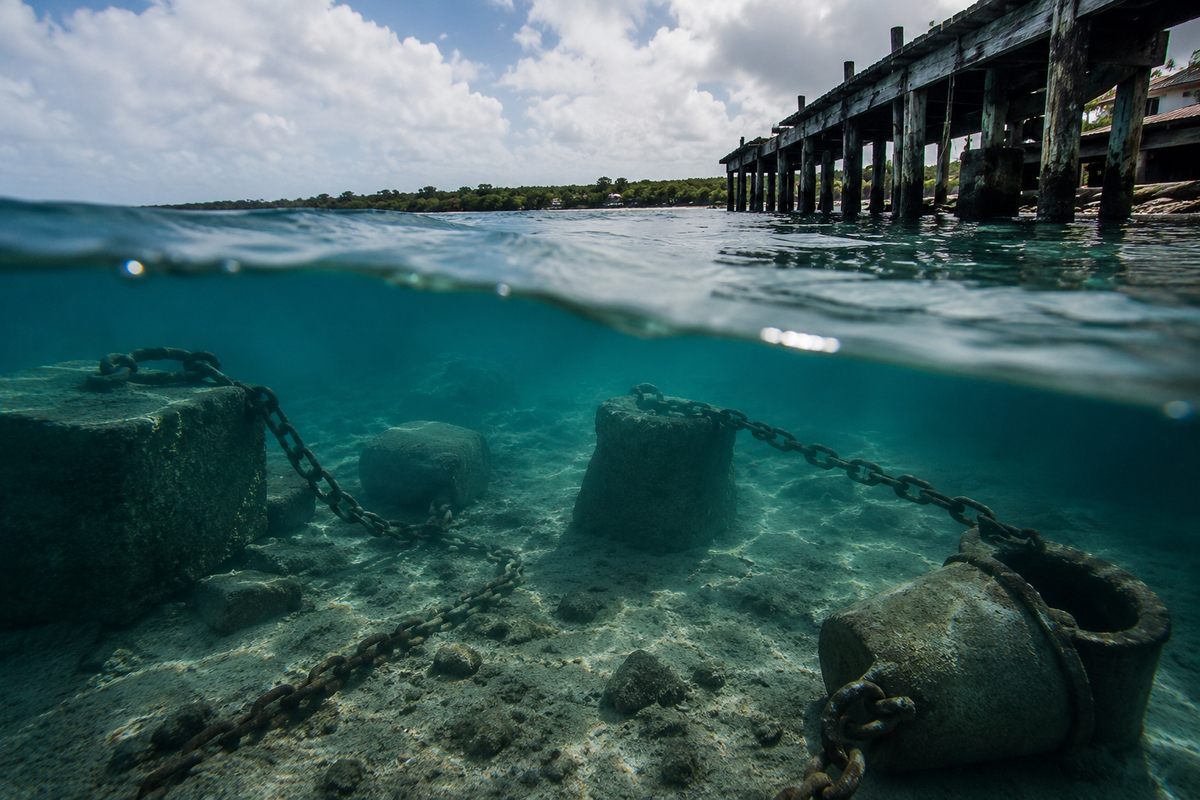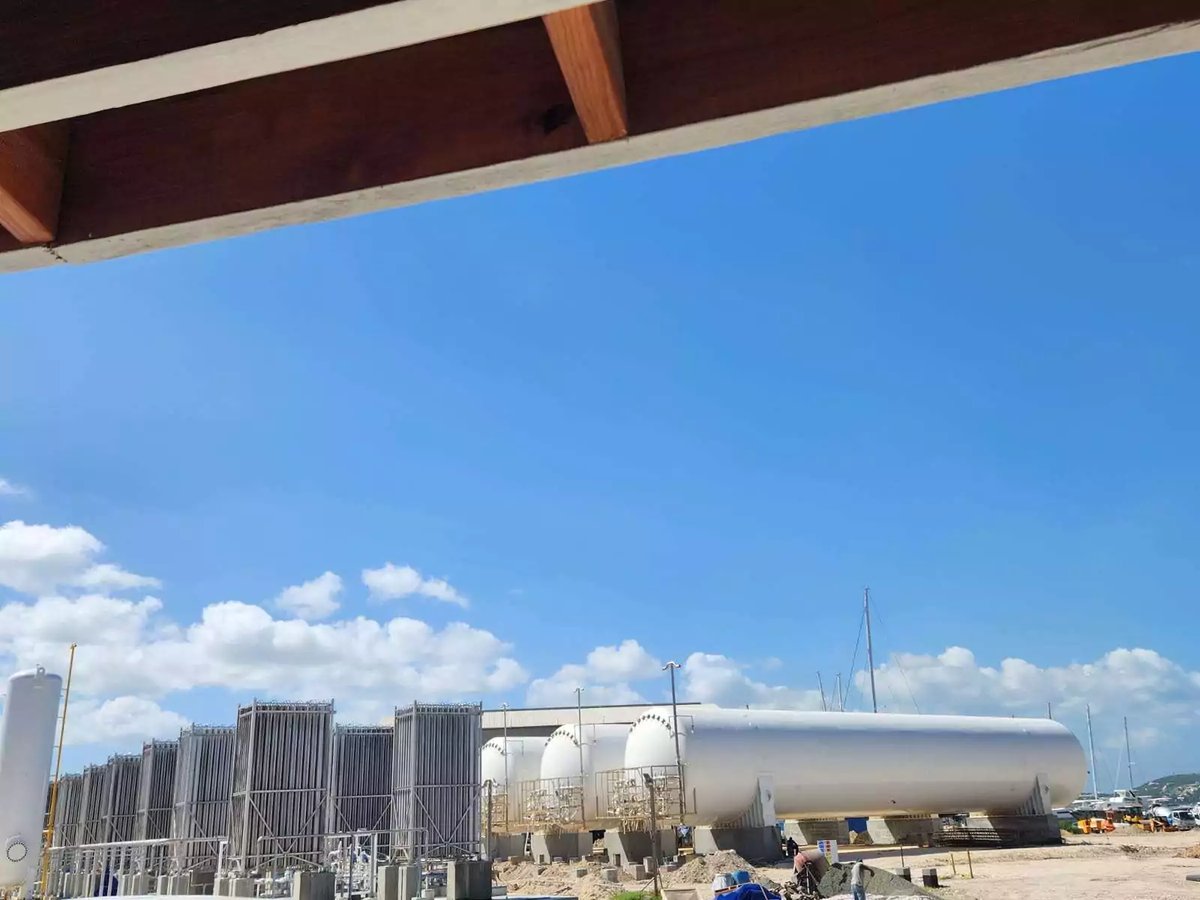
The dredging channel at Crabbs Peninsula is approximately 98 percent complete, with Minister of Utilities and Energy Melford Nicholas announcing that LNG vessels should be navigating the channel by June — finally bringing the long-awaited US$50 million power plant into full operation. According to Antigua.news, Nicholas made the announcement during an appearance on ABS Television's Monday Meeting with the Minister programme.
The minister said remaining work is concentrated in the turning basin, the section of the channel where vessels manoeuvre, which he expects to be cleared within five weeks.
"I anticipate that certainly by June, there should be movement of vessels within that particular channel to be able to bring the LNG plant into full operation," Nicholas said.
The plant is a joint venture between the Antigua Public Utilities Authority (APUA), the Hadeed Group's Antigua Power Company (APC), and Houston-based Eagle LNG. The facility itself has been operationally ready for some time, with dredging complications serving as the sole obstacle preventing LNG vessels from accessing the site. Director General of Communications Maurice Merchant had previously confirmed that channel access remained the critical outstanding issue.
Dredging crews have faced persistent challenges due to the rocky composition of the sea floor. Blue Ocean Dredging has been working alongside a supplementary company to address the hard material. As of December 2025, a €1.1 million Caterpillar 6015 excavator purchased in the Netherlands had arrived on site to assist, with approximately 150,000 cubic metres of dredging still required at Crabbs Harbour at that time. The government had also brought in Dutch Dredging to supplement Blue Ocean's efforts, though Cabinet received reports that the additional company's equipment proved less effective than the primary contractor's machinery.
The 40-megawatt dual-fuel plant is equipped with five Wärtsilä 34DF engines capable of operating on either gas or light fuel oil. It is projected to produce 40 percent fewer carbon emissions than Antigua's existing generation infrastructure.
Nicholas told ABS that a 25 percent reduction in fuel costs — modelled on results already achieved in Barbuda's hybrid power system — would translate to approximately EC$60 million in annual savings for APUA.
Beyond electricity generation, the facility is designed to function as a regional LNG terminal capable of supplying cruise ships and other LNG users across the sub-region, positioning Antigua and Barbuda as an energy hub for the Eastern Caribbean. APC Chairman Francis Hadeed has previously indicated that once the plant is fully operational, LNG can be loaded into ISO tankers on-site and exported to Barbuda, St Kitts, and other islands throughout the region.
The deeper channel is also expected to benefit the cement industry by accommodating larger vessels delivering cement to Crabbs — a commodity currently in such short supply that deliveries by smaller vessels sell out within 24 hours.
Nicholas acknowledged that rising global oil prices linked to the Middle East conflict have added urgency to the energy transition. He said APUA is currently holding electricity prices stable by absorbing the additional fuel costs, but warned the arrangement cannot continue indefinitely if prices keep climbing.
The shift to LNG, combined with a planned solar expansion targeting a 50-megawatt system over the next three to four years, forms the cornerstone of the country's long-term energy independence strategy, the minister said.