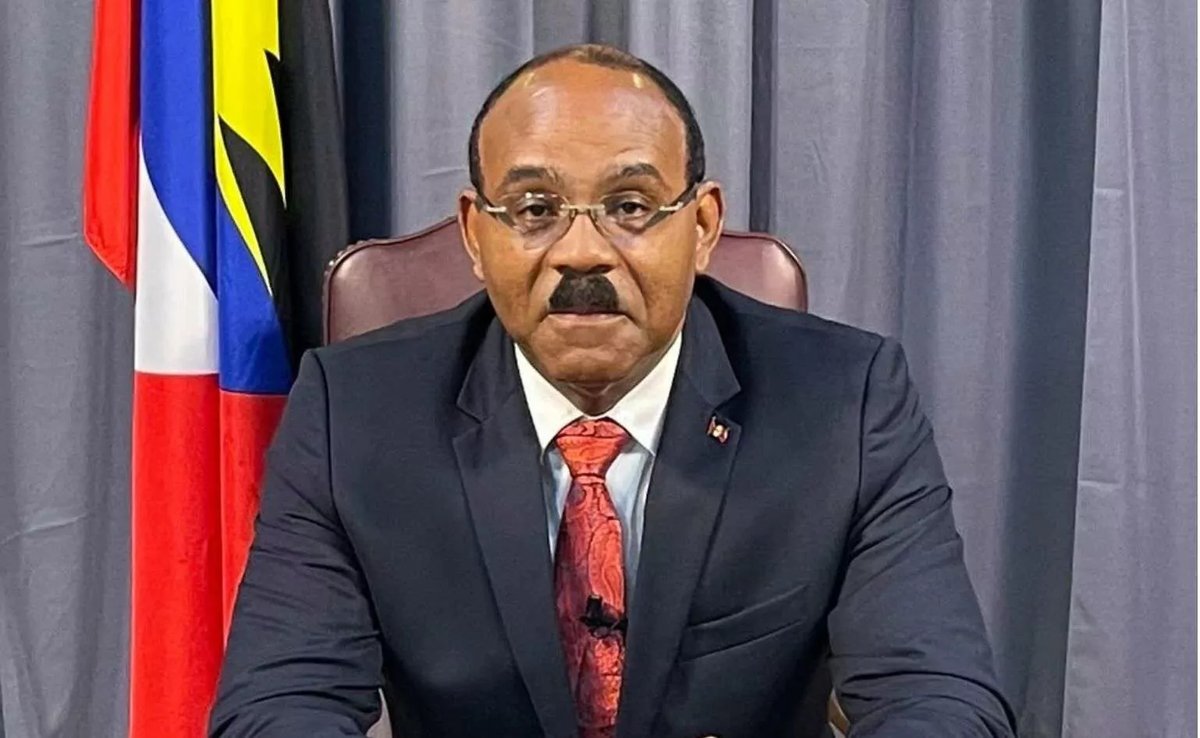
Prime Minister Gaston Browne has announced that his government will implement two rounds of Antigua and Barbuda Sales Tax relief this year, with reductions scheduled for April and August to coincide with back-to-school shopping periods.
According to Antigua.news, Cabinet approved the removal of ABST on food and school supplies for April last week. Browne confirmed the August measures during an appearance on the Browne and Browne Show on Saturday, stating that both rounds are timed to provide targeted relief when household spending on food and school-related items peaks.
Browne said the relief stems from a policy decision taken by Cabinet in January and forms part of a broader package of cost-of-living measures being rolled out by the administration. "We also promised as well, there was a policy decision taken in January in which we said that we would give periodic reduction of the ABST to reduce the cost of living," he said.
The Prime Minister noted that the government had originally sought to apply the tax relief more broadly but narrowed its focus to food and school supplies following advice from the International Monetary Fund, which warned that a wider application would significantly impact government revenue.
The ABST relief measures are being implemented alongside an interim five percent salary increase for all public servants, effective the end of March, while negotiations toward a final compensation figure are set to continue later in the year. Browne noted this was not the first time the government had provided an interim increase ahead of completed negotiations, having done so previously around 2016 and 2017.
The government is also raising the national minimum wage from approximately EC$9.00 to EC$11.50 per hour, a move Browne described as one of the largest single increases ever applied to the minimum wage. He said the EC$2.50 jump was designed to rapidly close the gap between the minimum wage and a liveable wage, with the government intending to push toward an eventual EC$13.00 per hour within a two-to-three-year period.
Browne attributed the need for these measures to rising prices driven by ongoing global geopolitical developments, including the conflict in Iran, which has pushed fuel and food costs higher across import-dependent economies such as Antigua and Barbuda. "We have policies in place for all, for the most vulnerable among us, and certainly when it comes to the issue of cost of living, we're doing all we can to make sure that we suppress prices," he said.
The Prime Minister added that the government had also absorbed a recent increase in petroleum prices rather than passing the cost on to consumers, keeping fuel prices unchanged despite higher import costs.