HAVANA — The Cuban government has refused a request from the U.S. Embassy in Havana to import diesel fuel for its generators, as the Trump administration maintains a fuel blockade on the island. According to Antigua News Room, two U.S. officials familiar with the matter confirmed the development on Friday, speaking on condition of anonymity to discuss the sensitive issue.
The refusal has prompted the U.S. State Department to weigh a reduction in embassy staffing in Havana due to the diesel shortage. Such a move would likely trigger a reciprocal U.S. demand for a corresponding cut in staffing at the Cuban Embassy in Washington, the officials said. The Cuban government's rejection was first reported by The Washington Post.
The White House, the State Department, and the Cuban Embassy in Washington did not immediately respond to requests for comment.
Cuba has been grappling with dwindling oil supplies since the U.S. moved against Venezuela's leadership, cutting off critical petroleum shipments from what had been one of Havana's closest allies. President Donald Trump subsequently threatened tariffs on any country selling or supplying Cuba with oil.
The island has been relying on natural gas, solar power, and its own oil production to run thermoelectric plants, but supply has fallen well short of demand. Millions of the nation's 11 million residents struggle to prevent food from spoiling. Hospitals have canceled surgeries, the country's leading university has reduced classes, and transportation shutdowns have compounded daily hardships.
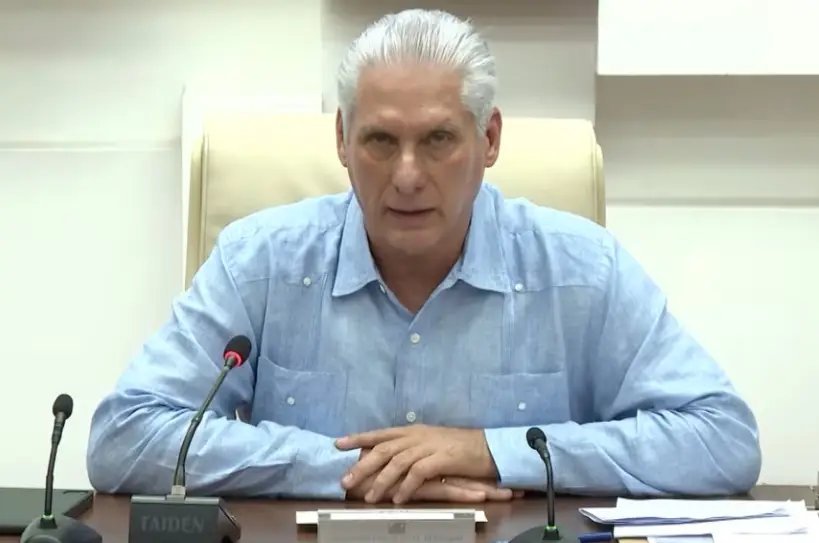
The diesel standoff comes as Trump has been pressing for sweeping political change under Cuban President Miguel Díaz-Canel. Trump and Secretary of State Marco Rubio have both described Cuba as a country where the U.S. intends to expand its influence. They are demanding, among other things, that Cuba release political prisoners and move toward political and economic liberalization in exchange for a lifting of sanctions.
The Trump administration is also seeking Díaz-Canel's departure from power, as previously reported by the Associated Press. No details have been offered regarding who Washington would like to see assume leadership.
Trump has repeatedly suggested Cuba's government is on the verge of collapse. Following a total collapse of Cuba's electrical grid earlier this week that triggered an island-wide blackout, Trump told reporters he believed he would soon have "the honor of taking Cuba."
"Taking Cuba in some form … whether I free it, take it, I think I can do anything I want with it, if you want to know the truth," Trump said. "They're a very weakened nation right now."
Trump has also suggested that Cuba's top leaders would be wise to avoid the fate of former Venezuelan President Nicolás Maduro, who was removed in a U.S. military operation in January and brought to New York to face federal drug conspiracy charges. Venezuela had been Cuba's closest ally and its primary source of heavily subsidized oil.
Any potential reduction in U.S. embassy staffing is not expected to be immediate. One official said the U.S. believes it holds enough diesel reserves to last approximately one month. Fuel reserves within Cuba remain tightly controlled by the government, leaving few alternative options.
The Spanish Embassy in Havana, for instance, has a significant surplus of fuel — boosted by prior imports intended for Spanish-owned hotels on the island, most of which are currently closed due to a sharp decline in tourism. The Spanish Embassy offered to share that excess with other European missions facing similar shortages, but Cuban authorities denied the request.
Díaz-Canel confirmed last week that Cuba has held talks with the U.S. government — the first official acknowledgment from Havana of widely speculated discussions with the Trump administration amid its ongoing pressure campaign.
Humanitarian organizations began delivering aid to Cuba by air on Friday, including solar panels, food, and medicine. Cuba is also expecting its first shipment of Russian oil in three months later this month.