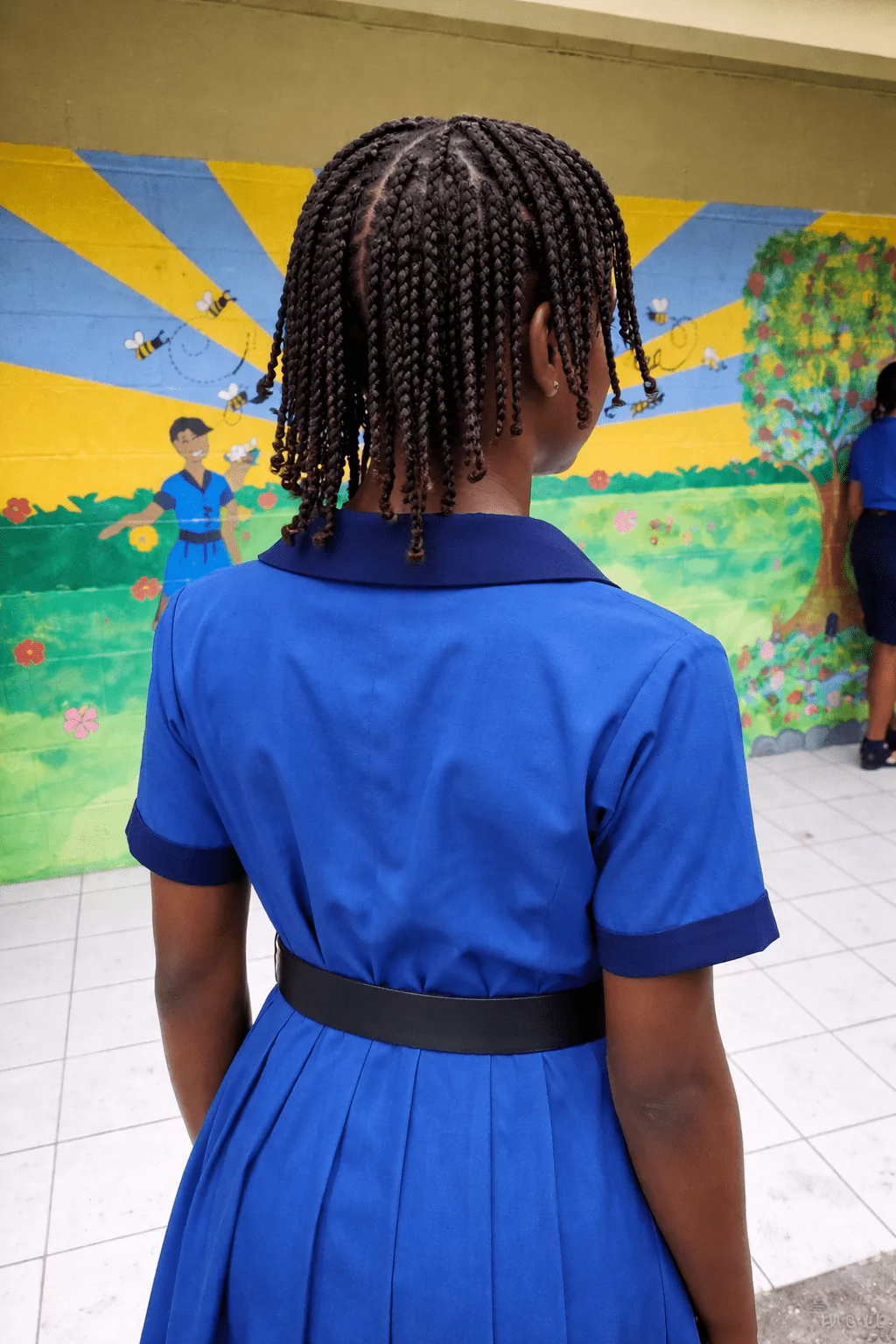
A member of the public has written to call out Antigua Girls' High School over what they describe as an unfair and disruptive enforcement of its hair policy — one that resulted in a student being sent home and losing valuable classroom time over a natural hairstyle.
According to Antigua.news, the letter writer details how the student had previously worn crocheted locs during the Christmas break and, upon returning to school, was instructed to remove them. The student complied without dispute. In an effort to maintain a neat and presentable appearance thereafter, she added a small amount of natural twist extensions to her short hair — only to be sent home again.
The letter writer emphasises that the hairstyle in question was remarkably subtle. "You would not even know that the young lady had small twists in her hair unless you actually separated or plaited the hair," the writer noted, adding that the style blended naturally and was neither excessive nor distracting.
The incident has raised broader questions about consistency in how grooming policies are applied across the country's schools. As reported by Antigua.news, the letter points out that other schools on the island permit students to wear natural twist extensions, provided their hair remains neat and appropriate. The writer questions why a student at AGHS should face disciplinary consequences for a style deemed acceptable elsewhere.
The letter argues that hairstyles such as locs and natural twist extensions carry cultural significance for many young people, particularly those with natural hair, and represent practical means of hair management rather than acts of defiance or disruption.
The writer also highlights the toll such enforcement takes on students. Having already removed one hairstyle at the school's request, the student is now being compelled to remove a freshly completed style — a situation described as creating unnecessary stress for a young person who simply wants to attend school and focus on her education.
The letter calls on the AGHS administration to review how its hair policies are being applied, urging a more balanced and culturally sensitive approach. It concludes with a pointed reminder that school policies are intended to guide students and uphold discipline, but must also be reasonable and respectful of students' realities.
"Education should always be the priority," the writer states. "Students should not be pushed out of the classroom over a neat hairstyle that does not disrupt learning or school order."