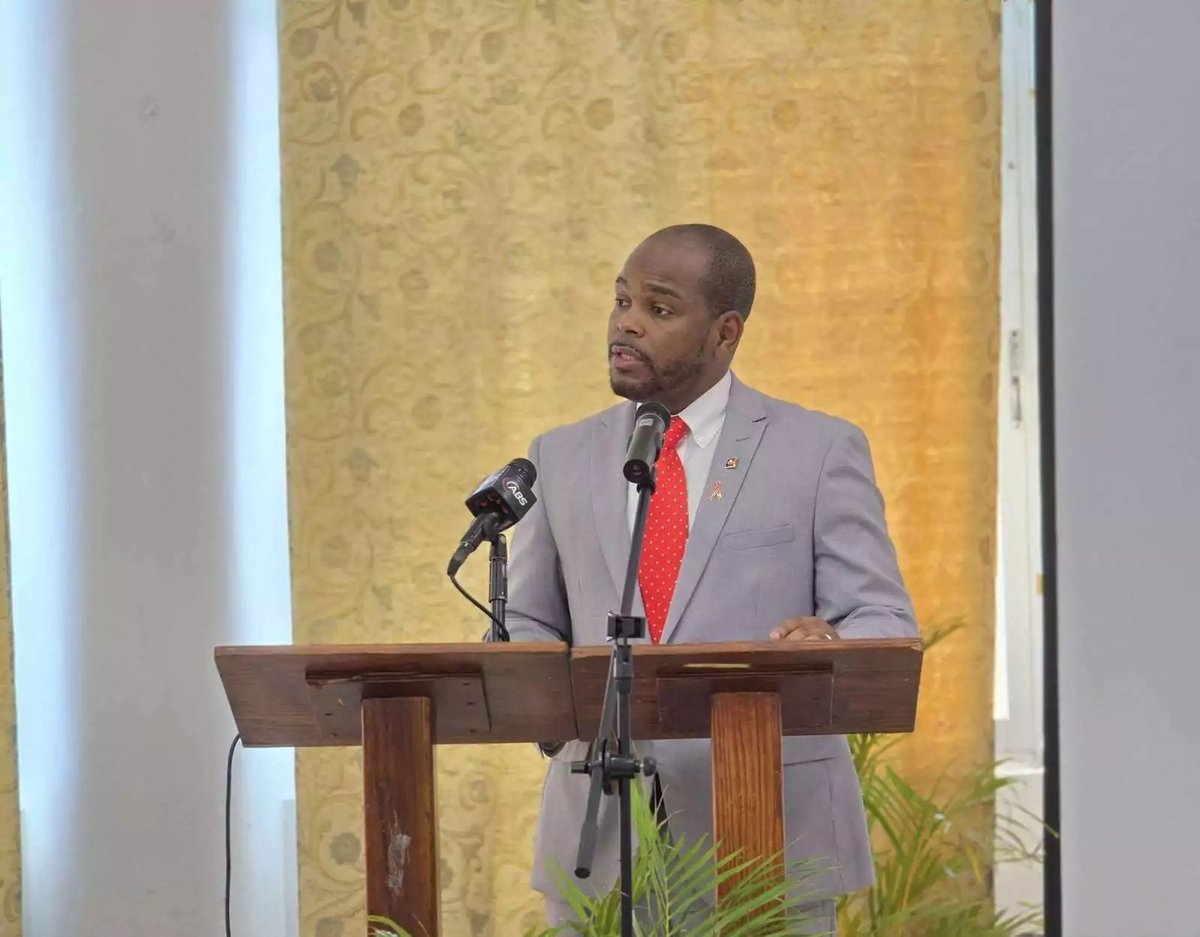
Caribbean Court of Justice (CCJ) President, the Honourable Mr Justice Winston Anderson, has proposed the establishment of an International Climate Injuries Compensation (ICIC) Fund, financed by corporate actors, to provide compensation for damage and harm resulting from extraordinary weather events. According to Antigua News Room, the proposal was put forward on 16 March 2026.
President Anderson presented the proposal while addressing the Inter-American Seminar on Climate Emergency and Human Rights: Different Perspectives, held in Brasilia, Brazil. The seminar was hosted by the Inter-American Court of Human Rights (IACtHR) and the Supreme Court of Brazil at the opening of the 187th Ordinary Session of the Inter-American Court, convened to discuss the implications of the Inter-American Court's Advisory Opinion No. 32 of 2025 on Climate Emergency and Human Rights.
While acknowledging that the Advisory Opinion established concrete obligations for governments to regulate companies and businesses contributing to the climate crisis — framing a healthy climate as part of the right to a healthy environment — President Anderson argued that this normative framework alone was insufficient. He stressed that practical measures were urgently needed to help small, vulnerable Caribbean nations and other regions recover from destruction caused by extraordinary weather events, citing the damage wrought by Hurricane Melissa in October 2025.
President Anderson acknowledged the existence of the Fund for Responding to Loss and Damage (FRLD), established by the Conference of Parties (COP) to the Paris Agreement on Climate Change and revisited at COP30 in Belém, Brazil, in November 2025. However, he expressed disappointment at the slow pace of capitalising the FRLD. He noted that while Jamaica was actively engaging with the fund, the maximum it stood to receive appeared to be approximately USD 20 million, a figure that falls drastically short of the USD 6–7 billion in damages the country had suffered.
The proposed ICIC Fund model would require multinational corporations and businesses that exceed a certain greenhouse gas emissions threshold to make mandatory contributions to the fund, collected by the states in which they operate. The fund would hold legal personality and could be sued in the country where an extraordinary weather event caused significant harm or damage.
President Anderson proposed that the fund be established through a global convention, modelled on the International Maritime Organisation's International Oil Pollution Compensation (IOPC) Funds — which compensate for oil pollution damage at sea and are backed by owners of oil vessels. Like the IOPC Funds, the ICIC Fund would align with the 'Polluter Pays' principle and with the customary law responsibility of states to ensure that economic activities within their borders do not cause environmental harm in other countries.
President Anderson first advanced the ICIC Fund concept during his keynote address, titled 'Transnational Actions in Reshaping Accountability for Climate Justice: A Caribbean Perspective,' delivered at the CANARI Partners Forum in Barbados in January 2026.
The Caribbean Court of Justice was inaugurated in Port of Spain, Trinidad and Tobago, on 16 April 2005. It currently operates with a bench of seven judges and functions as two courts in one, exercising both Original and Appellate Jurisdictions. In its Original Jurisdiction, the CCJ serves as an international court with exclusive authority to interpret and apply the Revised Treaty of Chaguaramas, which established CARICOM and the CARICOM Single Market and Economy. All 12 Member States belonging to the CSME may access the Court's Original Jurisdiction.
In its Appellate Jurisdiction, the CCJ serves as the final court of appeal for criminal and civil matters in Caribbean countries that have amended their constitutions accordingly. Five states currently access the Court in this capacity: Barbados, Belize, Dominica, Guyana, and Saint Lucia.