By Brent Simon
Across the Caribbean, cannabis policy occupies an uneasy middle ground between reform and denial. According to Antigua News Room, several jurisdictions have moved to decriminalize possession and private use of the substance, acknowledging both its cultural reality and the failure of strict prohibition — yet these same laws frequently maintain rigid bans on public consumption, insisting cannabis remain confined to private spaces.
This contradiction exposes a deeper policy problem. The region has begun to recognize the existence of cannabis use but has not yet decided how to responsibly manage it within public life.
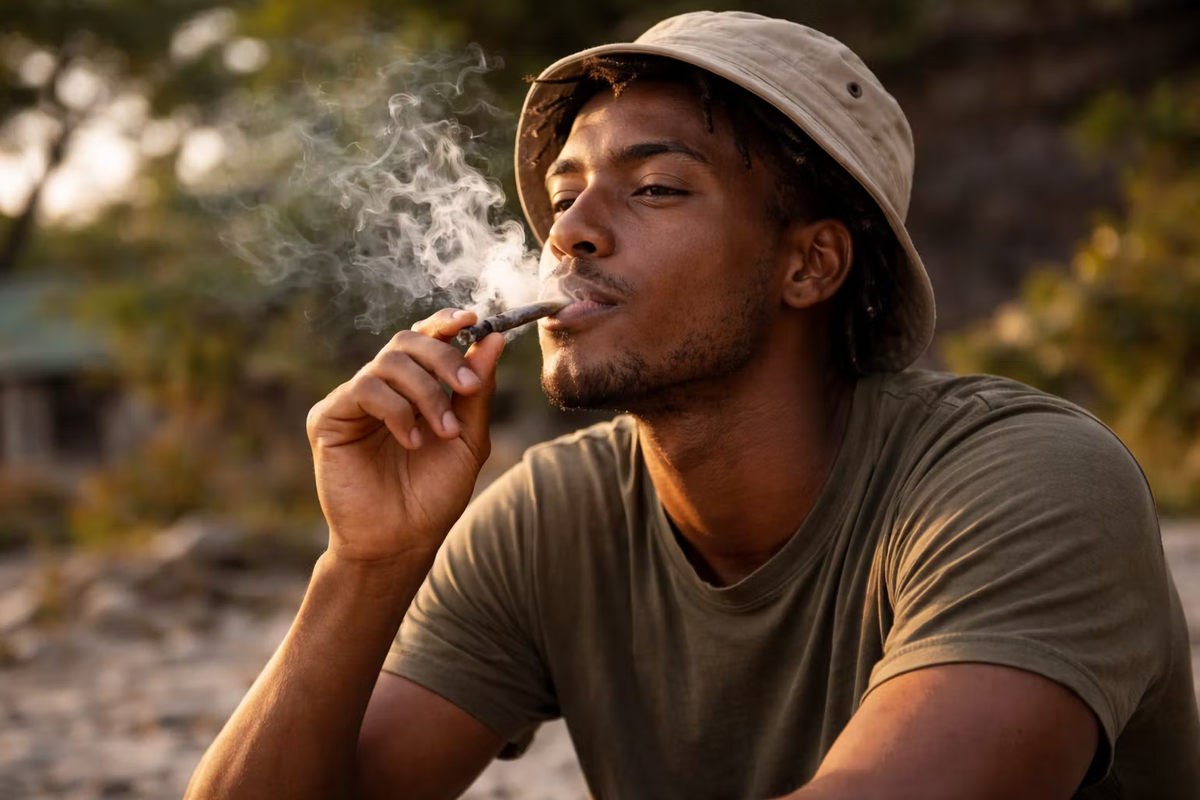
The core issue is not whether cannabis exists in public spaces — it clearly does. In practice, cannabis use already occurs in parks, on beaches, at roadside gatherings, and at social events throughout the Caribbean. Blanket public bans do not eliminate this behavior; they place it in a legal gray area where enforcement becomes inconsistent and often arbitrary. Laws that contradict everyday reality risk eroding respect for the legal system itself, particularly when citizens observe that a rule exists largely on paper while the behavior continues openly.
This tension is especially pronounced in societies where smoking remains a culturally embedded practice. Tobacco smoke, barbecue smoke, and vehicle exhaust already occupy the same public spaces from which cannabis smoke is being singled out. When cannabis laws are written as though smoking itself is uniquely incompatible with public space, they fail to engage with the broader reality that public environments already contain many forms of airborne pollutants. A policy that treats cannabis smoke as an exceptional moral threat while ignoring these other sources risks appearing less like public health policy and more like the lingering stigma of an earlier prohibitionist era.
A more coherent regulatory approach would begin by acknowledging that public space is shared space. The purpose of regulation should be to balance competing interests: the freedom of individuals to engage in legal behavior and the right of others to enjoy public environments without undue disturbance.
Rather than maintaining an unrealistic blanket prohibition, governments could adopt a framework similar to those applied to other regulated activities. This could include clearly designated consumption areas, restrictions near schools or other sensitive environments, and consistent standards governing smoke exposure regardless of its source. Such an approach would shift the conversation away from moral symbolism and toward practical governance.
The goal would not be to promote cannabis use, but to regulate it in a way that aligns law with social reality. By defining where consumption is acceptable and where it is not, governments would provide clarity to both citizens and law enforcement, reducing the ambiguity that currently surrounds public use.
The Caribbean has historically demonstrated the ability to adapt its legal frameworks in response to changing social conditions, whether in trade, tourism, or cultural expression. Cannabis policy represents another such moment of transition. Decriminalization was an important first step in acknowledging that punitive prohibition had failed. However, reform remains incomplete if it stops at partial acceptance while leaving fundamental contradictions in place.
Ultimately, the region faces a straightforward policy choice: continue to maintain laws that symbolically deny the presence of cannabis in public life, or develop regulatory systems that manage the reality responsibly. The latter path requires honesty about how societies actually function, as well as a willingness to treat cannabis as a public policy issue rather than a moral anomaly.
If the Caribbean is serious about modernizing its approach to cannabis, the next stage of reform must move beyond denial and toward practical regulation of the spaces where people live, gather, and interact.