Modern anti-Black racism was not discovered in nature. It was constructed in the Atlantic world — and what was deliberately built can, with equal deliberation, be dismantled.
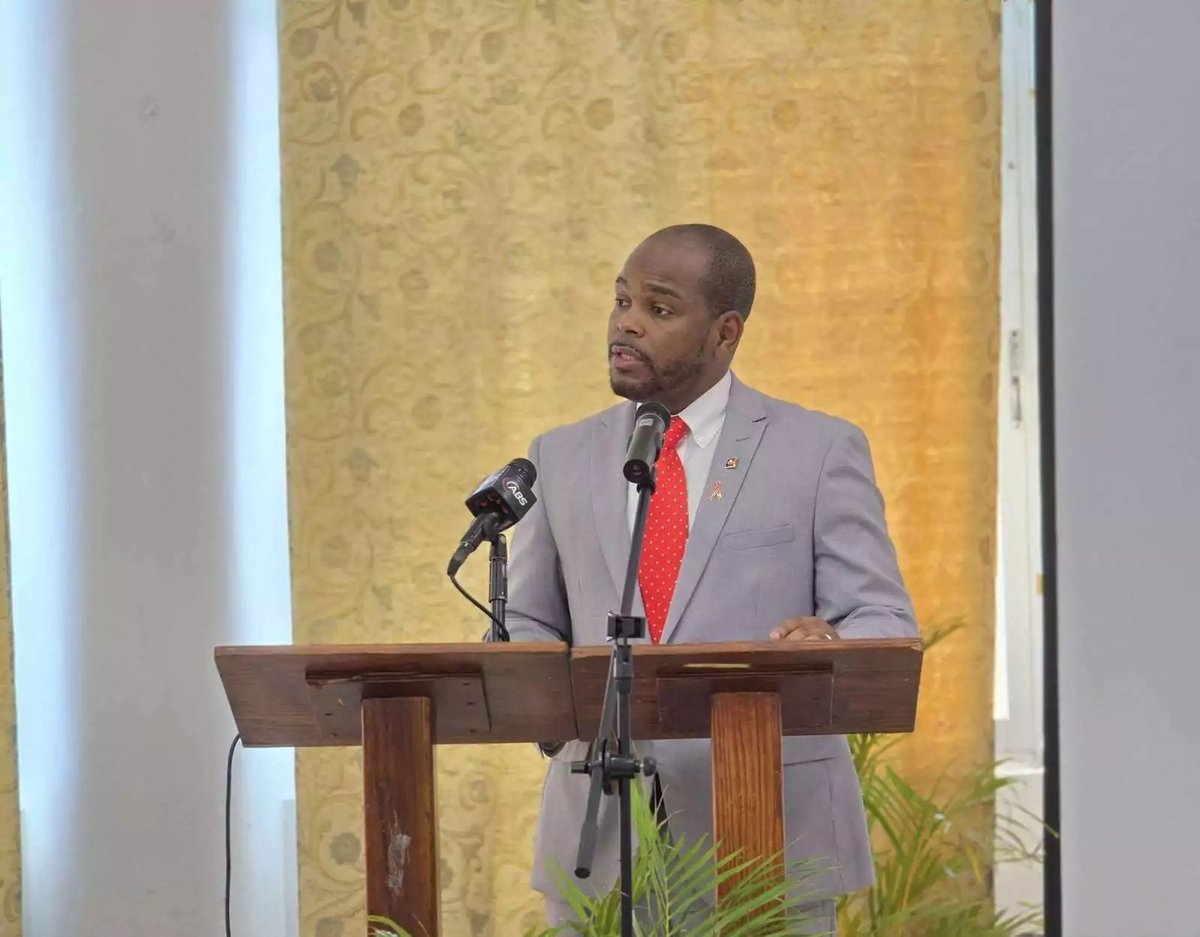
So argues Professor C. Justin Robinson, Pro Vice-Chancellor and Principal of The UWI Five Islands Campus, in an opinion piece published by Antigua News Room, examining the historical architecture of race and the responsibilities of those who inherited its rewards.
The 2026 FIFA World Cup, Robinson writes, has reignited urgent conversations about race and skin colour. He points to Vinícius Júnior — Champions League winner, global icon, a talent commanding the attention of millions — who continues to face monkey chants, thrown bananas and crowd mimicry of apes across stadiums in Spain, France and across European football. His wealth offers no shield. His fame provides no shelter.
"If a man who commands the world's attention cannot escape this degradation," Robinson writes, "imagine the fate of the invisible." He invokes the dark-skinned child in a Brazilian favela, the African migrant drowning at a European border, the Black man stopped by police for the act of existing while melanated. Millions lack Vinícius's platform, his legal team, his fortune. Their suffering makes no headlines.
Robinson traces his own awareness of race to his boyhood in St Vincent and the Grenadines. Watching football, athletics and cricket, he felt an instinctive pull toward teams with Black players — an impulse no one taught him, one that arrived, as he describes it, as naturally as thirst. He does not read this as evidence that race is biological destiny, but as solidarity formed inside history. That a child could inherit such a reflex, he argues, reveals how thoroughly skin has been made to perform political work.
Biologically, Robinson notes, skin colour is among the shallowest of human differences. Genomes are overwhelmingly alike across humanity, and pigmentation is largely an adaptation to ultraviolet radiation — more melanin where sunlight is intense, less where vitamin D synthesis requires it. Skin colour is, in his words, "a sunscreen setting," and tells us nothing reliable about intelligence, character or human worth.
The question Robinson presses is how so minor an adaptation became social destiny.
He is careful not to assign the invention of slavery, conquest or prejudice entirely to Europe. Greeks and Romans enslaved and despised outsiders, but their dividing lines were legal status, citizenship and culture — not a universal hierarchy ranked by colour. A dark-skinned free citizen could outrank a pale captive. The medieval world, similarly, was preoccupied with faith and lineage. The "Curse of Ham," later invoked to sanctify African slavery, Robinson notes, is textually revealing: Genesis curses Canaan, not Ham, and says nothing of Black skin. The association was added later, then weaponised.
A crucial hardening came in fifteenth-century Iberia, where "purity of blood" rules treated Jewish or Muslim ancestry as an inherited stain that even conversion could not erase — even as Portuguese expansion transformed the capture of Africans into an Atlantic enterprise. Religious difference began attaching itself to ancestry, body and colour.
The decisive legal laboratory, Robinson argues, stood in the Caribbean itself. In 1661, the Barbados Assembly enacted the first comprehensive English slave code — a regime of coercion that became the model for Jamaica, South Carolina and beyond. It was made in the Caribbean, but not by the people it enslaved. It was English colonial law, written by planters for plantation profit.
Virginia then supplied two refinements. In 1662, a child's status followed the mother, ensuring the children of enslaved women were born into bondage. In 1667, baptism was declared incapable of freeing an enslaved person. The enslaved womb became plantation machinery. Christianity no longer offered an exit. Bondage became visible, hereditary and permanent.
Robinson invokes Eric Williams's essential formulation: "Slavery was not born of racism; rather, racism was the consequence of slavery." The plantation required workers identifiable at a glance, whose children could be claimed, and whose condition neither conversion nor achievement could dissolve. Colour was recruited because it was visible, inheritable and inescapable. Racism, in Robinson's framing, became the moral technology of extraction.
The Enlightenment then provided intellectual respectability. Linnaeus attached temperaments to his human classifications. Craniometry, ethnology and eugenics converted prejudice into measurements. The United States became this order's most powerful engineer: its 1790 naturalisation law restricted citizenship to "free white persons," while Jim Crow laws, one-drop rules and racial integrity statutes made ancestry a legal fate.
Robinson is careful to note that this does not assign inherited guilt to every European or American. Europe produced abolitionists. America produced Black resistance — Du Bois, the civil rights movement. African rulers and merchants also participated in the trade. But responsibility, he insists, belongs to institutions, interests and choices, not blood. Acknowledging other participants must not obscure the states and planter regimes that built the system and profited most.
Which raises the question, as Robinson frames it, that no honest reckoning can avoid: what is the responsibility of those who inherited the nations that built this system?
He distinguishes guilt from obligation. A modern Briton, Frenchman, Spaniard, Portuguese or American is not morally guilty of drafting the Barbados code. But they are inheritors of its compounded wealth — walking on pavements, attending universities and drawing salaries from economies whose foundational capital was extracted from Black bodies legally classified as property. Only the inheritors of the imperial treasuries, Robinson writes, can repay what their laws took and take concrete steps to mitigate the disadvantages many still face because of their skin colour.
Yet the Caribbean, Robinson argues, inherited more than the wound. It inherited tools for closing it. The Haitian Revolution destroyed Saint-Domingue's slave regime. Haiti's 1805 constitution declared that all Haitians would be known by the "generic appellation of Blacks" — a category of oppression seized and remade as one of dignity. Williams, C. L. R. James, Elsa Goveia, Frantz Fanon and Sylvia Wynter explained the machinery of race to the world. The region was a laboratory of racial domination, but also of emancipation and thought.
That legacy, Robinson concludes, demands internal work as well. Teach the Barbados code as Caribbean and world history. Teach Haiti as a revolution in human freedom. Confront colourism in schools, hiring, advertising, romance and beauty standards. Place the names of maroons, insurgents, teachers and writers beside — or above — the planters commemorated in public spaces. Use racial categories to expose inequality where necessary, but never mistake categories for nature. And do not stop at cultural reckoning: demand the material restitution that alone can signal the colonial ledger is finally closed.