The government will permanently cover regional examination fees for eligible students, Cabinet has confirmed, formalising a programme that sets clear limits on the number of funded subjects per candidate.
Under the policy, government funding will cover entry fees, subject fees and local examination fees for up to 10 CSEC subjects, five CAPE subjects and five CCSLC subjects per eligible student. The initiative applies to students at public and private secondary schools, approved home-schooling programmes and the Antigua and Barbuda College of Advanced Studies.
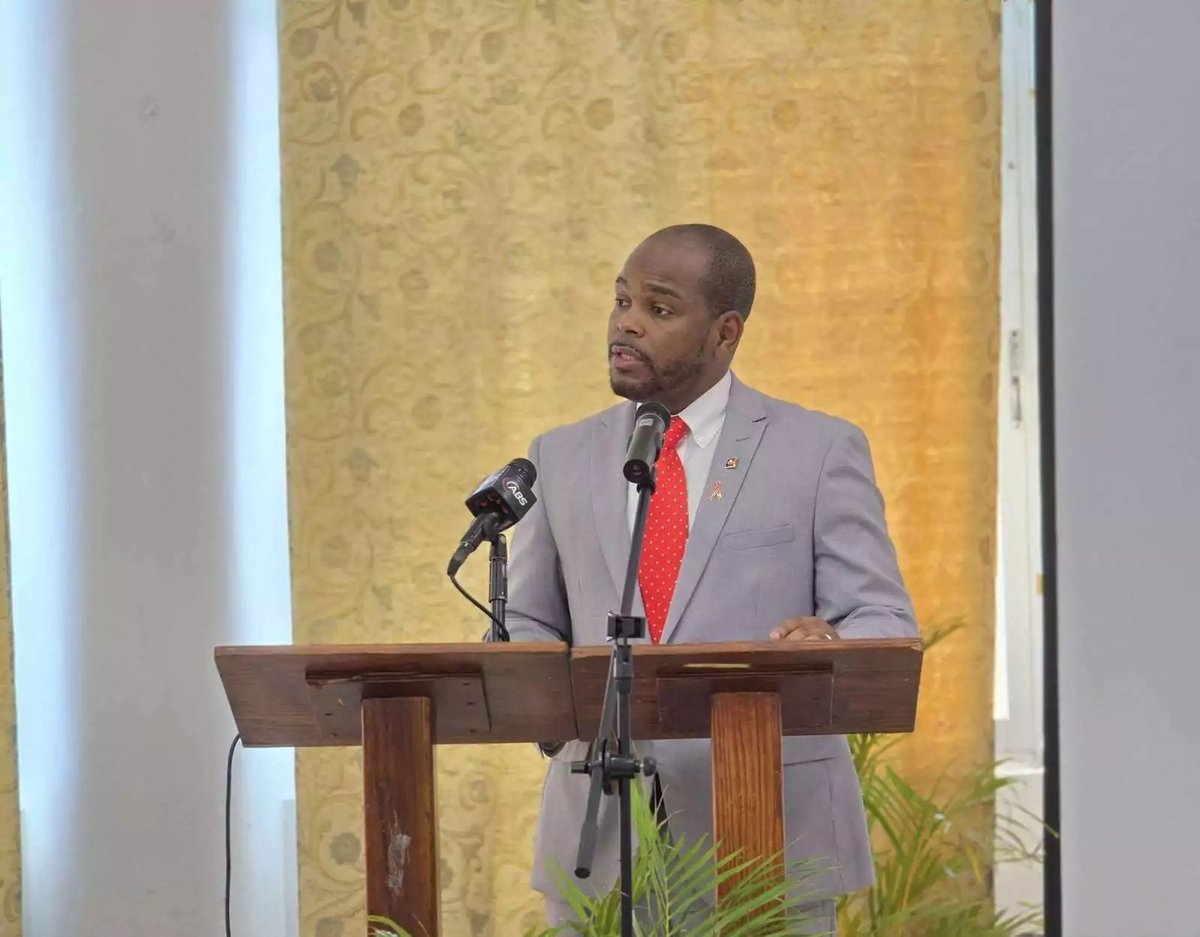
Director General of Communications Maurice Merchant announced the policy's permanent status during Thursday's post-Cabinet media briefing. He said the initiative is designed to prevent financial hardship from blocking qualified students from obtaining regional certification through the Caribbean Secondary Education Certificate, Caribbean Advanced Proficiency Examination and Caribbean Certificate of Secondary Level Competence programmes.
To qualify, students must be citizens of Antigua and Barbuda or citizens of OECS member states that provide reciprocal benefits. They must also be enrolled in an approved institution, meet attendance requirements, carry a recommendation from their principal and be sitting the funded subjects for the first time.
The programme does not cover subjects beyond the approved limits, examination resits, rewrites aimed at improving previous grades, script reviews, late registration penalties or amendment fees incurred after registration deadlines. Merchant noted that students repeating subjects or querying examination results will be responsible for those costs themselves.
Students benefiting from the programme must maintain satisfactory attendance, complete their School-Based Assessments, demonstrate appropriate conduct and sit all examinations for which the government has paid. Those who fail to complete their SBAs or do not sit registered examinations without an approved reason may be required to reimburse the government for the associated fees.
The programme was first introduced during the 2025–2026 academic year as a measure to ease the financial burden of regional examinations on families. Now formalised as permanent policy, it requires the Ministry of Education to make annual budgetary provisions for the fees, verify student eligibility and monitor participation, expenditure and examination outcomes.