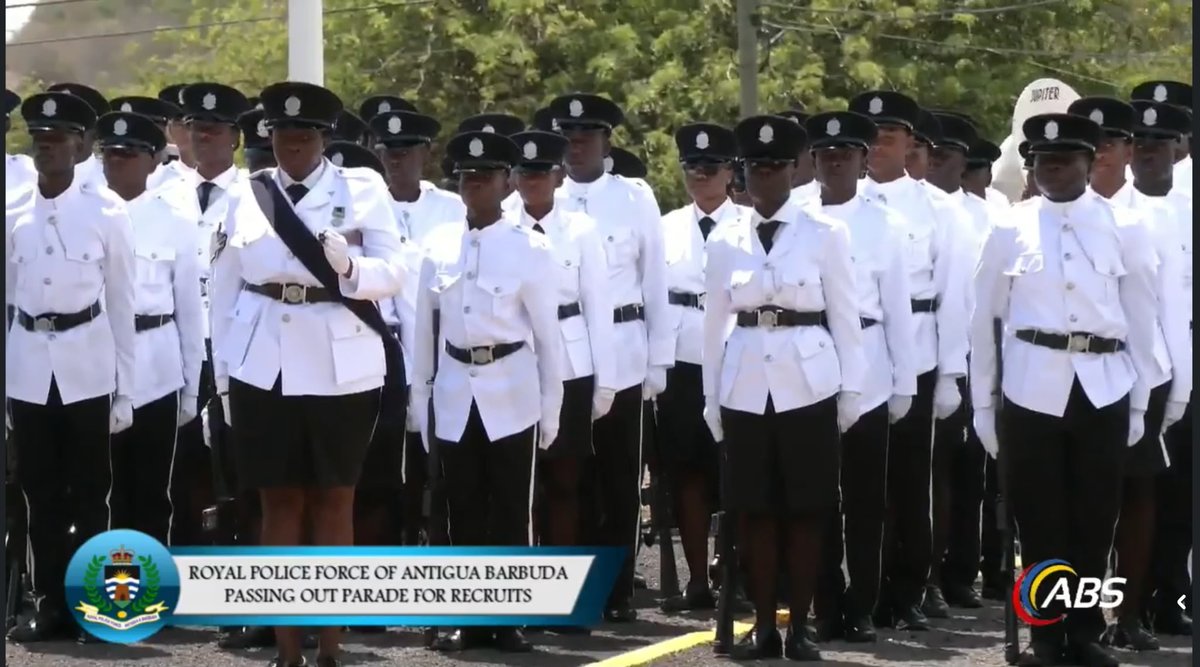
Forty-three new police officers have officially joined the Royal Police Force of Antigua and Barbuda after successfully completing the 50th Recruit Training Course, a milestone marking more than five decades of formal police training in the country.
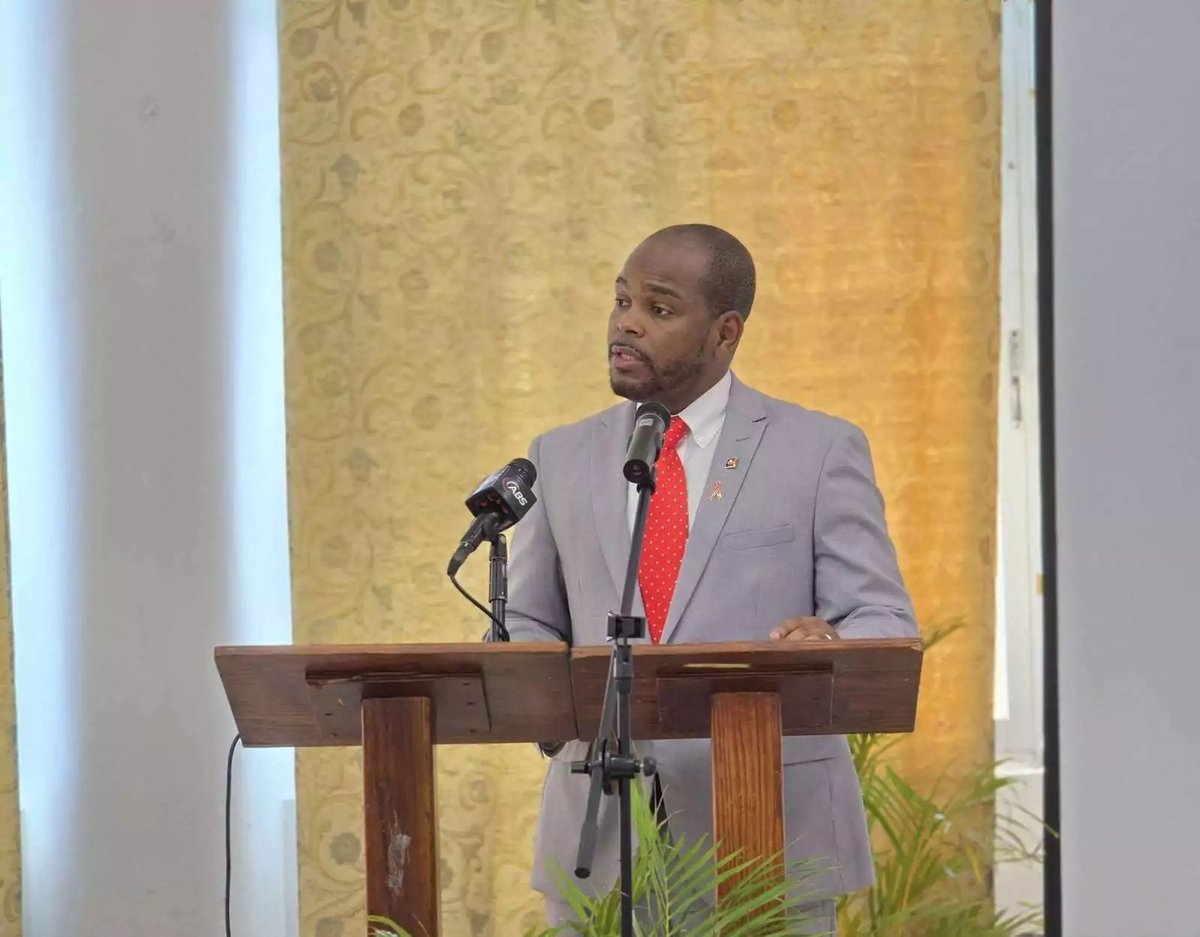
The graduation ceremony was held at the Sir Wright F. George Police Academy, where Police Academy Commandant Superintendent Rodney Ellis delivered the Commandant's Report and urged graduates to measure their success not by examination scores, but by the trust and confidence they build within the communities they serve.
"The public will not remember your examination score, your physical training result. They will remember your integrity. They will remember your professionalism. They will remember how you treat them," Ellis told the new officers.
Ellis described the occasion as a landmark in the force's history. "Course 50 represents more than another graduating class. It marks a significant milestone in the history of recruit training within the Royal Police Force of Antigua and Barbuda," he said. "The 50th Recruit Training Course symbolises decades of commitment, sacrifice, discipline and service to our nation."
Using a cricket analogy, Ellis reflected on the academy's heritage, noting that Sir Wright F. George "opened the batting" by laying the foundation for police training when formal recruit courses began in 1967. He also highlighted that the academy's last five commandants have each gone on to serve as commissioner or deputy commissioner of police.
Ellis revealed that he sought divine guidance after being appointed to oversee the historic course. He adopted Proverbs 22:6 — "Train up a child in the way he should go" — as the guiding principle for the six-month programme. "When the commissioner called me in late January and informed me that I would assume responsibility for this course, I asked Almighty God for wisdom, strength and guidance to lead this training successfully," he said.
The course began with 54 special constables — 32 men and 22 women — who entered the academy with the goal of becoming regular police officers. Not all completed the programme. One female and one male recruit resigned for medical reasons, two had their contracts terminated for disciplinary reasons, and two others resigned for personal reasons.
Those who remained faced rigorous physical training alongside intensive classroom instruction. "From the very first day the recruits were introduced to the reality of police life, beginning with rigorous physical training. For many it was unlike anything they had previously experienced. The first few weeks tested them physically, mentally and emotionally," Ellis said.
Recruits completed 11 core modules covering administration, general policing, professional and personal development, the criminal justice system, laws and local statutes, tactical skills, traffic and road safety, crime and criminal activity, criminal investigations, and practical field training. The academy also incorporated customer service training, with officials from the Ministry of Tourism assisting in preparing recruits for public-facing interactions.
Of the remaining recruits, 43 achieved the required standard of 350 marks out of a possible 500, yielding an overall pass rate of 95.6 percent. "This represents an overall pass rate of 95.6 percent, a testament to the hard work of the recruits and the dedication of the instructors at the academy," Ellis said.
Ellis reserved special praise for the academy's instructors, who he said delivered exceptional results despite operating with limited resources. "Despite limited resources, you remained committed, professional and resilient. Through your dedication, you produced an outstanding group of officers. No praise is too great for your effort," he said.
Addressing the commissioner, the government, and the people of Antigua and Barbuda, Ellis expressed confidence in the direction of the force. "The Royal Police Force of Antigua and Barbuda is moving in the right direction in preparing officers capable of safeguarding our nation," he said.
He closed his address to graduates by quoting former British Prime Minister Winston Churchill: "'Success is not final, failure is not fatal; it is the courage to continue that counts.'"