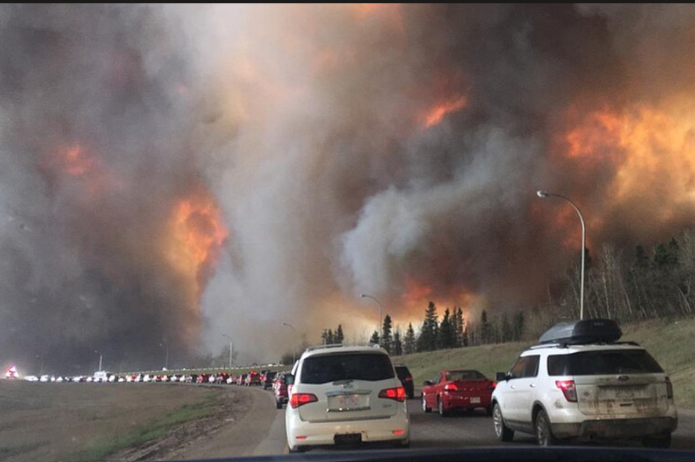
More than 800 wildfires are burning across Canada, with air quality alerts now extending south into multiple US states, according to Antigua News Room, which cited reporting from the BBC.
The US Air Quality Index program has classified air quality across large parts of Michigan and Minnesota as "hazardous," recommending residents stay indoors. Alerts span the Upper Midwest, the Great Lakes region and into the northeast, the US National Weather Service (NOAA) confirmed in an update on Thursday.
The Canadian Interagency Forest Fire Centre reports 857 fires are actively burning across the country, including 23 new fires recorded on Thursday alone. The Canadian Wildland Fire Information System indicates the vast majority of those blazes are burning out of control.
A large cluster of fires in northwestern Ontario is sending thick plumes of smoke over Thunder Bay and Toronto. Lower concentrations of smoke are drifting high in the atmosphere across the Great Lakes and above New York, producing hazy skies and more vivid red sunrises and sunsets.
While widespread thunderstorms are forecast across Ontario over the coming days, meteorologists warn the rainfall may not be sufficient to meaningfully suppress the fires. Northwesterly winds are expected to continue pushing smoke into northern US states through the weekend, raising concerns that poor air quality could affect New Jersey, where Sunday's World Cup final is scheduled to take place. A shift in wind direction by Monday is expected to redirect smoke toward Quebec, bringing some improvement to air quality further south in the US.
Swiss air quality tracker IQAir reports that Detroit currently holds the distinction of having the worst air quality of any city in the world, followed by Minneapolis and Toronto.
Republican lawmakers in Michigan have responded with frustration, sending an open letter to Canadian Prime Minister Mark Carney demanding better wildfire management. "A year has passed, the season has come around again, and nothing has changed except that our patience has run out," wrote the four House representatives who signed the letter — expressing their displeasure for the third consecutive year.
US Ambassador to Canada Pete Hoekstra took a more measured approach in a statement on Wednesday, commending joint firefighting efforts. "This challenge knows no borders. The United States will continue to coordinate closely with Canada, just as we have for more than four decades of shared wildfire emergencies," he said.
Beyond the air quality crisis, the fires have forced hundreds of residents from First Nations communities in northern Ontario to evacuate, with videos showing some fleeing remote areas by boat. Anishinabek Nation Grand Council Chief Linda Debassige confirmed in a statement that homes and buildings in the region have sustained extensive damage.
A dramatic incident on Wednesday captured the danger facing workers in the area, as footage showed a Canadian National Rail freight train surrounded by wildfire flames near Armstrong, Ontario. Workers aboard issued an emergency rescue call. Canadian National Rail subsequently confirmed that all trapped workers were safely rescued and that rail operations in the region have been temporarily suspended.