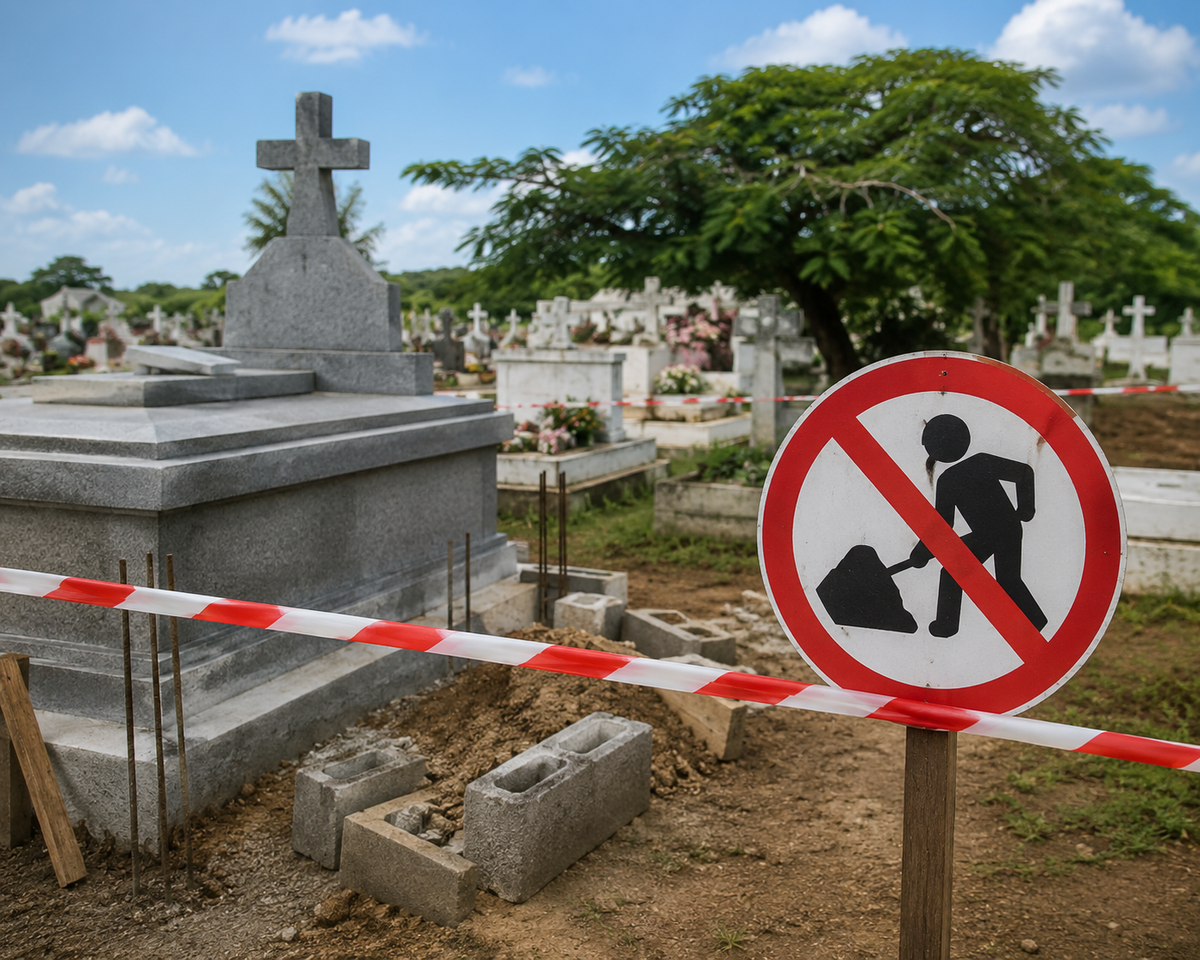
The Ministry of Health, Wellness, Environment and Civil Service Affairs has identified multiple instances of unauthorised construction within the St. John's Public Cemetery and other public cemeteries across Antigua and Barbuda, and is now moving to enforce compliance.
The Ministry has made clear that the construction, alteration or installation of any tomb, headstone, fence, retaining wall, concrete structure or other permanent feature within a public cemetery is strictly prohibited without prior written approval from the Chief Health Inspector.
Any unauthorised work will be immediately halted, dismantled and removed — regardless of its stage of completion — in accordance with the Public Health Act, Cap. 353. Persons who carry out unauthorised construction or interfere with graves, tombs, burial plots or other cemetery structures will also face prosecution.
The Ministry outlined five reasons underpinning the enforcement drive: to protect burial plots and the rights of families; preserve the dignity and sanctity of cemetery grounds; maintain accurate records of burials and approved works; ensure the orderly management of public cemeteries; and safeguard public health and safety.
Members of the public are warned not to rely on instructions, assurances or approvals from unauthorised individuals. All required approvals must be obtained directly from the Cemetery Office or the Central Board of Health before any cemetery-related work commences.
Enquiries concerning burials, family plots, tombs, headstones, fencing, retaining walls or other cemetery works must be directed to the appropriate authority before any arrangements are made or construction begins.
The Ministry stated it is strengthening monitoring of public cemeteries and will take enforcement action against all breaches. The public's cooperation is required to protect the integrity, safety and dignity of the nation's public cemeteries.