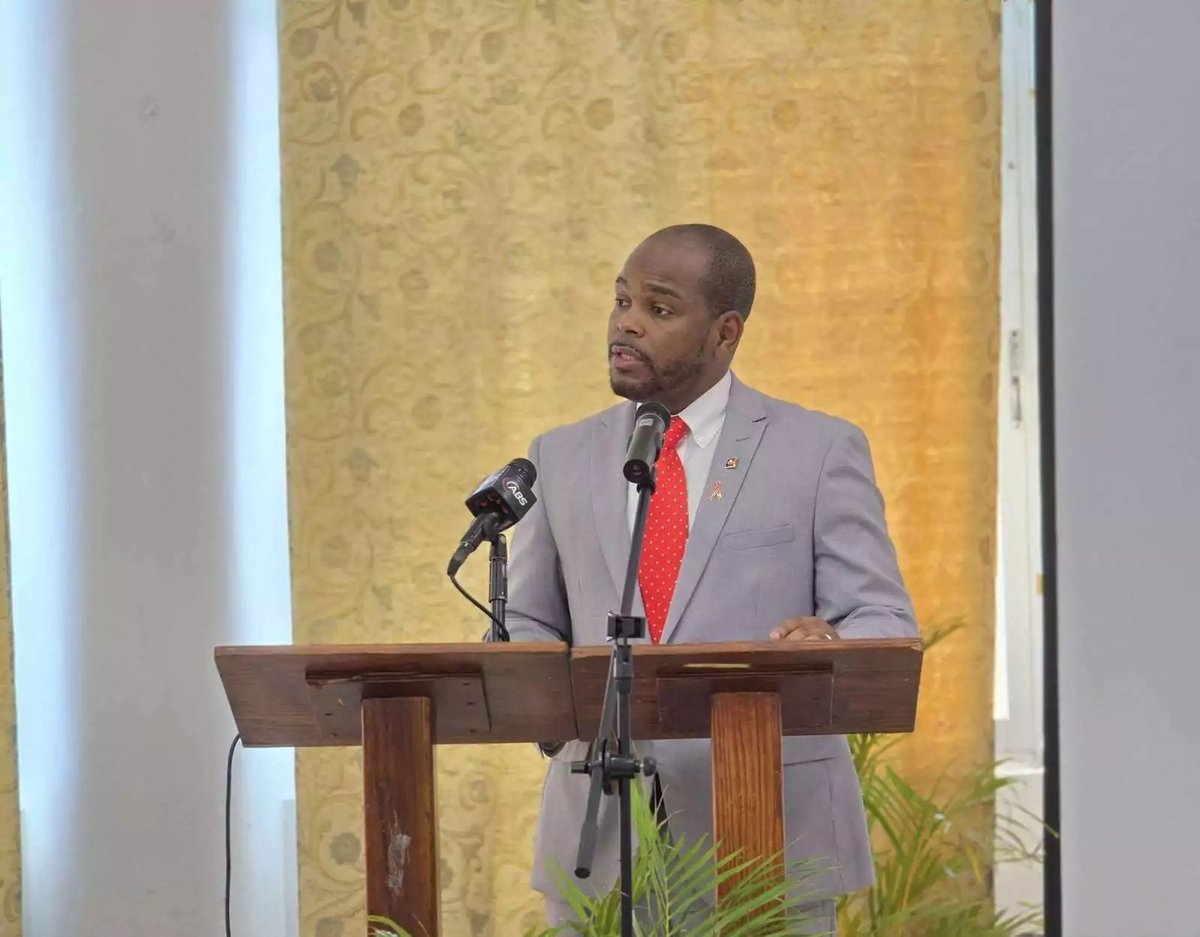
Antigua and Barbuda's initial negotiations with the United States over accepting third-country nationals broke down in part because Washington's proposal contained no binding commitment to cover all associated costs, Parliament was told on Tuesday. According to Antigua Observer, Foreign Affairs Minister EP Chet Greene stated that the original operating procedures would have left the country exposed to unresolved financial, legal and administrative obligations.
"There was no binding commitment that every financial obligation would be met," Greene said during debate on the government's White Paper on the possible transfer arrangement.
The government subsequently rejected the proposal and submitted counterproposals requiring all financial responsibilities to be settled before any individual departs the United States. Under Antigua and Barbuda's position, the US would be expected to cover accommodation, healthcare, welfare, security, administration, onward travel and any costs associated with returning an individual.
"The financial responsibility had to be settled before that person left the United States," Greene told the House, adding that all commitments would need to be formalised in writing rather than based on a promise or assumption. "Everything had to be covered, and it had to be covered in writing."
Prime Minister Gaston Browne echoed that position, stating that no person should arrive in Antigua and Barbuda before all legal, security, financial and administrative arrangements are fully completed. Browne told Parliament that the government would calculate the cost of supporting each individual and present a proposed figure to the United States.
The Prime Minister noted that some countries had received between US$25,000 and US$50,000 per individual under similar arrangements. He suggested Antigua and Barbuda could seek approximately US$75,000 per person, citing the country's higher housing and living costs.
"Antigua and Barbuda is an expensive country, so we may want to consider about US$75,000 per head," Browne said, though he stressed the figure was tentative and had not been agreed upon with Washington. The government would first quantify actual costs before formally advising the United States of the amount it considered sufficient.
The financial conditions form part of a broader counterproposal following the government's rejection of several versions of the operating arrangements put forward by the US. The American proposal had contemplated transfers of up to 10 people per month, while Antigua and Barbuda proposed a maximum of 10 people for the entirety of 2026.
The government has further insisted that there be no automatic transfers and that every case be assessed individually. Antigua and Barbuda would retain the right to approve or reject any proposed individual, and would exclude persons with serious criminal records, unaccompanied minors and those with unresolved asylum or protection claims. Full medical, criminal, biometric and biographical information would also be required before any individual could be considered for transfer.