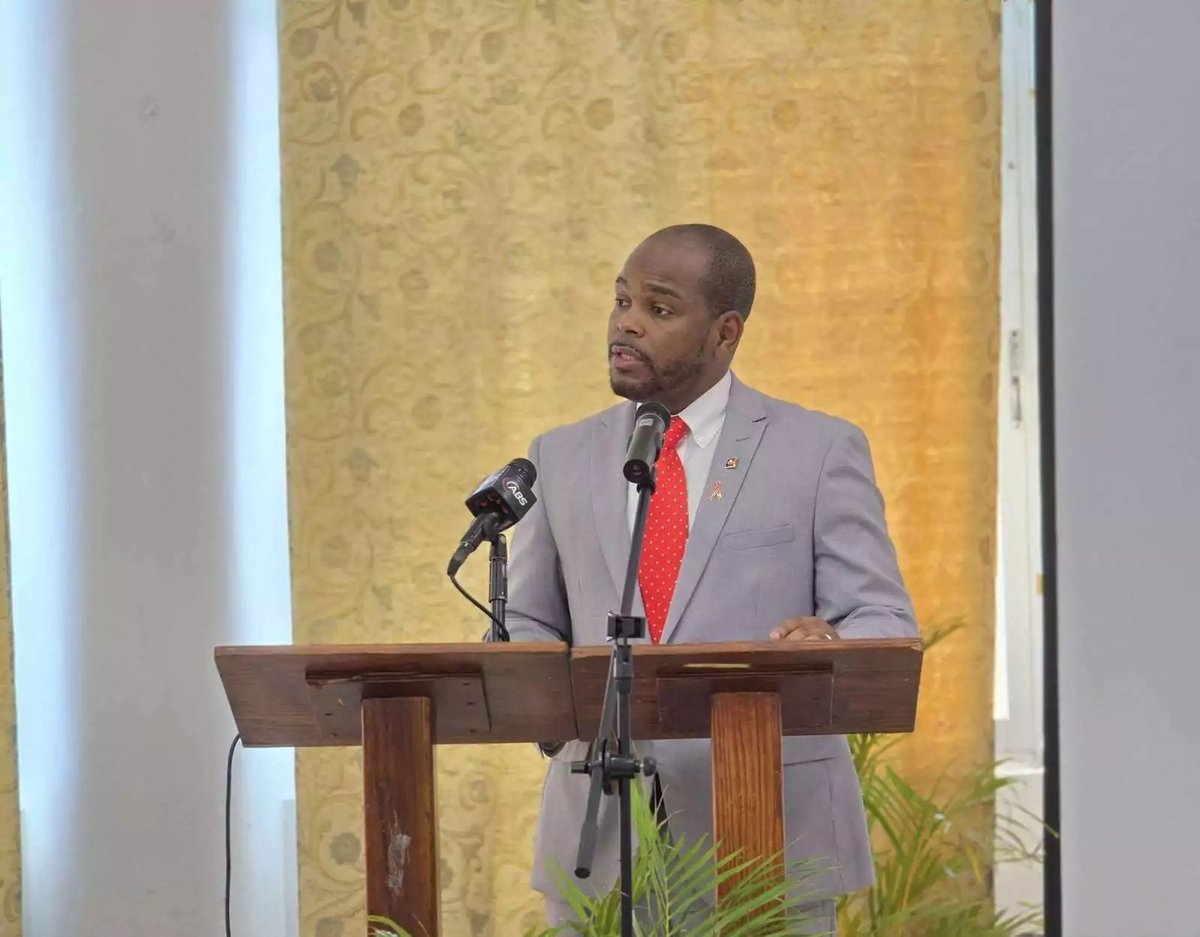
Prime Minister Gaston Browne has declared that Antigua and Barbuda would sooner endure continued United States visa restrictions than accept third-country nationals with serious criminal records under a proposed transfer arrangement.
According to Antigua Observer, Browne made the remarks during Tuesday's parliamentary debate on the government's White Paper, stating that national security and quality of life would take precedence if the country were forced to choose between the two.
"We know that the United States could take punitive action, and already there are visa restrictions against Antigua and Barbuda," Browne told Parliament. "But if we were faced with an option of not taking criminals and to have visa restrictions, we'll go for the visa restrictions, because accepting criminals will destroy our country."
The Prime Minister was quick to clarify, however, that current negotiations with the United States do not require Antigua and Barbuda to accept individuals with criminal records. "I want to make that abundantly clear, that all of the formal exchanges of agreements that we've had so far, the issue of accepting criminals is not on the table," he said.
Browne explained that one of the government's chief concerns was that earlier drafts of the proposed operating agreement did not expressly exclude persons with criminal records. Antigua and Barbuda raised the issue during negotiations, triggering discussions with US officials over how criminality should be defined.
US officials advised that a person who breached immigration laws by overstaying a visa could technically be considered to have committed a criminal offence. In response, the government proposed revised language that would bar individuals with criminal records while carving out an exception for those whose only offences were immigration or visa-related.
"We can then amend the language to state that we will not accept criminals, with the exception of individuals who may have been involved in visa violations," Browne said.
He noted that Antigua and Barbuda has previously regularised the status of immigration violators through amnesty programmes, and said the government would consider accepting skilled individuals whose sole offences were immigration-related. Browne reiterated that anyone convicted of serious criminal offences would be rejected outright, warning that such individuals could undermine public safety and national development.
The White Paper outlines the principles guiding Antigua and Barbuda's negotiations with the United States over the possible transfer of third-country nationals removed from US territory. Under the government's stated position, every proposed transfer would require Antigua and Barbuda's explicit approval, with the country retaining the right to reject any individual case.
The proposed framework would also exclude unaccompanied minors, persons with unresolved asylum or protection claims, and anyone with serious criminal records. Complete medical, criminal and biographical information would be required before any transfer takes place.
The government has maintained that the memorandum of understanding signed with the United States in December 2025 is non-binding and does not obligate Antigua and Barbuda to accept any individual. Negotiations on a final operational agreement are ongoing.
Antigua and Barbuda has been subject to partial US entry restrictions since January 1st, 2026, when a proclamation signed by President Donald Trump took effect. The measure suspended the entry of Antiguan and Barbudan nationals seeking immigrant visas, as well as non-immigrant B-1 business, B-2 visitor, combined B-1/B-2, F student, M vocational student and J exchange visitor visas.
The proclamation cited Antigua and Barbuda's history of operating a citizenship-by-investment programme without a residency requirement as the country-specific basis for the restrictions.