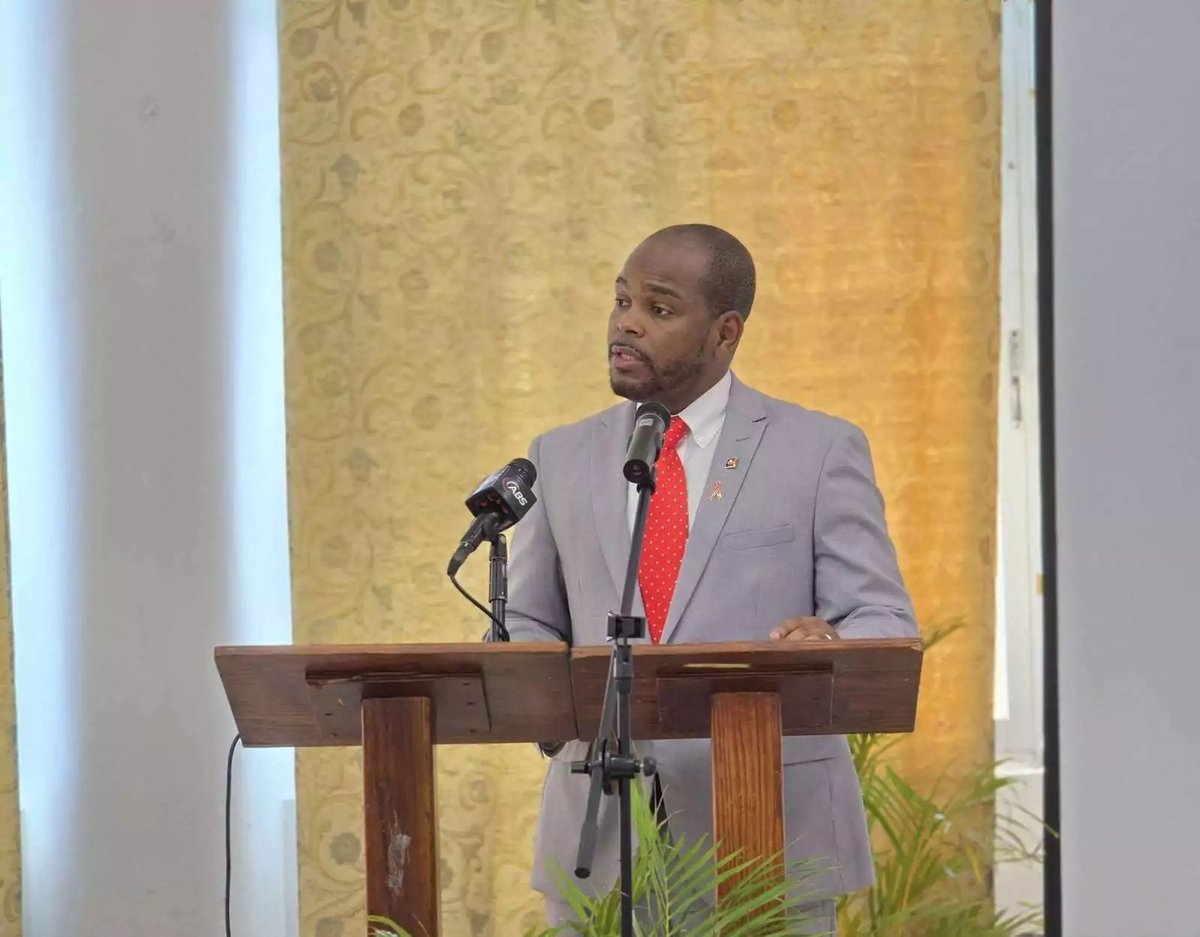
Barbuda MP Trevor Walker has sharply criticised the government for bringing its proposed framework for accepting third-country nationals from the United States to Parliament without first conducting broad public consultations, according to Antigua Observer.
Speaking during Tuesday's parliamentary debate, Walker argued that the implications of the arrangement were too significant for discussions to remain confined to the Cabinet and the House of Representatives.
"A matter like this ought to have had a wide, and I would say island-wide, slew of consultations," Walker told Parliament.
He identified the Antigua and Barbuda Bar Association, civil society organisations and the Chamber of Commerce as groups that should have been invited to examine the proposal and offer recommendations. Walker said broader public engagement could have helped ordinary residents understand the arrangement and allowed the government to build wider national consensus before proceeding.
"Antiguans and Barbudans deserve better than this," he argued, noting that no town hall meetings or other public discussions had been held before the White Paper and resolution were presented to Parliament.
Walker also questioned whether all government parliamentarians had reviewed the memorandum of understanding before Tuesday's sitting. He challenged several MPs to confirm whether they had previously seen the document and demanded that a signed copy be produced for comparison with the version presented to the House.
His concerns formed part of a broader argument that Antigua and Barbuda holds limited negotiating leverage against the United States. Walker repeatedly declared that the country had "no cards", insisting that its economic, travel and commercial dependence on Washington placed it in a weak bargaining position.
"You're going begging them because you don't have no cards," Walker said during a heated exchange with government MPs.
He clarified that his position did not mean the country should accept criminals or agree to unrestricted transfers. Rather, he argued that the government should acknowledge the power imbalance between the two nations and seek the broadest possible national support for whatever position it ultimately adopts.
Walker further called for a unified CARICOM position on third-country transfers, saying Caribbean governments affected by the US initiative should have developed a common policy. He questioned whether individuals admitted to Antigua and Barbuda would later be permitted to travel to other OECS or CARICOM member states and what legal status they would hold upon arrival.
"When Antigua and Barbuda would have gotten some of these deportees, are they free to move around the Caribbean?" Walker asked.
He also noted that people lawfully admitted into the country would be entitled to constitutional protections, making it essential to resolve questions surrounding their rights, conditions of stay and freedom of movement before any transfers occur.
Government MPs strongly rejected Walker's claim that Antigua and Barbuda lacked negotiating power, accusing him of suggesting the country should simply accept whatever the United States proposed. The Attorney General argued that the memorandum, signed on December 19, 2025, was non-binding and had not authorised the transfer of a single person. He said the document gave the United States no automatic right to send anyone and provided no prospective transferee with an automatic right to enter or remain in Antigua and Barbuda.
The government also rejected the original US operating proposal, which had contemplated the transfer of as many as ten people each month and did not include a binding commitment covering all associated costs.
Antigua and Barbuda's counterproposal limits consideration to individuals with final removal orders, excludes serious criminals, unaccompanied minors and people with unresolved asylum claims, and preserves the government's right to reject every proposed individual. It would also require all accommodation, healthcare, welfare, security, administrative and possible return expenses to be secured in writing before anyone departs the United States.
The resolution debated on Tuesday does not approve a final transfer agreement or authorise anyone's immediate admission. It provides a framework under which the government may continue negotiations while retaining the right to reject individuals or suspend the entire arrangement.
Walker maintained, however, that the formal safeguards did not eliminate the need for wider public participation before the government commits the country to any operational agreement.