Prime Minister Gaston Browne has told the House of Representatives that Antigua and Barbuda may need to decide whether to suspend its Citizenship by Investment Programme if visa restrictions tied to the programme continue.
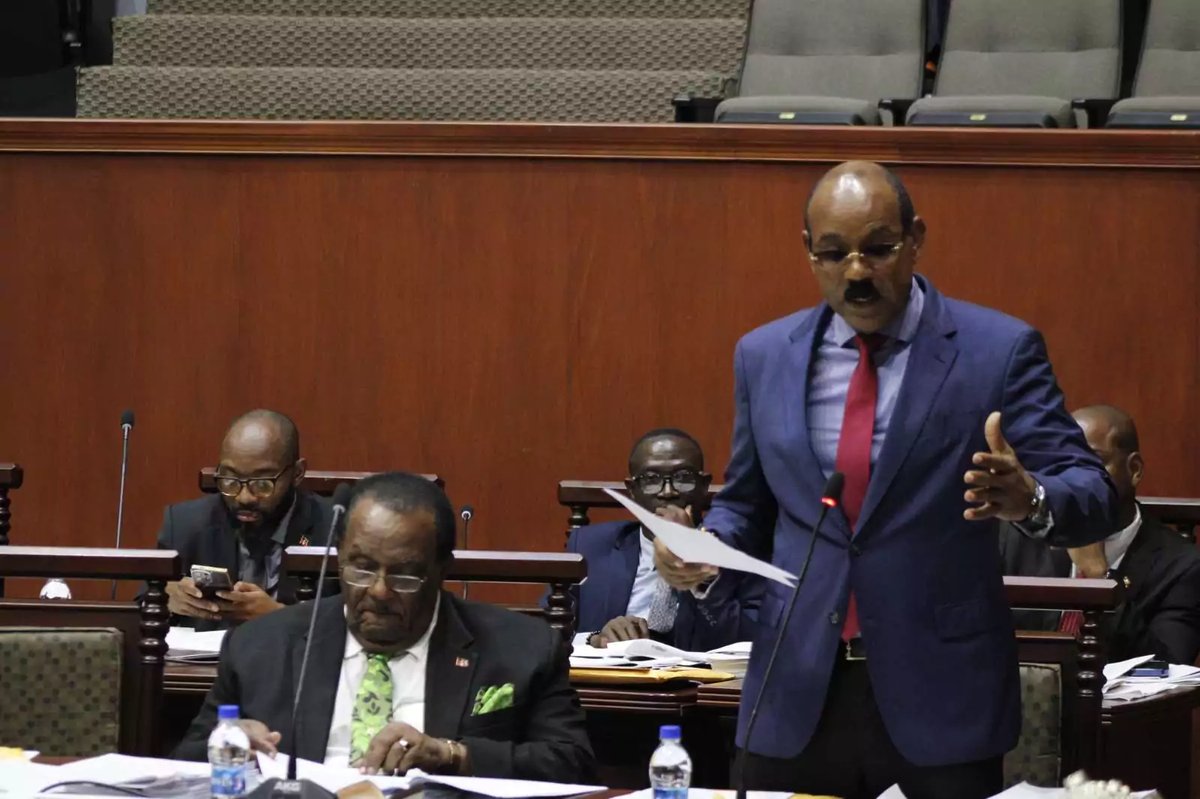
According to Antigua.news, Browne raised the possibility during Tuesday's parliamentary debate on a resolution governing the potential transfer of third-country nationals from the United States, telling members that the CIP question and the deportee negotiations could ultimately demand the same kind of difficult trade-off.
"If it is a CIP issue that persists, then we have to have a broader discussion as to whether or not we need to maintain our CIP programme, or if we should suspend it so that we can get full visa access again to the U.S., European Union too," he said.
The remarks come three weeks after the European Commission formally requested that Antigua and Barbuda phase out its CIP by June 1, 2028. The request falls under a revised Visa Suspension Mechanism that took effect December 31, 2025, and treats the mere operation of a citizenship by investment programme as grounds for suspending Schengen access, regardless of how well the programme is managed.
Brussels' letter, dated June 25 and signed by EU Commissioner Magnus Brunner, offered a 24-month transition window but required interim vetting measures to be in place by September 2026.
The United States separately restricted several visa categories for Antigua and Barbuda from January 1, citing both screening deficiencies and the investor-citizenship pathway. Browne has previously argued that decision was also tied to the country's refusal to sign an unrestricted third-country nationals arrangement with Washington.
As recently as early July, the Prime Minister stated that the CIP should continue regardless of the outcome with Brussels. "With or without those visa-free arrangements, our CIP programme continues," he said at the time, describing the programme as too important a source of non-tax revenue to abandon. The government's 2026 budget projected EC$157 million in CIP revenue, and the programme has generated more than EC$1.4 billion since 2013.
On Tuesday, however, Browne framed the decision in starker financial terms, suggesting greater openness to suspension than his earlier statements had indicated. "If it is that we want to maintain access in the European Union, visa-free, then we have to have a discussion as to whether or not we should continue the CIP and give up $100 million," he told the House.
Browne said the government was working toward a position within a short timeframe. "We are consulting, and we are hoping within a matter of weeks to come up with a consensus," he said, adding that he would consider bringing a separate resolution before the House specifically on the CIP question to allow for a dedicated debate.
The Prime Minister also directed pointed remarks at the opposition, telling members that such a debate would be their opportunity to move beyond criticism and offer concrete solutions.
"This will be your time now to show the people your mettle, all of the nonsense you have said about CIP. This is your time now, now that the rubber has hit the road, for you to come now and to show how responsible you are and what solutions you have," he said.